A kitchen wall does more work than any other surface in the building. It takes boiling steam from the stove, hot grease from the pan, condensation from the dishwasher, and a cloth with cleaning chemicals every single day. Waterproof kitchen wall panels need to be judged on exactly that job: can they take heat, moisture and grease — and still look flat and clean five years later?
Why Ordinary Kitchen Wall Materials Fail
Most kitchens are finished in one of four ways, and each has a known failure mode:
- Tile: the tile itself is fine, but grout lines stain, crack and grow mould. In humid climates the adhesive fails and tiles hollow off the wall.
- PVC / acrylic panels: cheap and waterproof, but most are combustible and soften near the hob; hot steam can deform them and they scratch easily.
- Plasterboard (gypsum): the paper face and core absorb steam, swell and sag — it is simply the wrong material for a wet kitchen wall.
- Wood and MDF: warp, stain and harbour mould the first time a pipe weeps or a splashback steams for a year.
The common thread is that each material solves one problem and creates another. Waterproof kitchen wall panels should solve all three at once: fire safety, moisture stability and cleanability.
What Makes a Panel Truly "Waterproof" for Kitchens
Waterproofing claims are easy to print on a datasheet and harder to prove in a kitchen. Four numbers matter:
| Property | What it means for a kitchen wall | Low-density fiber cement |
|---|---|---|
| Water absorption | Less absorption = grease and steam stay on the surface | <0.2% |
| Moisture movement | Wet/dry cycling without warping or joint cracking | Wet expansion ≤0.25%, dry shrinkage ≤0.15% |
| Fire reaction | Behind a hob, non-combustible is non-negotiable | A1 non-combustible (GB 8624; A2-s1,d0 per EN 13501-1) |
| Mould resistance | Inorganic surface gives mould no nutrient to grow on | Mould-proof; 30-day immersion, no delamination |
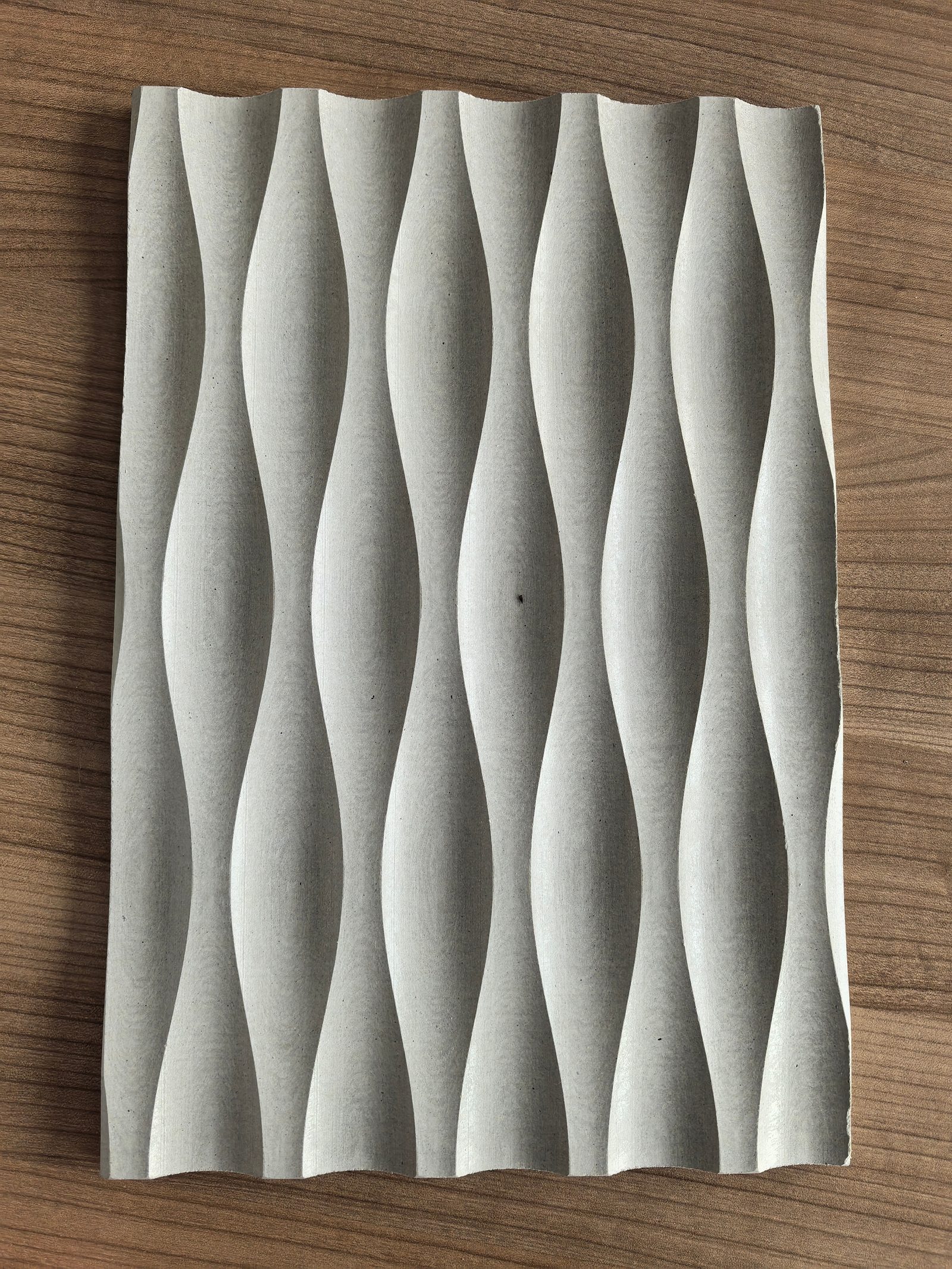
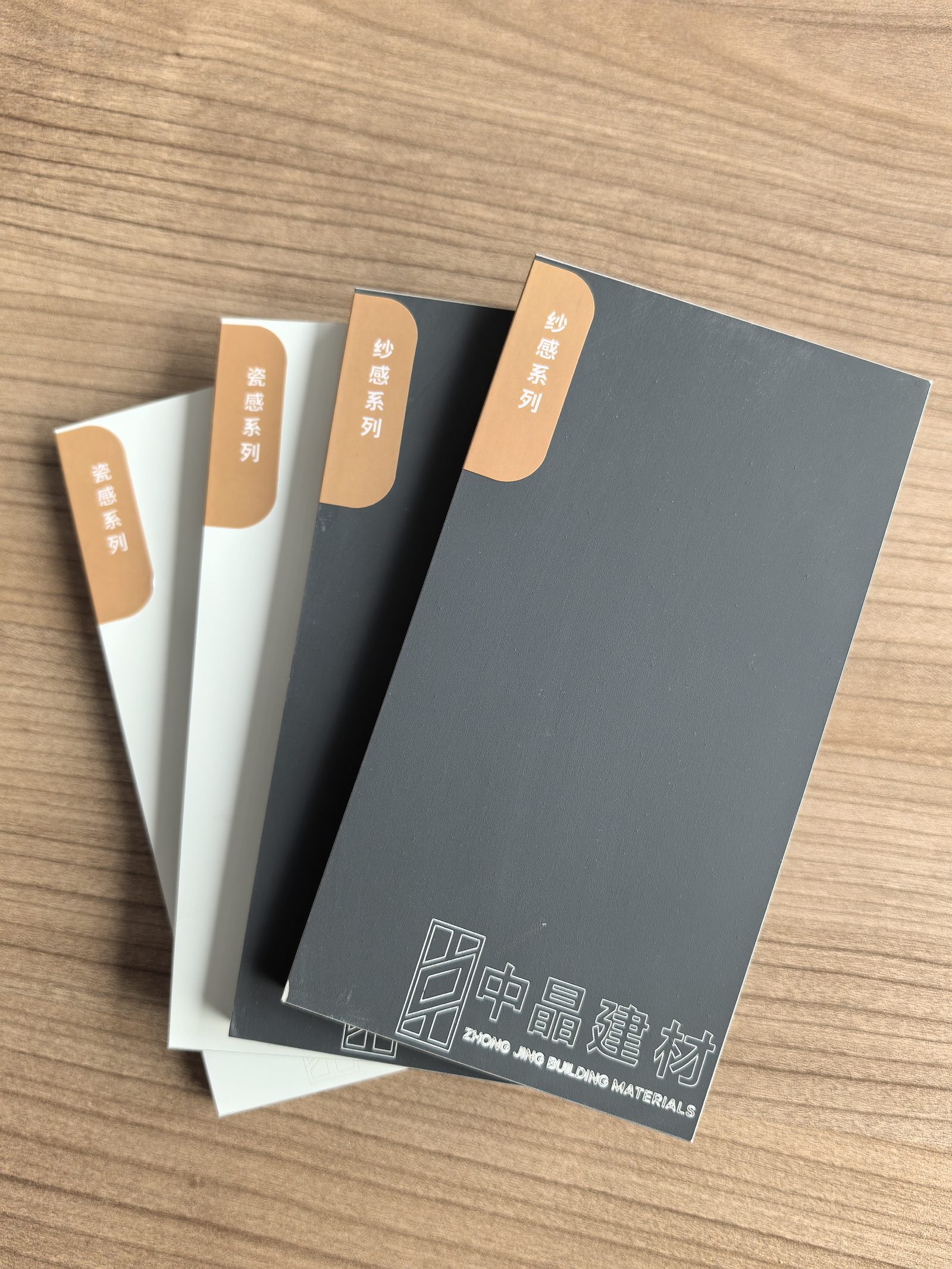
Our Crystal Board is engineered as a low-density fiber cement board at 0.65–0.85 g/cm³ — roughly 30% lighter than ordinary fiber cement, so sheets are easy to handle, yet it keeps the A1 fire class and the moisture numbers above.
Where to Use Waterproof Panels in the Kitchen
Not every kitchen wall needs the same board. The useful map looks like this:
- Cooker / hob splashback: full-height A1 non-combustible panel behind gas hobs — the highest heat and grease zone in the room.
- Sink wall: condensation and splashing every day; the board's low absorption keeps it flat and joint-free.
- Dishwasher side and under-counter panels: steam bursts during every cycle.
- Full wall renovation: cover old tile or damaged plasterboard in one dry operation, no demolition.
Renovation Without the Mess: Cover, Don't Demolish
Kitchen refits are expensive because of demolition. Waterproof kitchen wall panels change the calculation: over a sound, flat substrate, panels are fixed with adhesive plus mechanical fixings, joints taped, and the surface finished directly. There is no tile removal, no bagging out, no re-plastering — the room can be back in use in a day or two.
This is also where the board's flat, factory-smooth face pays off. Because the surface needs no skim coat or putty before finishing, the paint process is dramatically shorter. Watch the full plaster-free paint process on our board:
Fire Safety Behind the Cooker
Building codes treat the space around a cooking appliance as a high-risk zone, and for good reason — it is the most likely ignition point in a home or commercial kitchen. Non-combustible kitchen wall panels behind and beside the hob remove one variable from that risk entirely: the board itself cannot burn, melt or drip, even at 1000°C, and smoke toxicity is rated AQ1 (safe grade). Compare that with a wood-based or PVC substrate, which carbonizes or softens and releases smoke when heated. For commercial kitchens, schools and care-home canteens, this is a compliance issue, not a preference — see our breakdown of fire safety and green certifications for specifiers.
Formaldehyde and Indoor Air in Open-Plan Kitchens
Kitchens in modern apartments are usually open to the living area, which means any off-gassing from wall panels is inhaled all day. Fiber cement is fully inorganic — no wood, no adhesive binder, no added formaldehyde, benzene or heavy metals. Emission is rated ENF grade (undetectable) with TVOC under 0.06 mg/m³, and the product carries France A+ and CE certification. That is a measurable advantage over resin-bound boards and foamed PVC in a space where people eat.
Waterproof Kitchen Wall Panels vs. PVC, Tile and Gypsum
| Criteria | Fiber cement panel | PVC / acrylic | Tiled wall | Gypsum board |
|---|---|---|---|---|
| Fire reaction | A1 non-combustible | B1–B2, softens with heat | Dependent on substrate | Paper face burns |
| Steam & grease | Repels both, wipe-clean | Waterproof, but scratches/warps | Grout stains and moulds | Absorbs and sags |
| Surface finish | No putty, paint-ready | Needs adhesive + trim | Grout lines + sealing | Skim coat + sanding |
| Impact / screw hold | ≥1200 N screw hold | Weak, punctures | Hollow behind tiles | Weak, needs backing |
| Renovation fit | Cover in place, dry work | Yes, but heat-limited | Demolition + re-tile | Demolition + re-skim |
PVC panels win on price; tile wins on tradition. If the brief is a kitchen that is safe, stable and cleanable for decades — fiber cement is the rational choice. For the full material argument, see our fiber cement vs gypsum comparison and the product-line selection guide.
Installation Notes for Contractors
Fiber cement panels are dry-work friendly: sheets cut with a utility knife (6mm bends for corners), fix directly to steel studs or solid substrates, and joints are taped and finished for a seamless wall. At 6mm a sheet weighs roughly 18 kg — one-person handling on site. Our installation guide walks through the five core steps, and the application & construction reference covers typical assemblies.
Specifier Checklist: Kitchen Wall Board
- Fire class A1 / A2-s1,d0 for hob surrounds and escape-adjacent walls
- Water absorption <0.2%, wet expansion ≤0.25% for steam zones
- ENF formaldehyde (undetectable) for open-plan kitchens
- Paint-ready surface with no skim coat — verify the finish system
- Ceiling continuity: pair with moisture-resistant ceiling board above the cabinets
A kitchen wall is not a decorative surface — it is a working surface. Choose the board that works as hard as the room does.
Conclusion
Waterproof kitchen wall panels should be measured on heat, steam, grease and time. Low-density fiber cement board is A1 non-combustible behind the hob, dimensionally stable through years of wet-dry cycling, mould-proof, formaldehyde-free and ready to finish without putty — the only material on the market that checks every box a kitchen asks for. For a bathroom and other wet areas, our bathroom and kitchen waterproofing guide covers the full wet-area map.