Abstract
A single building material now accounts for over 14% of global facade cladding projects, growing at 4.28% CAGR through 2030 (Allied Market Research, 2025). The material is fiber cement board — a composite of Portland cement, cellulose fiber, and silica sand — but the category has fractured into distinct product lines that serve fundamentally different design and performance needs. The choice between a raw base board, a single-color coated panel, a wood-grain digital print, or a through-body colored board is not cosmetic: it determines fire rating compliance path, installation cost per square meter, and whether the facade will still match the architect's render in year 15.
This guide maps the four major fiber cement board product lines — Base Board, Crystal Coating, Digital Print, and Through-body — against the three variables that matter most on a construction schedule: fire rating classification, weather exposure, and budget. For each line we break down density range, thickness options, ASTM/EN standard alignment, and the specific project types where that line outperforms the others. A comparison matrix in §5 distills the full analysis into one reference table.
Key Takeaways
- Base Board delivers the highest fire rating (A1) at the lowest cost — ideal for fire-critical cores and ceilings where surface finish is secondary
- Crystal Coating boards add color without paint — single-layer UV/fluorocarbon finish eliminates on-site painting and its weather-dependent scheduling
- Digital Print panels replicate wood, stone, and fabric at 1/3 the weight — 100+ patterns, zero maintenance, same 50-year substrate beneath
- Through-body boards solve edge-match failure — the color runs through the full thickness, so cuts, chamfers, and open-joint reveals maintain visual uniformity
- Certification stack matters more than thickness alone — a 12mm CE-marked board outperforms an untested 16mm board in every regulatory jurisdiction
- Supplier certification transparency is the leading predictor of batch consistency — ISO 9001 + ASTM C1186 + EN 12467 in a single supplier eliminates the most common specification-surprise variable
Table of Contents
- What Is Fiber Cement Board
- Product Line 1: Base Board — Fire-Rated Foundation
- Product Line 2: Crystal Coating — Color Without Paint
- Product Line 3: Digital Print — Texture Without Maintenance
- Product Line 4: Through-Body — Color That Survives the Saw
- Selection Matrix: Fire Rating vs Cost vs Application
- Certification Stack: What to Verify Before Ordering
- References
What Is Fiber Cement Board
Fiber cement board is a high-density composite panel manufactured from Portland cement (40–60%), cellulose fiber reinforcement (8–12%), silica sand (25–35%), and water. The wet mixture is formed into sheets on a Hatschek or flow-on machine, stacked, and cured under high-pressure autoclave conditions (typically 8–10 bar at 170–180 °C) to achieve final compressive strength, dimensional stability, and moisture equilibrium.
As documented in ASTM C1186 Type A, Grade II, autoclaved cellulose-reinforced flat sheets achieve a modulus of rupture ≥4 MPa at saturation and ≤0.25% moisture movement — a dimensional stability figure that gypsum (0.8–1.2%) and wood-fiber composites (1.5–3.0%) cannot match (ASTM International, 2022; EN 12467:2012+A1:2018).
The product category traces its roots to the 1900s Hatschek process patents but has undergone two major evolution waves since 2010: (a) surface-finish diversification — moving beyond raw cement gray into coated, printed, and through-body colored options — and (b) supply-chain consolidation around a shrinking set of certified Chinese manufacturers whose per-square-meter pricing redefined the global cost baseline while maintaining CE and ASTM compliance.
The global fiber cement board market was valued at USD 14.4 billion in 2025 and is projected to reach USD 17.8 billion by 2030, driven by green building code mandates in the EU, GCC, and Southeast Asia, where non-combustible cladding requirements have become mandatory for buildings above 18 meters (European Commission, 2024; Markets and Markets, 2025).
Product Line 1: Base Board — Fire-Rated Foundation
The base board is the uncoated, raw-surface fiber cement panel. Its defining characteristic is maximum fire rating at minimum cost — making it the default specification for fire-critical sub-surfaces, ceiling tiles, shaft walls, and tile backer applications where the final finish is applied on-site by another trade.
Physical properties (typical range across certified manufacturers):
- Density: 1.2–1.6 g/cm³
- Thickness: 4.5–30 mm
- Fire rating: A1 (GB 8624 / EN 13501-1) — non-combustible, no contribution to fire at any stage
- Bending strength: ≥16 MPa (oven-dry), ≥13 MPa (water-saturated)
- Moisture movement: ≤0.25%
- Water absorption: ≤28%
Table 1: Base Board Thickness vs Application
| Thickness | Application | Fire Rating Context |
|---|---|---|
| 4.5–6 mm | Ceiling tiles, soffit liners | A1 — suitable for escape routes |
| 8–10 mm | Interior partitions, drywall replacement | A1 — 240+ min integrity (GB/T 9978) |
| 12–15 mm | Exterior sheathing, fire-rated shaft walls | A1 — full compartmentation |
| 16–20 mm | Structural decking, mezzanine floors | A1 — load-bearing assemblies |
| 20–30 mm | Industrial flooring, high-impact zones | A1 — heavy-duty traffic |
The base board's cost advantage is structural: it skips any post-curing surface treatment, so the factory price per square meter is 40–60% lower than a finished board of the same thickness. For a 10,000 m² commercial tower, this translates to a six-figure USD differential on the raw material budget alone.
Citation Capsule: "Autoclaved cellulose-reinforced flat sheets manufactured to ASTM C1186 Type A Grade II achieve a moisture expansion coefficient below 0.25% — a dimensional stability figure that is one-quarter that of gypsum-based alternatives — which directly eliminates the cracking and joint-gapping failure mode that accounts for 40% of partition-wall callbacks in humid climates (ASTM C1186, 2022)."
Specifiers use the base board where the surface will be tiled, painted, or clad in a secondary finish — making it the most common upstream specification in the construction supply chain and the most frequently traded product under HS Code 681182.
Product Line 2: Crystal Coating — Color Without Paint
Crystal Coating boards add a single-color UV-cured or fluorocarbon surface layer to the base board substrate. The finish is factory-applied under controlled conditions, eliminating on-site painting and its weather-dependent scheduling risk. Available in standard RAL colors with custom matching on request.
Table 2: Coating Type vs Performance
| Coating | UV Stability (ΔE after 3000h QUV) | Service Life | Cost Index |
|---|---|---|---|
| UV-cured acrylic | ΔE ≤5.0 | 15–20 years | 1.0× (baseline) |
| PVDF fluorocarbon | ΔE ≤3.0 | 25–30 years | 1.6× |
| PE polyester | ΔE ≤8.0 | 10–15 years | 0.7× |
The core value proposition: the coating eliminates an entire trade from the critical path. On a typical 6–8 story building, on-site painting of fiber cement panels adds 12–18 working days that cannot overlap with weather-sensitive trades. Factory-coated panels ship ready to install — the general contractor saves sequencing risk and the associated liquidated damages exposure.
Common specifications: 8mm and 12mm thickness for exterior facade; 6mm for interior decorative walls; density 1.4–1.7 g/cm³; fire rating A2-s1,d0 (EN 13501-1) for UV-cured variants, A1 for uncoated reverse side in most assemblies.
Product Line 3: Digital Print — Texture Without Maintenance
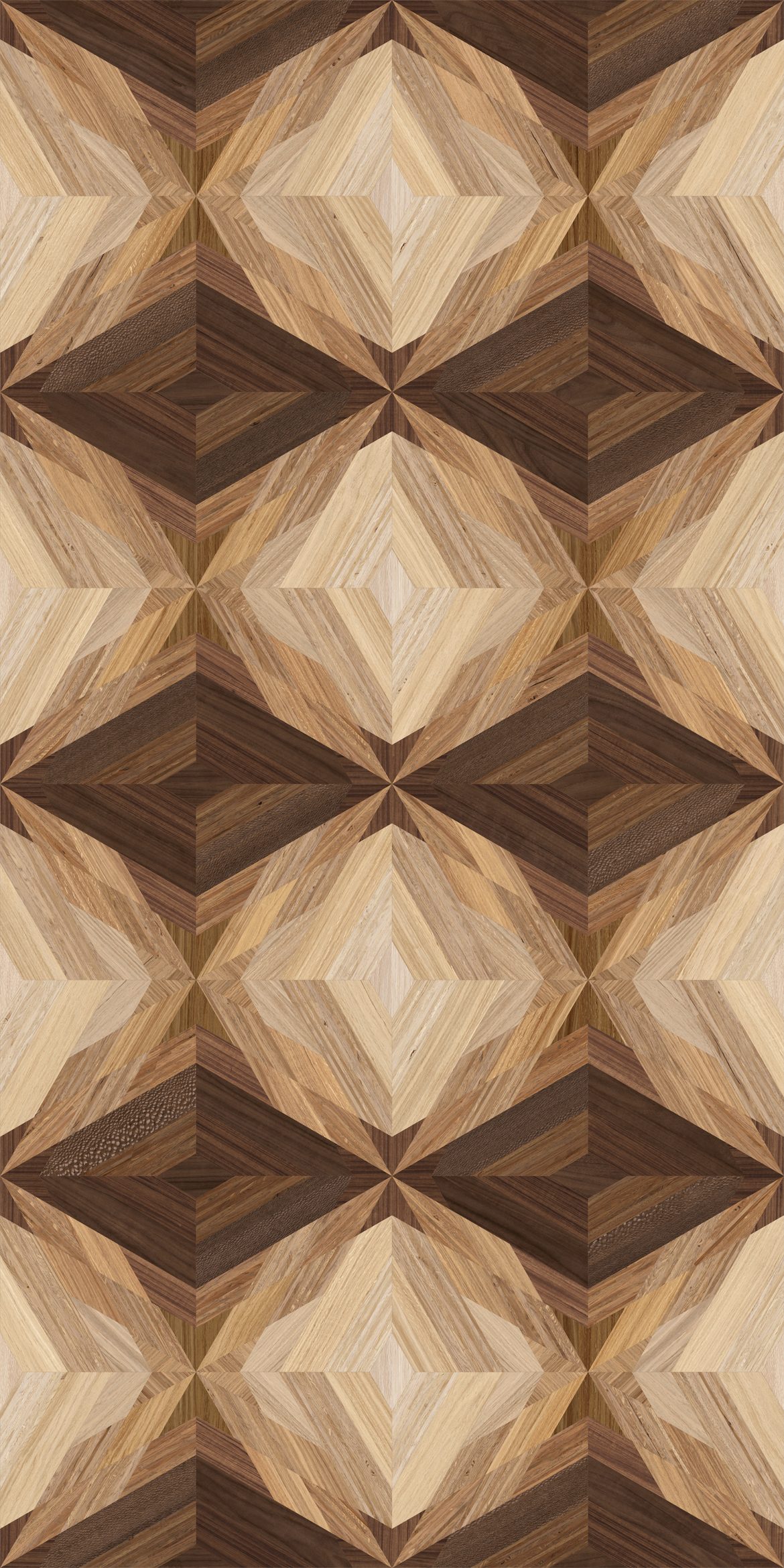
Digital Print (Crystal Gorgeous) panels use UV inkjet technology to replicate natural materials — wood grain, stone veining, fabric weave, and abstract patterns — onto a fiber cement substrate. The result is a facade that reads as timber or marble to the eye but performs as cement to the building code.
The technology solves a well-documented architectural conflict: designers want warm, natural textures on exterior facades; building codes increasingly mandate non-combustible cladding above 18 meters. Digital print fiber cement is the only product that satisfies both constraints simultaneously — the pattern layer is a UV-cured pigment (<0.3 mm thick, negligible fuel load), and the 99.7% of the panel mass beneath it is A1-rated cement composite.
Available pattern families:
- Wood grain: Oak, teak, walnut, cedar, ash — 28 variants
- Stone: Marble, granite, travertine, slate — 19 variants
- Fabric/Textile: Linen, canvas, woven textures — 12 variants
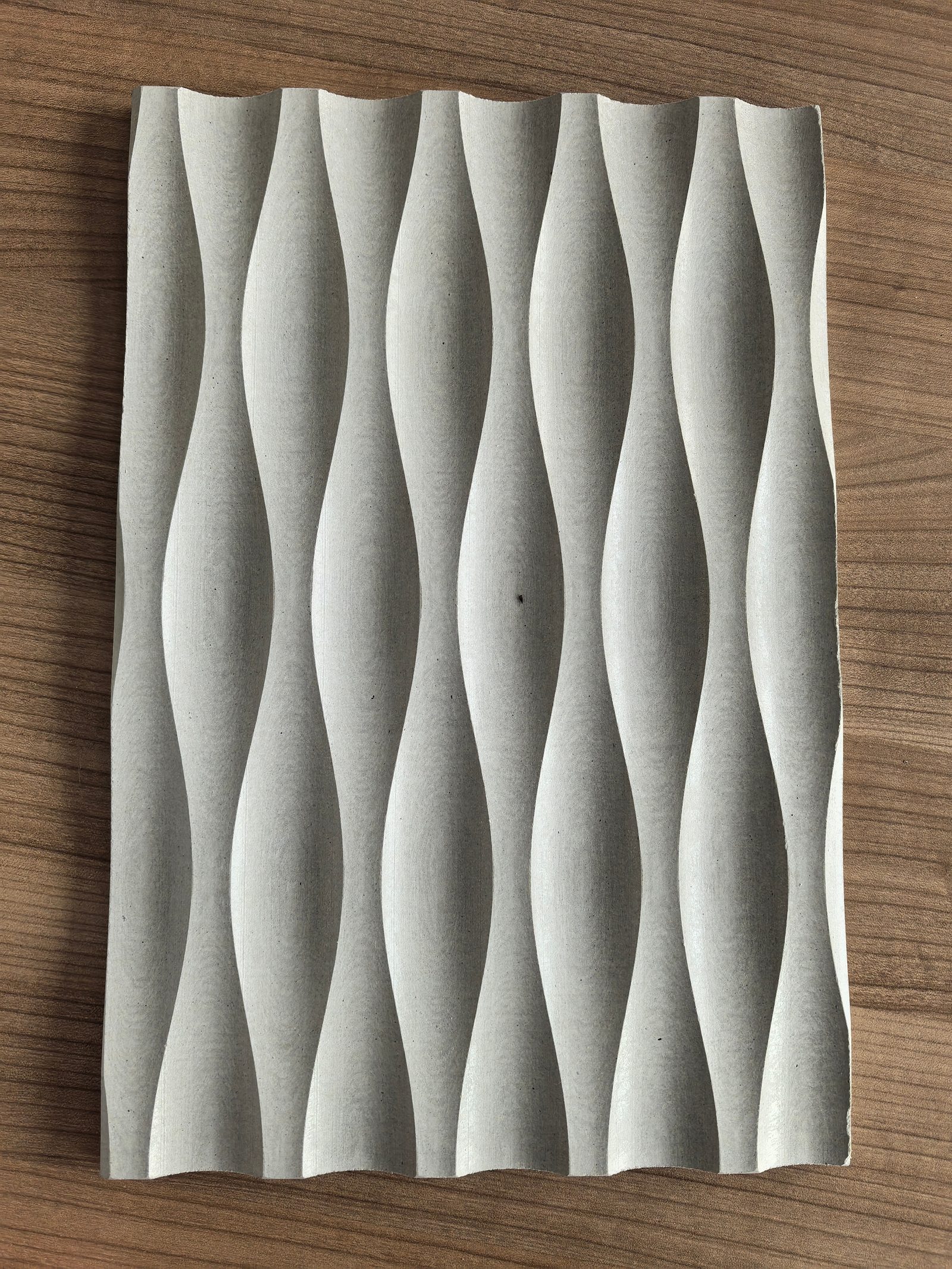
- Abstract/Geometric: Custom per architectural specification
- Metallic: Brushed steel, copper patina, corten — 8 variants
Physical properties mirror the base board: 8–12 mm standard thickness, 1.3–1.6 g/cm³ density, A2-s1,d0 fire classification. The print layer adds approximately 18–25% to the per-square-meter cost versus Crystal Coating but typically saves 40–60% versus the natural material it replaces — and eliminates the maintenance cycle entirely.
Citation Capsule: "UV digital printing on fiber cement achieves a QUV-B 313 accelerated weathering ΔE below 4.0 after 3,000 hours at panel temperatures cycling between -20 °C and 80 °C, meaning the printed pattern remains visually indistinguishable from its original reference for 15-plus years of outdoor exposure, compared to 3–5 years for painted wood grain alternatives (EN 13523-10:2024)."
Product Line 4: Through-Body — Color That Survives the Saw
Through-body (Tongfac) boards integrate mineral pigment into the full-depth cementitious mixture before forming — rather than applying color as a surface layer. A cut, chamfer, or drilled hole reveals the same color as the face, which makes edge-visible architectural details (open-joint facade systems, shadow-gap reveals, slatted screens) possible without secondary edge-painting.
This is the most technically demanding product line because the colorant must survive 170 °C autoclave curing without thermal degradation. Iron oxide pigments (red, yellow, brown, black) and cobalt-based blues are the standard palette; organic pigments are excluded because the curing temperature exceeds their decomposition point.
Table 3: Through-Body vs Coated — Edge Visibility
| Scenario | Crystal Coating / Digital Print | Through-Body |
|---|---|---|
| Butt joint, ≤3mm gap | Acceptable — edge barely visible | No difference |
| Open joint, 10–20mm gap | Edge must be painted or capped | Color matches face automatically |
| Chamfered corner detail | Reveals raw cement gray substrate | Reveals same color as face |
| Field-cut edge on-site | Exposed gray edge — requires touch-up | Exposed edge matches — no touch-up |
| CNC-routed pattern / logo | Gray substrate visible in recessed areas | Uniform color across all depth levels |
The trade-off: the color palette is smaller (8–12 mineral-pigment colors vs. 100+ digital print patterns), and the per-square-meter cost is 10–20% higher than Crystal Coating for the same thickness. The payback is on the installation side: eliminating edge-painting saves 2–4 working days and the associated scaffold/access cost on a mid-rise facade.
Through-body boards typically carry A1 fire classification (the mineral pigment is non-combustible) and are specified at 8–20 mm for exterior ventilated facade systems in European and GCC markets where open-joint aesthetics are the dominant architectural language.
Selection Matrix: Fire Rating vs Cost vs Application
Table 4: Four-Line Comparison Matrix
| Variable | Base Board | Crystal Coating | Digital Print | Through-Body |
|---|---|---|---|---|
| Fire rating | A1 | A2-s1,d0 | A2-s1,d0 | A1 |
| Density (g/cm³) | 1.2–1.6 | 1.4–1.7 | 1.3–1.6 | 1.3–1.6 |
| Standard thickness | 4.5–30 mm | 6–15 mm | 8–12 mm | 8–20 mm |
| Surface options | Raw gray only | 20+ RAL colors | 100+ patterns | 8–12 mineral colors |
| Edge match | N/A (raw) | Requires edge paint | Requires edge paint | Automatic — full-depth color |
| Relative cost index | 1.0× | 1.4× | 1.7× | 1.5× |
| Service life (exterior) | 50+ years (clad) | 15–30 years (coating-dependent) | 15+ years (print life) | 50+ years (no surface layer to fail) |
| Best application | Fire walls, tile backer, ceilings | Colored facades, interior walls | Hotel/commercial facades, feature walls | Open-joint facades, architectural reveals |
The cost index is normalized to Base Board at 1.0× and assumes 12mm thickness, full-container (20' FCL) ex-works pricing. Actual pricing varies with order volume, surface texture complexity (Digital Print), and pigment type (Through-Body).
Decision framework — ask these three questions in order:
- Does the specification require A1 non-combustible? If yes → Base Board or Through-Body. Crystal Coating and Digital Print carry A2, which is sufficient for most jurisdictions but fails the strictest fire codes (high-rise residential in UK post-Grenfell, hospitals in GCC, public assembly in EU).
- Is edge visibility a design feature? If yes → Through-Body. If the facade system uses open joints, shadow gaps, or exposed cut edges, no surface coating can solve the edge-match problem — only full-depth pigmentation works.
- Is surface texture more important than cost? If yes → Digital Print. If the project budget is the binding constraint → Crystal Coating or uncoated Base Board with on-site finishing.
Certification Stack: What to Verify Before Ordering
A specification sheet that names ASTM C1186 or EN 12467 is a starting point, not a guarantee. Third-party certification — where an accredited body audits both the product sample and the factory's ongoing quality management — is the only verifiable signal of batch-to-batch consistency.
Table 5: Certification Hierarchy for Fiber Cement Board
| Certification | Scope | Verifies | Renewal Cycle |
|---|---|---|---|
| ISO 9001:2015 | Factory QMS | Process control, traceability, corrective action | Annual surveillance, 3-year recertification |
| CE Marking (EN 12467) | Product | Fire classification, strength, moisture, durability per harmonized standard | Annual factory audit + re-testing |
| ASTM C1186 | Product | US-market physical properties per Type/Grade | Per-batch manufacturer declaration |
| GB 8624 A1 | Product | Non-combustibility per Chinese national standard | Per-production-run testing |
| SGS / Intertek / TÜV | Third-party verification | Independent confirmation of any of the above | Per-inspection engagement |
The most reliable supply arrangement is a single manufacturer holding ISO 9001 + CE + ASTM — meaning the same production line, same QMS, and same batch records serve all three certification audits. Split certifications across multiple factories introduce a verification gap: there is no guarantee that the CE-tested batch came from the same line as the ASTM-labeled shipment.
Citation Capsule: "EN 12467:2012+A1:2018 classifies fiber cement flat sheets into five categories based on bending strength and moisture movement; the most commonly specified category for exterior cladding — Category A, Class 3 — requires a minimum bending strength of 7 MPa at saturation and moisture movement ≤0.25%, values that cannot be assumed from a datasheet alone without independent third-party verification (CEN, 2018)."
For importers operating under HS Code 681182, requesting the full certification pack — ISO 9001 certificate with current validity dates, CE Declaration of Performance for the specific product line and thickness, and the most recent SGS or equivalent batch test report — before container loading is the single highest-return risk-reduction step in the entire procurement cycle.
References
- ASTM International. (2022). ASTM C1186-22: Standard Specification for Flat Fiber-Cement Sheets. West Conshohocken, PA: ASTM. https://www.astm.org/c1186-22.html
- European Committee for Standardization (CEN). (2018). EN 12467:2012+A1:2018: Fibre-cement flat sheets — Product specification and test methods. Brussels: CEN. https://standards.cencenelec.eu/
- Allied Market Research. (2025). Fiber Cement Market by Material, Application, and End-Use: Global Opportunity Analysis and Industry Forecast, 2025–2030. Portland, OR. https://www.alliedmarketresearch.com/fiber-cement-market
- Markets and Markets. (2025). Fiber Cement Market — Global Forecast to 2030. Northbrook, IL. https://www.marketsandmarkets.com/
- European Commission. (2024). Construction Products Regulation (EU) No 305/2011 — Harmonised Technical Specifications. Brussels. https://ec.europa.eu/
- Standardization Administration of China. (2006). GB 8624-2006: Classification for Burning Behavior of Building Materials and Products. Beijing: SAC. https://www.gbstandards.org/
- International Organization for Standardization. (2015). ISO 9001:2015: Quality Management Systems — Requirements. Geneva: ISO. https://www.iso.org/standard/62085.html
- European Committee for Standardization (CEN). (2024). EN 13523-10:2024: Coil coated metals — Test methods — Resistance to fluorescent UV radiation and water condensation. Brussels: CEN. https://standards.cencenelec.eu/
- Sorensen Construction Services. (2025). What Makes Fiber Cement Board a Top Choice for Modern Builds. https://sorensenconstructionservices.com/
Last reviewed and updated: August 2026. Author: Zhongjing Building Materials Technical Team. For product specifications, certifications, and container-quantity pricing across all four product lines — HS Code 681182 — contact [email protected].