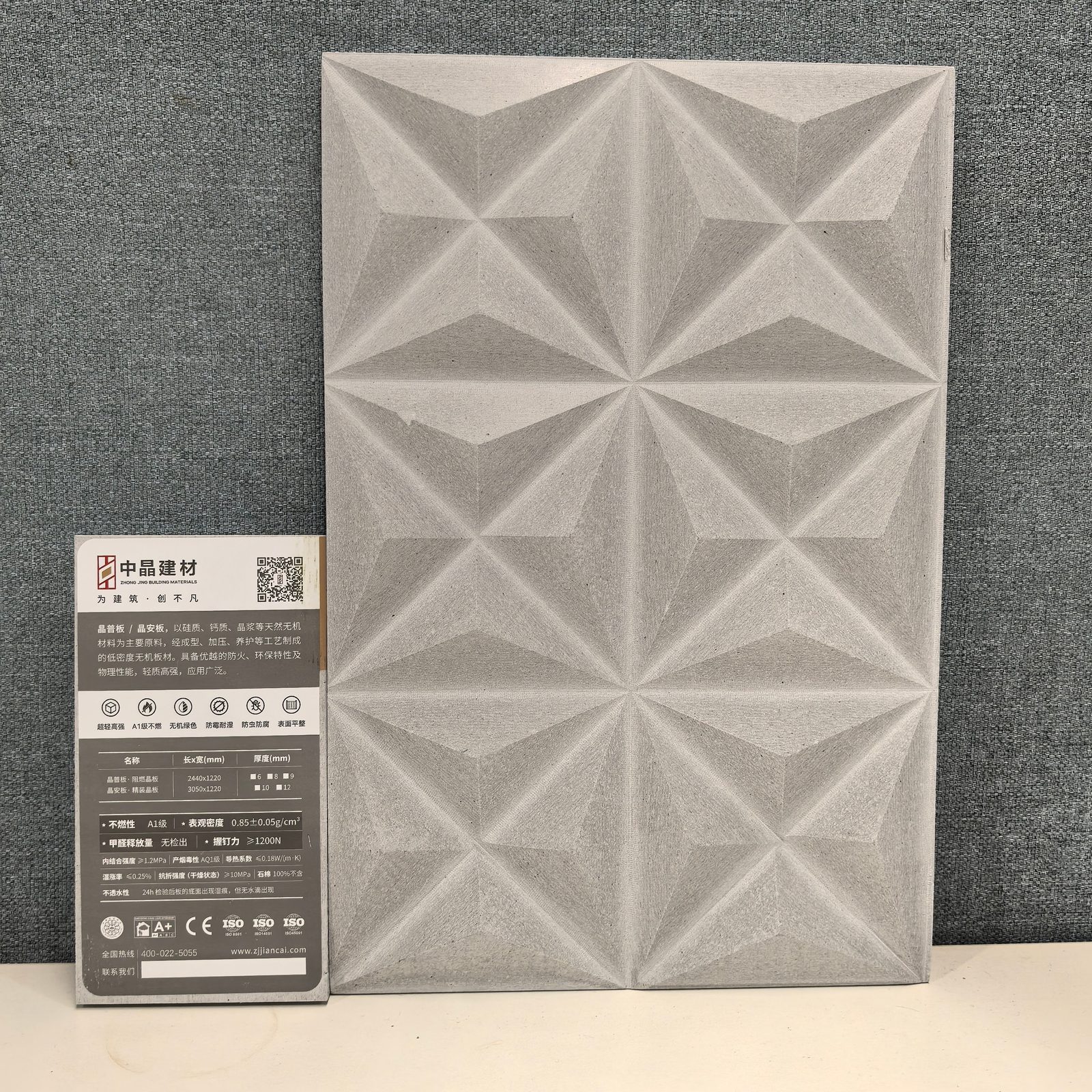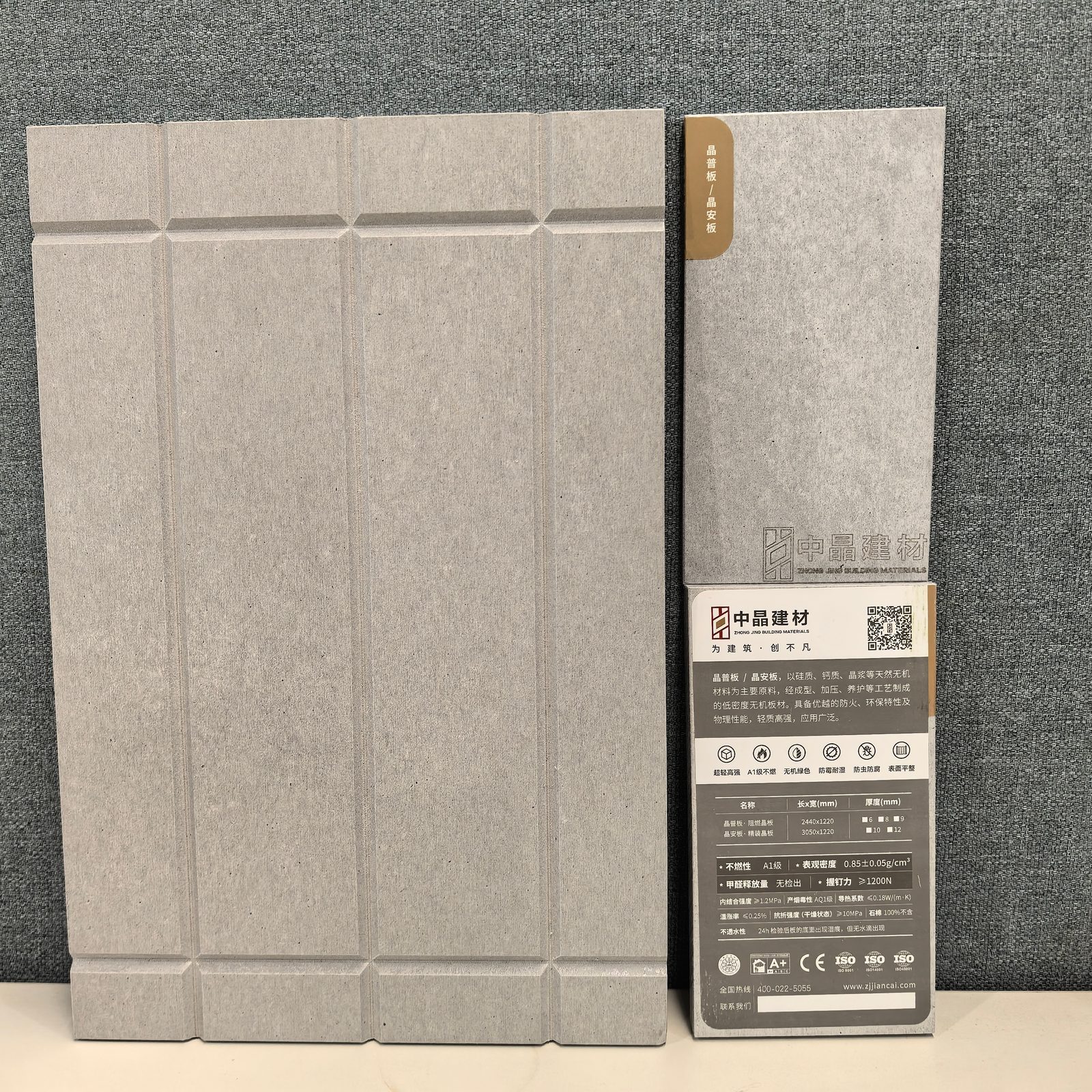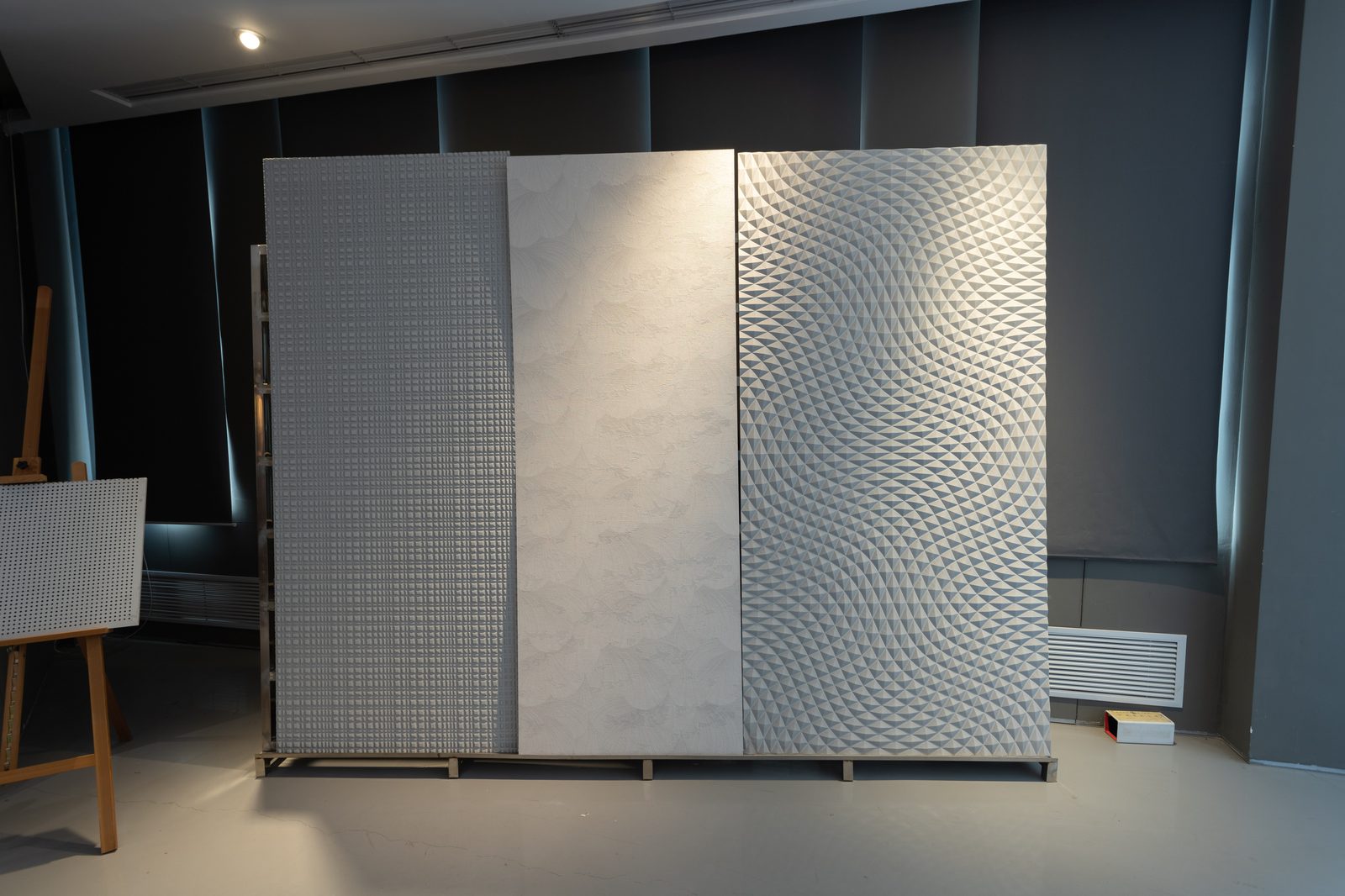
The sheet price is one number. The maintenance regime it implies over twenty years is another — and it is the second one that decides whether a cladding is cheap or expensive to own.
A fiber cement board facade is a low-maintenance assembly, not a no-maintenance one, and the maintenance it needs sits in four places: the face, the joints, the sealant and the trims at edges and openings. Get those right and the sheet sits there doing nothing, which is what an inorganic board is good at. Get them wrong and the facade needs attention long before anything has worn out.
What Ages, and What Does Not
A fibre cement sheet is a mineral composite: cement, ground silica and cellulose fibre, formed, pressed and cured under steam pressure. There is no food source in it for mould, no resin to off-gas, no paper face to burn, and no mechanism by which it rots. In a drained, back-ventilated assembly the board is the least demanding component on the wall — which is why a maintenance conversation should start by naming everything that is not the board.
| Component | Ages? | Maintenance it implies |
|---|---|---|
| Board body | Effectively inert | Washing to remove soiling; nothing else |
| Factory coating or print | Yes — UV, chalking, colour shift | Recoat, typically 10–15 years; shorter on a dark sun-facing elevation |
| Joint sealant | Yes — shortest-lived item on the wall | Inspect at year 1 and year 5; replace when bond-line adhesion fails |
| Trims, flashings, fixings | Slowly | Check cut edges and fastener heads for corrosion |
| Cavity and drainage path | Not if designed correctly | Clear blocked vents, insect mesh and outlets |
Most facade complaints that reach a factory trace back to rows three to five, not row one. That is worth saying plainly, because it changes what you specify and what you promise a client.
Cleaning: Once or Twice a Year Is Enough
Washing removes the two things that change how a facade looks: atmospheric soiling and biological growth. The method is deliberately unremarkable:
- Low-pressure water. Below roughly 50 bar, at least 300 mm from the face, wide fan. A pencil jet on one spot will mark a coated panel and can drive water past a sealant.
- Neutral pH detergent, diluted as the label says. Work bottom-up in bands, rinse top-down.
- A soft brush or low-pressure rotary head for ingrained dirt. No abrasive pad, no wire brush, no scouring powder on a coated or printed face.
- A final fresh-water rinse of glazing, flashings and sills, because run-off carries the soil you just lifted.
- Patch-test on a decorative board. A print or factory coating is a thin layer, and a solvent cleaner chosen for concrete can dull it permanently.
What not to do, in order of how often it is done: acid washing, which attacks the cement matrix and the coating; strong alkaline degreasers on a factory-coated surface; high-pressure jets aimed at joints; and steam cleaners, which can lift a film coating at the edges.
The Stains You Will Actually Meet
- Green algae on north elevations, under overhangs and in shaded courtyards. It is damp plus shade plus dirt: wash it, then correct the detail that keeps the zone wet — a shallow overhang, a blocked outlet, a ledge that holds water.
- Efflorescence, a white salt bloom, more common at cut edges and near the base than on a sealed coated face. Dry-brush, wash, and do not acid-wash.
- Rust bleeding below a fixing or from cutting swarf left on the face. The stain is the fastener, not the board: replace it with the specified stainless grade and clean the panel.
- Graffiti. On a coated or printed decorative board, remove promptly with a proprietary remover. On an uncoated sanded face, removal is mechanical and may mean recoating that panel.
Joints, Sealant and Edges: Where Maintenance Happens
The board will outlive the sealant by an order of magnitude. A facade carries hundreds of metres of joint, and that joint is the only part of the wall asked to move — thermal movement, wind deflection, frame shrinkage — while staying watertight. Three rules separate a joint that lasts from one re-done at year four:
- Do not let the sealant be the waterproofing. A drained, back-ventilated cavity with a baffle or flashing takes the bulk water away; the sealant handles the residue.
- Size the joint for the movement you expect, not for the thinnest shadow line that looks sharp on a render.
- Use a backer rod and a bond breaker. Three-sided adhesion is the most common reason a facade joint fails early, and it is invisible until it does.
Edges are the other half of the story. A cut edge is the most vulnerable part of any cement-based sheet: uncoated, exposed and able to wick. Trims at corners, reveals and openings should cover the cut, not butt against it — the same applies to the head and sill of every opening.
Does It Need Sealing? Usually Not
One persistent myth is that a cement-based board must be sealed to stay waterproof. It does not. Sealing is a decision about appearance and cleanability, and on some surfaces it is actively the wrong move.
- Uncoated sanded face: an optional penetrating water repellent reduces dirt pick-up and eases washing. It does not change the fire classification, and it needs re-application.
- Factory-coated or printed decorative board: on a pre-finished wall panel the coating already seals. A film-forming acrylic on top can blister, craze or trap moisture, and it ends any conversation about the original finish.
- Never seal a joint to hide a bad detail. Sealant over a wet cavity or a missing flashing buys one season.
Where a treatment is required, specify penetrating siloxane or silane rather than a film, and obtain the coating supplier's compatibility statement. Our factory-coated board is supplied as a finished face for exactly this reason, and the technical data sheets say what may be applied over it.
Recoating a Coated or Printed Facade
Colour is the first thing to age visibly, and it ages unevenly: a sun-facing elevation and a sheltered one will not match at year twelve, whatever the specification said. Before a recoat, wash the elevation, run a tape test on a small area, prime a chalked surface, then apply the specified system. Recoating over chalk without a primer is how a fifteen-year cycle becomes a five-year one.
Dark colours deserve the warning at design stage rather than at year ten: higher surface temperature accelerates binder degradation, so the appearance cycle on a black or deep-bronze decorative board is shorter than on a light stone-effect panel. That is a specification decision, not a maintenance failure. Where a print carries a fine pattern, keep a signed master sample so a future replacement panel can be matched.
The Inspection Schedule
| When | What to check | What to do |
|---|---|---|
| 6 months after handover | Sealant adhesion at the bond line, outlets clear, water tracking below joints | Snag list to the installer while the defects period is live |
| Year 1 | Walk-round of every elevation, photographed | Set the baseline; correct any movement-related joint failure |
| Year 3 | Sealant elasticity, fixing corrosion, trim fixings | Spot re-seal; replace corroded fasteners |
| Year 5 | Sealant on the most exposed elevations | Planned re-seal rather than a leak call-out |
| Year 10–15 | Coating appearance, chalking, colour shift | Full recoat with the specified system |
Photograph each elevation from the same two or three positions every time. A facade problem is a rate of change, and a dated photo history is the only reliable way to see one forming — it is also the document that settles a warranty conversation.
What Actually Shortens a Facade's Life
In site reports the failures are rarely the sheet:
- Ground contact — a board brought down to soil or paving level wicks and never dries.
- A cavity that is not drained or ventilated, or vents blocked by the next trade.
- Sealant doing the waterproofing alone, with no flashing or baffle behind the joint.
- Wrong fastener grade, or cut edges left uncoated in a coastal atmosphere.
- Coating applied outside the supplier's temperature and humidity window — a programming problem, not a product problem.
- Repairs with the wrong filler, which telegraphs through the finish within a season.
None of these is a board failure. All are design or workmanship failures, and all are cheaper to avoid than to correct. Our facade cladding guide covers the build-up; the thickness guide covers the part of the specification most often shortened.
How Long Does It Actually Last?
No single honest number exists for the sheet, because service life belongs to the assembly, the climate and the regime together. What can be stated as product fact is what the board brings to the wall: A1 non-combustible to GB 8624 with AQ1 smoke toxicity, wet expansion of 0.25% or less and dry shrinkage of 0.15% or less, flexural strength of at least 10 MPa, screw holding of at least 1200 N, and 100 freeze-thaw cycles after which at least 80% of flexural strength is retained, at 0.65 to 0.85 g/cm³. Those numbers decide whether a panel stays flat, tight and in line for twenty years.
The assembly decides the rest. A well-detailed fiber cement board rainscreen with a factory-coated face, stainless fixings and correctly sized joints is a twenty-year cost story most clients have never been shown — usually shorter than repainting the render it replaced. Where the wall is also a fire barrier, sealant and fixing schedules must match the tested system, as the partition systems guide sets out. Used as an interior wall panel behind a wet area, the logic repeats: the panel is inert, the joints and the coating carry the maintenance.
A maintenance file worth handing over
- Elevation drawings marked with joint layout and sealant type
- The coating system, batch and signed master sample
- Fixing grade and fastener schedule
- Dated photographs of each elevation from fixed positions
- The inspection dates above, written into the O&M manual
- Cutting and edge-treatment instructions for future repairs
A facade does not fail because the board wore out. It fails because a joint was asked to do a flashing's job, or because nobody looked at it for ten years. Both are avoidable, and neither is expensive to avoid.
Frequently Asked Questions
How often should an exterior fiber cement board facade be cleaned?
Once a year on an exposed elevation in a temperate climate, twice in a humid, coastal or high-pollution market. Low-pressure water and a neutral detergent are enough: the aim is to remove soiling before it becomes a habitat for algae, and to see the joints clearly enough to inspect them.
Does a fiber cement board have to be sealed or painted?
No. An inorganic board is not a porous cladding in the way timber is, and it does not need a sealer to keep water out. Sealing is an appearance and cleanability decision. On a factory-coated or printed decorative board the finish already performs that role, and a film-forming product on top creates a second, possibly incompatible layer. If a treatment is required, specify a penetrating siloxane or silane and get the coating supplier's compatibility statement in writing.
When does the joint sealant need replacing?
Inspect at year one and year five, and plan the replacement rather than waiting for a leak. A good facade sealant on a correctly sized joint is typically quoted at ten to fifteen years in a temperate climate, less on an elevation with full sun and large thermal swings. Adhesion at the bond line fails before the sealant body does, and a missing bond breaker is the usual cause.
Can a fiber cement facade be pressure washed?
Yes, with a wide fan jet at least 300 mm from the face and pressure below roughly 50 bar. Never use a pencil jet on one spot, never drive water into a joint, and never acid-wash or use a strong alkaline degreaser on a factory-coated surface. On a printed decorative board, test any new cleaner on a concealed panel first.
Is calcium silicate board better than fiber cement board for an exterior wall?
They are the same family of mineral composite, so it is a density and specification question. A standard fiber cement board at 0.65 to 0.85 g/cm3 suits a drained, back-ventilated rainscreen; a denser calcium silicate board is often specified where the wall panel also carries a fire rating, a heavier finish or a more severe exposure. Compare the density, flexural strength, wet expansion and fire class on the Declaration of Performance, not the product names.
The Bottom Line
An exterior fiber cement board wall is one of the few claddings a buildings team can maintain with a hose, a neutral detergent and a ladder: wash once or twice a year, look at the joints every spring, plan a re-seal around year five and a recoat after year ten. A denser calcium silicate board behaves the same way with more mass behind it. Specify the assembly properly, hand over the maintenance file, and the facade stops being a budget line. For the products behind it — Crystal Board, the decorative board range and the full product family — start there, or send us an elevation and we will detail the wall with you.