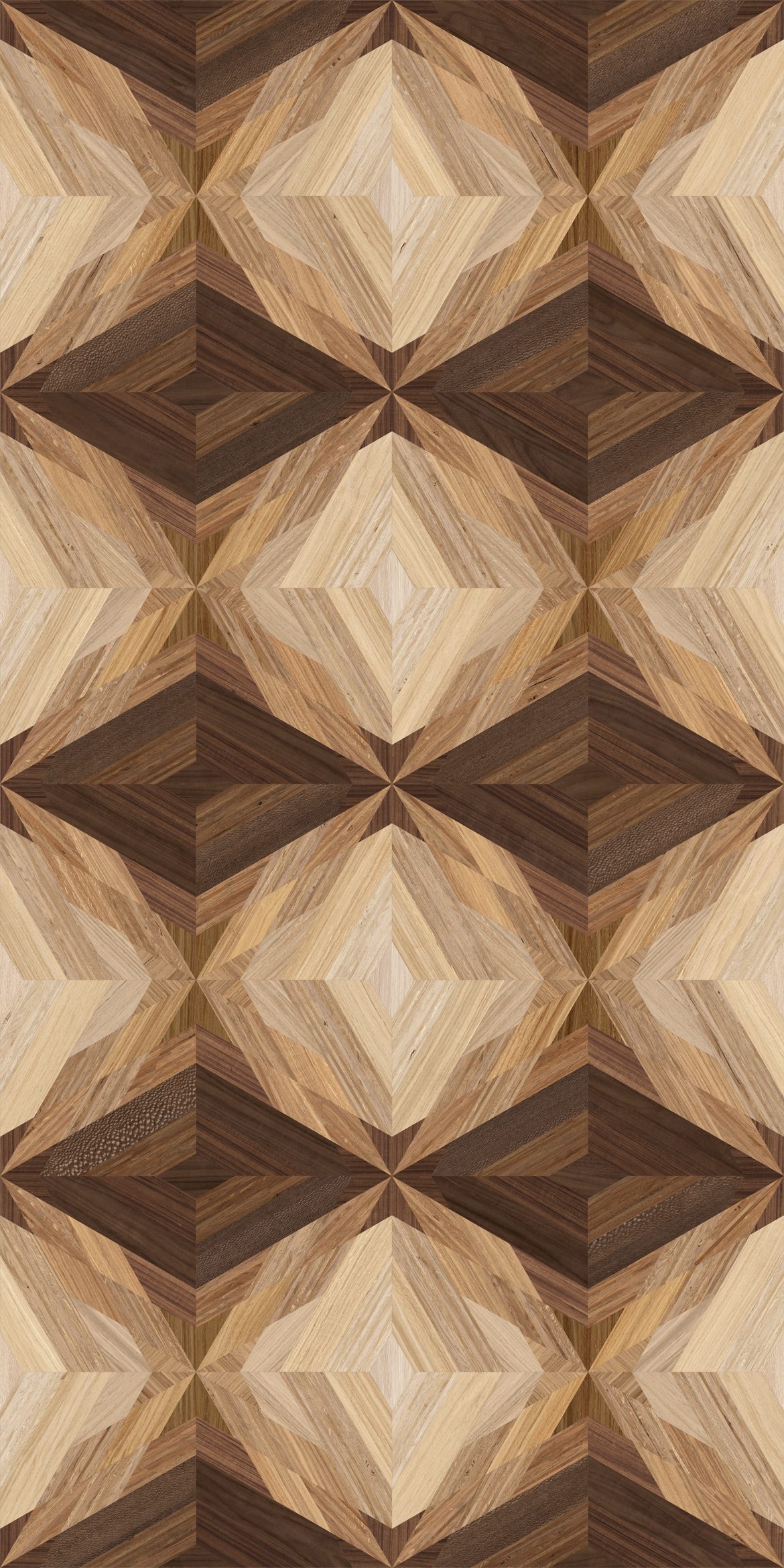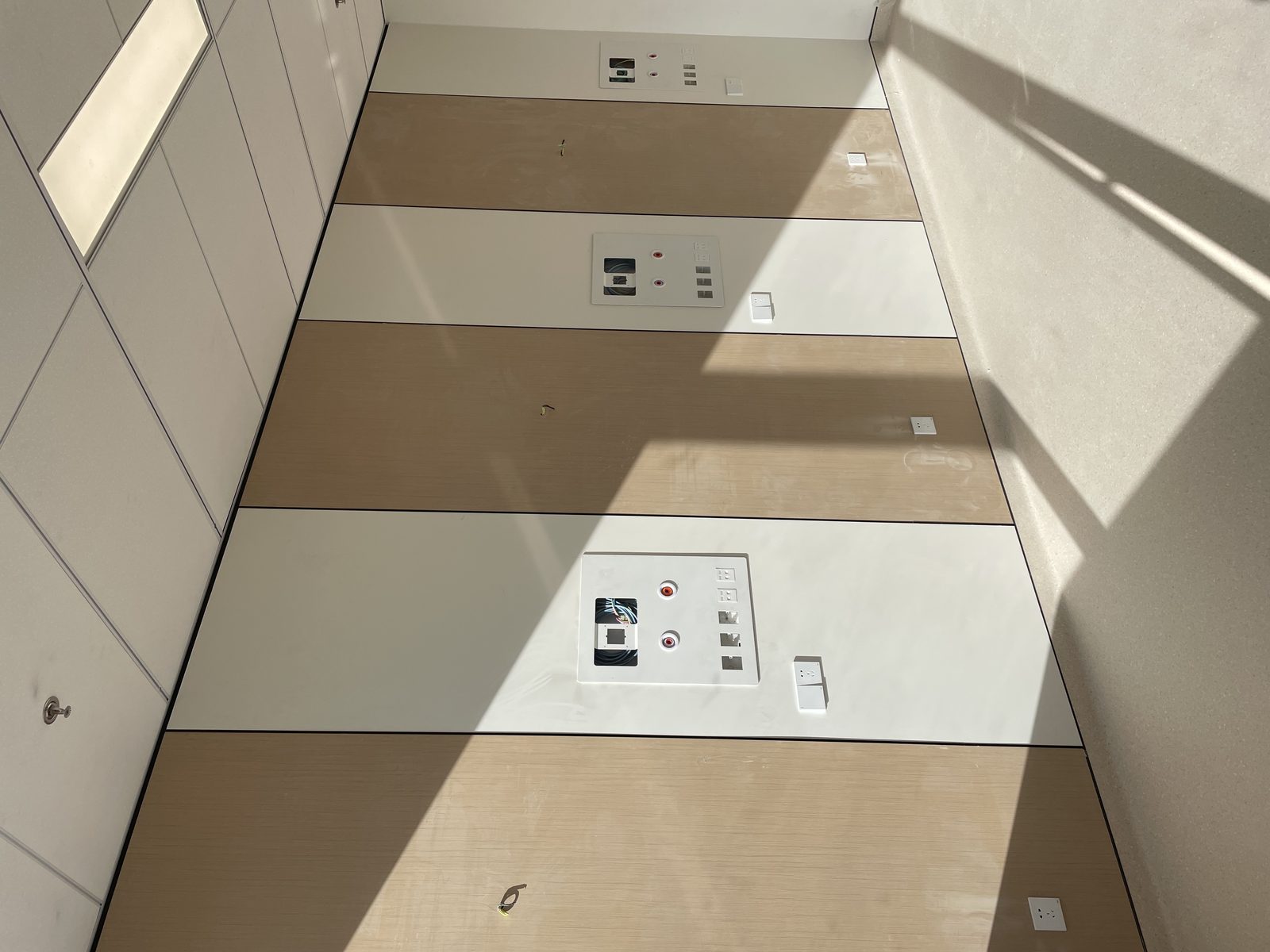
A living room or bedroom is read wall first. The surface behind the sofa or the bed is what the room is remembered by — which is why the decorative wall panel has moved out of hotel lobbies and into ordinary homes. But the panel that looks right in a showroom and the panel that still looks right in five years are not the same product. The difference is rarely the print; it is the core.
A decorative panel is a composite: an inorganic fiber cement board or calcium silicate board carrying a factory finish. This guide covers which finish for a living room, what works behind a bed, and the thickness, fire and jointing facts that matter.
What a Decorative Wall Panel Actually Is
Four finishes do most of the interior work, and each fails in a different way:
| Finish | Look | Best wall | Typical board |
|---|---|---|---|
| Digital print | Marble and wood grain, photographic | TV backdrop, lobby feature | 4–10 mm printed board |
| UV coating | Flat colour, low sheen | Full rooms, wardrobe fronts | 4–12 mm coated board |
| Carved relief | Shadow and depth | Headboard, reception | 8–12 mm carved board |
| Through-body pigment | Colour in the mass | High traffic, wet accents | 8–12 mm |
Under every one sits a mineral core. That core is why a decorative wall panel in a bedroom is not a wood laminate: it holds its dimensions in a humid room, gives mould nothing to feed on, and adds no fuel to a fire. For the printed range, see Crystal Gorgeous Board.
Living Room: Plan the Wall, Then Pick the Pattern
Most decorative walls fail on proportion, not colour. Three rules do most of the work:
- One feature wall per room. Two patterned walls compete, and both read smaller.
- Full height, or a defined datum. A panel stopping 200 mm short of the ceiling looks like an error.
- Let the sheet module drive the layout. A 1220 × 2440 mm sheet is a design grid: 2.4 m covers a standard wall in one drop, and the seam can be a deliberate reveal.
For a TV backdrop, a book-matched marble print mirrors two panels on the centre line so the wall reads as one slab and the joint hides in the pattern. Matte where light rakes across, gloss only for reflection.
Bedroom: Texture, Quiet and Air
Bedrooms ask for the opposite of a lobby: a large pattern is tiring at 30 cm from a pillow, so the wall needs calm texture, low glare and a solid feel.
- Headboard wall. Panel to 1,000–1,200 mm with a shadow gap at the top, so it reads as a datum rather than a leftover.
- Tactile finishes. Fine wood grain, linen-effect print or a shallow carved relief catches evening light without glare.
- Fixing capacity. At least 1,200 N of screw holding lets reading lights and shelves anchor into the panel, not into a hunt for studs.
- Air quality. Small rooms concentrate everything: ENF core, formaldehyde not detected, TVOC at or below 0.06 mg/m³.
Wardrobe fronts and bedside niches take the same board, keeping one material language; the pre-coated board range covers the flat-colour version.
Thickness and Weight: Match the Board to the Wall
There is no single correct thickness. The wall decides:
| Board | Where it works | Fixing |
|---|---|---|
| 4–6 mm | Feature walls, wardrobe fronts, over flat plaster | Adhesive plus light mechanical fixing |
| 6–8 mm | Full-height walls, ceilings, niches | Adhesive plus screws to batten or frame |
| 8–12 mm | Partitions, wet-area walls, heavy-duty interiors | Steel studs at specified centres |
Weight is the argument for thin panels in renovation. A 6 mm sheet at 1220 × 2440 mm is around 18 kg and one person can place it, and low-density crystal board sits at 0.65–0.85 g/cm³ — roughly 30% lighter than a standard fiber cement board of the same thickness. That is why a decorative wall can go over an existing finish without re-engineering the wall behind it.
Fire, Moisture and the Numbers Specifiers Ask For
Decorative boards are bought for looks and defended on paperwork. The figures that matter:
- Reaction to fire. Mineral cores, whether fiber cement board or calcium silicate board, are A1 non-combustible: no melting or dripping at 1,000 °C, smoke toxicity AQ1.
- Rated systems. A calcium silicate board at 8 mm on 75 mm steel studs with mineral wool reaches 1 hour, 9 mm reaches 2 hours, 12 mm reaches 3 hours.
- Dimensional stability. Wet expansion at or below 0.25% and dry shrinkage at or below 0.15% keep a 2.4 m wall within 6 mm across the seasons, so a detailed joint stays tight.
- Moisture. 30 days of immersion without delamination or mould growth; an inorganic surface has nothing for mould to feed on.
- Indoor air. Formaldehyde not detected (ENF), TVOC at or below 0.06 mg/m³, French A+ and CE (see the zero-formaldehyde board article).
Joints and Edges: Where the Money Shows
A decorative wall is judged at its joints, not its middle.
- Butt joint with a 2–3 mm painted gap reads as a deliberate line and tolerates small movement.
- V-groove or chamfer gives a shadow line; on a carved board, follow the relief so the joint disappears into the pattern.
- Shadow gap at ceiling and floor, 8–10 mm and left ungrouted, makes the wall float and absorbs perimeter movement.
- Cut edges are the only unfinished surface: touch them up before fixing, and order matching edge paint with the panels.
Never skim a decorative board: plastering defeats the point of a factory finish. The cutting sequence is in how to cut fiber cement board.
Carved Panels: Depth That Needs Light
Carved board changes with the hour, because shallow relief only reads when light rakes across it. Plan the lighting with the panel: a grazing wall-washer set 300 mm from the face makes a 3 mm relief visible, while a central downlight flattens it. Carving happens in the factory, so the pattern repeats panel to panel — which matters on a 6 m wall. On site the decorative board fixes like any other panel, and the face arrives finished: no plaster, no paint.
Fixing Over an Existing Wall
Most decorative wall projects are renovations, and most existing walls are not flat.
- Flat and sound: direct adhesive with a mechanical fixing at the head, following the open time.
- Out of tolerance: a batten or light steel frame takes out the deviation and gives a void for cables.
- Never bond to a damp, dusty or flaking substrate; the panel will telegraph every defect underneath.
- A finish, not a structural upgrade: it adds little load, and does not replace repairing the wall.
For the full wall build-up see how to install fiber cement board; for the substrate behind the panel, cement board vs drywall vs plywood.
FAQ: Decorative Wall Panels Indoors
Which decorative wall panel is best for a living room?
A 4–6 mm digital-print panel in book-matched marble or wide wood grain gives the most impact for the least weight and bonds straight to a flat wall. Matte where light rakes across, gloss only for reflection. Check the core: an A1 non-combustible core is what keeps the wall stable.
Can decorative wall panels be used behind a bed?
Yes, and it is one of the best uses for them. Panel the headboard wall to around 1,000–1,200 mm with a shadow gap at the top. Choose a fine texture and low-glare finish: a large pattern is tiring close up and gloss shows fingerprints.
Do decorative wall panels need plastering or painting?
No. The panel arrives factory-finished: no skim coat, no filler, no painting, no drying time before the room is used. Only the cut edge is unfinished, so touch that up before fixing.
Are fiber cement decorative panels safe in a fire?
The mineral core is A1 non-combustible and does not melt or drip at 1,000 °C, with smoke toxicity rated AQ1; printed boards on the same base are A2 with CE marking, so the panel adds no fuel load beside a bed.
Can decorative wall panels go over existing plaster or tiles?
Over sound, flat plaster, yes: direct adhesive plus a mechanical fixing at the head. Over tiles or an out-of-true wall, a batten or light steel frame takes out the deviation and gives a void for cables. Never bond to a damp or flaking substrate.
Related Reading
- Crystal Gorgeous Board: Stone & Wood, Reimagined — the printed panel in detail.
- Crystal Board: The Ultra-Lightweight Fiber Cement Board — the 0.85 g/cm³ core.
- Thickness Guide: 6 mm to 25 mm — which board for which wall.
- How to Cut Fiber Cement Board — clean edges before the panel goes up.
- Moisture-Resistant Ceiling Board — the surface overhead.
- Fire-Rated Partition Walls — what happens behind the finish.
Pick the pattern in an afternoon. Pick the core once — and it decides how the wall looks in year five, when the print is no longer the thing anyone is looking at.