Abstract
The ceiling is the one surface in a building expected to stay flat, stay clean, and stay put for decades — yet it is often the first to fail in humid conditions. In kitchens, bathrooms, corridors above wet rooms, basements, and coastal regions, ordinary ceiling boards soften, sag, stain, and crack. This guide explains what a moisture resistant ceiling board must deliver — non-combustibility, low moisture movement, mold resistance, and dimensional stability — and how low-density fiber cement board meets each requirement under EN, ASTM, and GB test standards.
Key Takeaways
- A true moisture resistant ceiling board is A1 non-combustible — it does not burn, melt, or emit smoke under fire, which matters most in escape routes and plant rooms above occupied space
- Moisture movement under 0.25% keeps a ceiling flat — boards that expand when wet produce cracked joints and sagging panels in humid climates
- An inorganic surface cannot feed mold — mold needs an organic nutrient like paper facing; a cement-and-fiber board provides none
- Low density is a feature, not a compromise — 0.65–0.85 g/cm³ keeps the board light enough for one-person handling while retaining ≥10 MPa bending strength
- Zero-added formaldehyde suits occupied buildings — schools, hospitals, and hotels increasingly specify ENF-grade boards for indoor air quality
Why Ceilings Fail in Humid Conditions
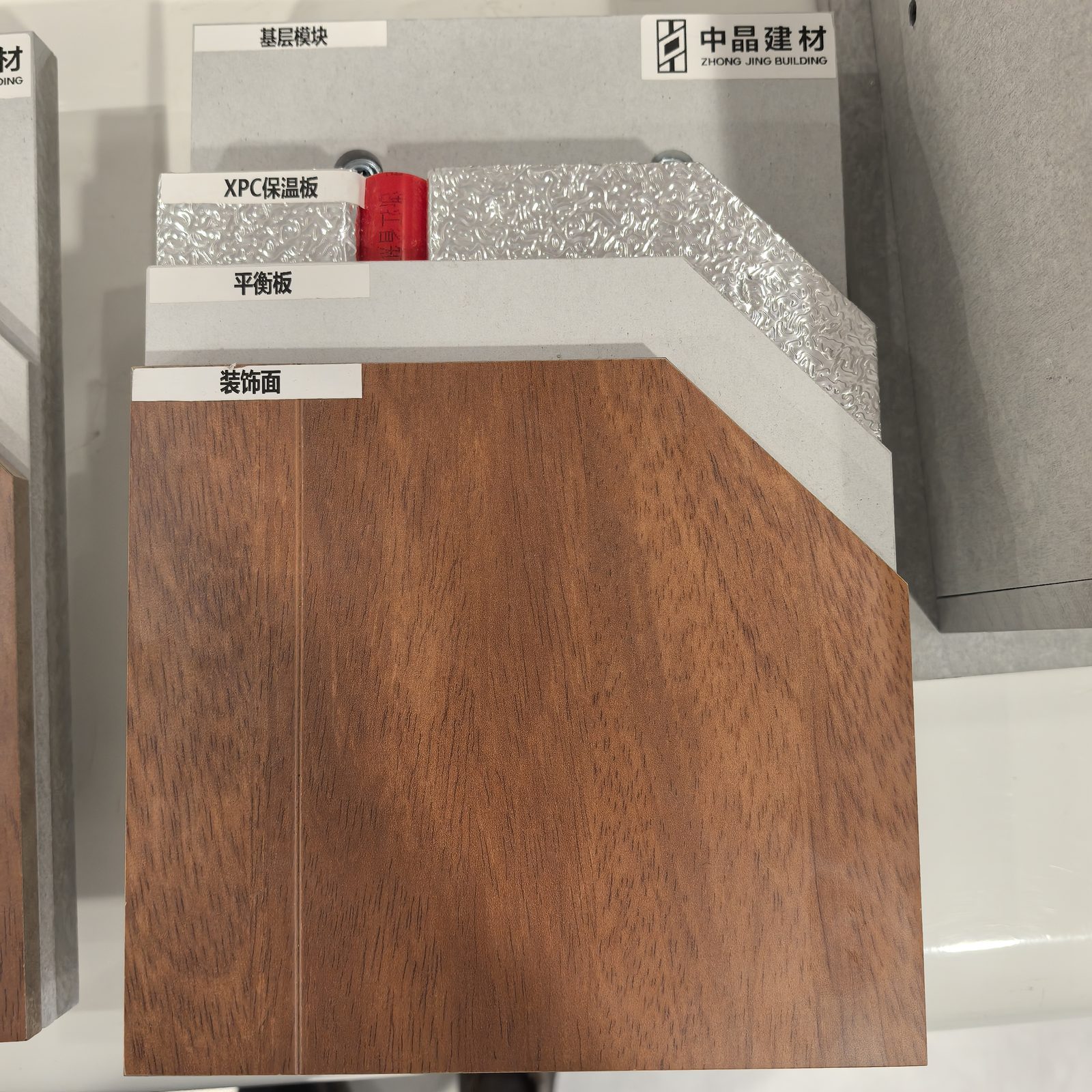
Every material has a failure mode. Paper-faced gypsum board absorbs moisture from humid air; the facing wets, the core softens, and the board sags between supports before it visibly stains. Mineral fiber ceiling tiles rely on organic binders that can age, droop, and shed particles in service. A moisture resistant ceiling board built from autoclaved cement and fiber addresses fire, moisture, and stability in one substrate — which is why it is increasingly the default in high-humidity and fire-rated ceiling specification.
The 6 Tests a Moisture Resistant Ceiling Board Must Pass
1. Fire: A1 Non-Combustible
Low-density fiber cement board is classified non-combustible to EN 13501-1 Class A1 or A2-s1,d0 and GB 8624 Class A1. At 1000°C it does not burn, melt, or drip, and smoke toxicity is rated AQ1 (safe level). Fire resistance depends on assembly: an 8mm board on a 75mm steel stud with rock wool reaches 1 hour, 9mm reaches 2 hours, and 12mm reaches 3 hours. For escape corridors and plant rooms, this difference is code-relevant, not cosmetic.
2. Moisture Movement: ≤0.25%
Moisture movement is the number that predicts whether a ceiling stays flat. Low-density fiber cement board holds wet expansion at or below 0.25% and drying shrinkage at or below 0.15% (ASTM C1186 Type A methodology). Gypsum board under the same sustained humidity loses structural integrity; the cement board does not. That 0.25% differential is the difference between a hairline joint and a visible crack line.
3. Mold Resistance: Inorganic Substrate
Mold needs three things: moisture, warmth, and an organic food source. Fiber cement board supplies none of the third — the surface is an alkaline cement matrix with no paper, no wood fiber, and no starch-based binder. Boards submerged in water for 30 days show no delamination or mold colonization. This is the property that keeps kitchen and bathroom ceilings clean without chemical treatment, and it is why the same board family is used for bathroom and kitchen waterproof walls.
4. Dimensional Stability: No Sag, No Cracks
Suspended ceilings fail in two visible ways: panels sag between supports, and joints crack along board edges. Both are creep and moisture problems. Fiber cement board has high modulus of elasticity and low creep under self-weight, so a large-format flat ceiling stays flat through temperature and humidity cycles. Joints, once taped and filled, do not re-open — the substrate does not move underneath them.
5. Weight and Handling: One-Person Lifting
At 0.65–0.85 g/cm³, low-density fiber cement board is roughly 30% lighter than ordinary fiber cement board. A 6mm sheet weighs about 18 kg — light enough for a single installer to lift into place, keeping productivity high and reducing load on the ceiling framing. Bending strength remains at or above 10 MPa, and screw-holding force is at least 1200 N, so a single fastener supports 15–20 kg of fixture load.
6. Indoor Air: Zero-Added Formaldehyde
The board contains no wood and no adhesive binder, so there is no added formaldehyde, benzene, or heavy metals. Formaldehyde emission is rated ENF grade (undetectable), TVOC is below 0.06 mg/m³, and the product carries France A+ and CE certification — a decisive advantage for schools, hospitals, and hotels that specify indoor air quality.
Ceiling Board Comparison at a Glance
| Property | Low-Density Fiber Cement | Paper-Faced Gypsum | Mineral Fiber Tile | PVC / Aluminum |
|---|---|---|---|---|
| Reaction to fire | A1 / A2-s1,d0 non-combustible | Paper facing burns | Char above high temperature | Melts / limited rating |
| Moisture movement | ≤0.25% | Softens and sags when wet | Binder can degrade | Water-tight surface |
| Mold growth | None (inorganic) | Paper is a nutrient | Dependent on coating | Surface only |
| Seamless flat ceiling | Yes | Yes | Panel joints visible | Panel joints visible |
| Long-term flatness | High, low creep | Sags in humidity | Can droop with age | Stable but jointed |
| Indoor air | ENF / France A+ / CE | Generally low emission | Binder-dependent | PVC plastic content |
This is not a claim that one board is universally better. It is a statement of fit: where fire rating and long-term moisture resistance are both required — the corridor, the plant room ceiling, the coastal apartment — fiber cement is the right answer.
Where to Specify It
- Kitchen and bathroom dry zones — the ceiling above steam, splashes, and humidity cycles
- Corridors and stairwells in high-rise buildings — escape routes need non-combustible surfaces
- Basement ceilings — below-grade humidity with no natural ventilation
- Plant rooms and mechanical shafts — fire compartmentation around services
- Coastal and high-humidity regions — Southeast Asia, Gulf, and island markets where mold is the default failure
- Hospitals and schools — indoor air quality and impact resistance in occupied spaces
For broader guidance on choosing among product lines, see the fiber cement board selection guide, and for fire performance details, the certification guide explains how A1, A2, CE, and ENF are actually tested. Installation practice for ceiling and wall applications is covered step by step in the installation guide.
Frequently Asked Questions
Can moisture resistant ceiling board be used in bathrooms?
Yes. Low-density fiber cement board with moisture movement of 0.25% or less suits bathroom dry zones, kitchens, and corridors above wet rooms. It does not soften or delaminate in humidity, and its inorganic surface provides no nutrient for mold. For continuously wetted areas such as shower enclosures, a high-density or calcium silicate board is the more conservative specification.
Is fiber cement ceiling board fire rated?
Yes. It is classified non-combustible per EN 13501-1 Class A1 (or A2-s1,d0) and GB 8624 A1 — it does not burn, melt, or drip at 1000°C. Fire resistance of 0.5 to 3 hours can be achieved depending on board thickness and assembly.
Does moisture resistant ceiling board contain formaldehyde?
No. It is an inorganic cement-and-fiber composite cured by autoclaving, with no wood, no adhesive binder, and no added formaldehyde, benzene, or heavy metals. Emission is rated ENF grade (undetectable), TVOC below 0.06 mg/m³, with France A+ and CE certification.
Can fiber cement board form a seamless flat ceiling?
Yes. Fixed on steel furring channels with taped and filled joints, it produces a seamless flat ceiling visually equivalent to premium plasterboard — but with higher dimensional stability, so joints are less likely to crack over time in humid conditions.
Is fiber cement ceiling board heavier than gypsum board?
Low-density fiber cement board is engineered to 0.65–0.85 g/cm³, about 30% lighter than ordinary fiber cement board. A 6mm sheet weighs roughly 18 kg — light enough for one-person handling.
Specification Checklist
- Confirm the required reaction-to-fire class (A1 or A2-s1,d0) and fire resistance duration for the ceiling zone
- Select board density appropriate to the load: 0.65 g/cm³ for lightweight partitions, 0.85 g/cm³ for general ceiling and wall substrate
- Verify moisture movement ≤0.25% and drying shrinkage ≤0.15% on the manufacturer's test report
- For wet rooms, pair the board with appropriate joint treatment and waterproofing at penetrations
- Request the formaldehyde emission test certificate (ENF) and CE / France A+ documentation for the project file
Ready to evaluate a moisture resistant ceiling board for your project? Contact our export team for test reports, TDS, and container-quantity supply information — or reach us directly on WhatsApp for a same-day reply.