Every kitchen design book starts the same way: a cooker, a splash of colour, a tiled backsplash. Ceramic tile has been the default wall surface behind the hob for so long that we forget to ask whether it is actually the best one. After a few years of cooking, the grout yellows, a tile cracks from a pot impact, and the wall behind reads as the dirtiest surface in the room. A fiber cement kitchen backsplash panel solves each of those problems at once, and adds a fire-safety story that tile simply does not.
The Real Problems with a Tile Backsplash
Tile is decorative, durable in the abstract, and easy to source. In a working kitchen, three weaknesses show up quickly:
- Grout is the failure mode. Cementitious grout is porous. Cooking steam, oil aerosols and food acids settle into the joints, the grout darkens, and within a season the backsplash looks tired even after cleaning.
- Cracked tiles, and a panel of mismatched re-glazes. A cast-iron pan dropped from wall height will chip a ceramic tile. Replacements never quite match, and partial re-tiling is messy.
- No fire story. Tile itself is non-combustible, but the substrate behind it — plywood, MDF, gypsum board — is not. A gas hob flare-up that flashes behind the splashback ignites the wall in seconds.
A modern fiber cement wall panel eliminates all three problems in a single 6 mm sheet.
What a Fiber Cement Backsplash Panel Actually Is
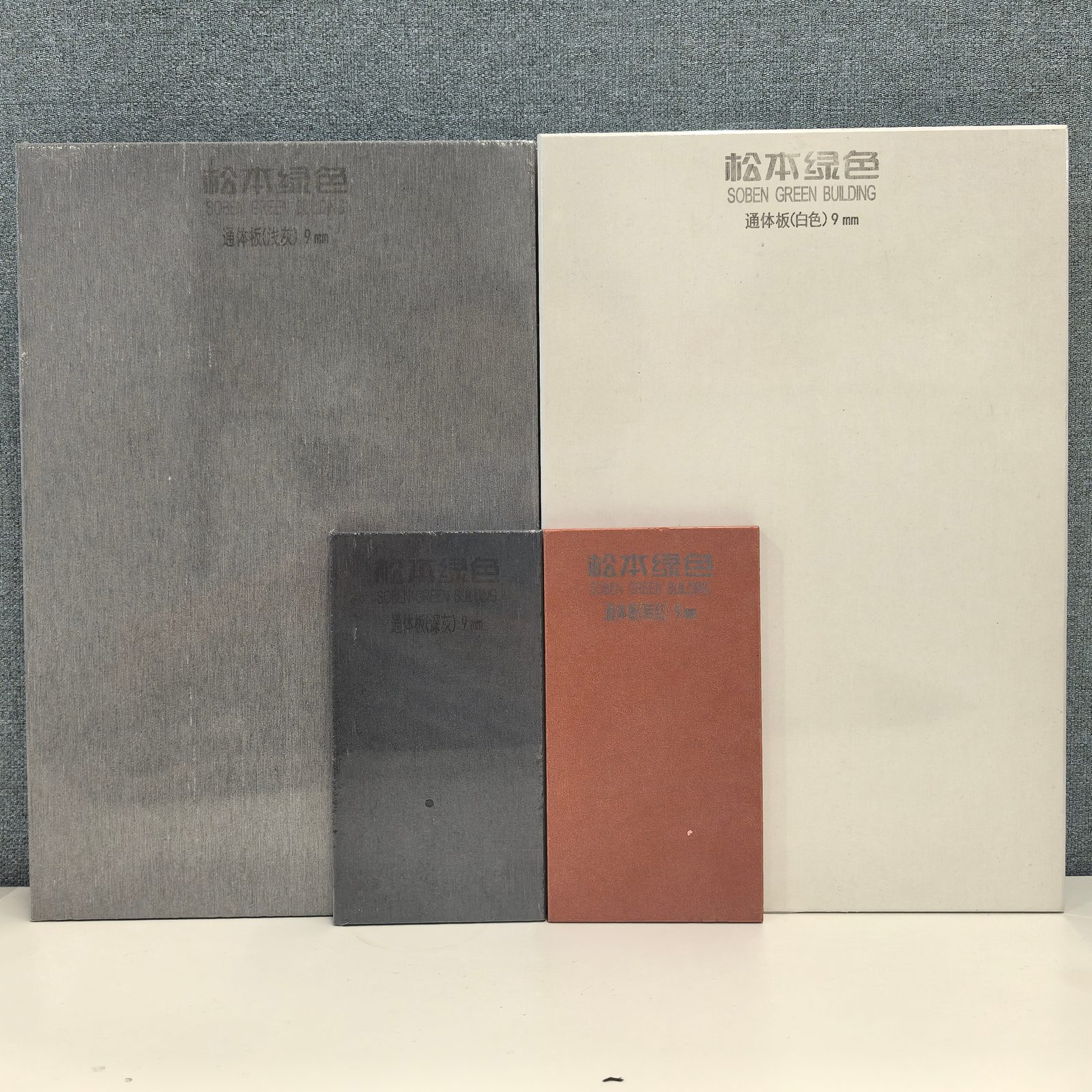
Our low-density fiber cement board is a cementitious composite of silica, calcium minerals and reinforcing plant fibre, autoclaved under pressure. The resulting panel is:
- A1 non-combustible under GB 8624, and A2-s1, d0 under EN 13501-1: it does not burn, melt, drip or release toxic smoke at 1000 °C. This is the panel behind the cooker, not a plastic film.
- Inorganic and dimensionally stable. Water absorption is below 0.2 % and moisture movement below 0.25 %. Steam, splashes and cooking grease do not swell, warp or feed mould.
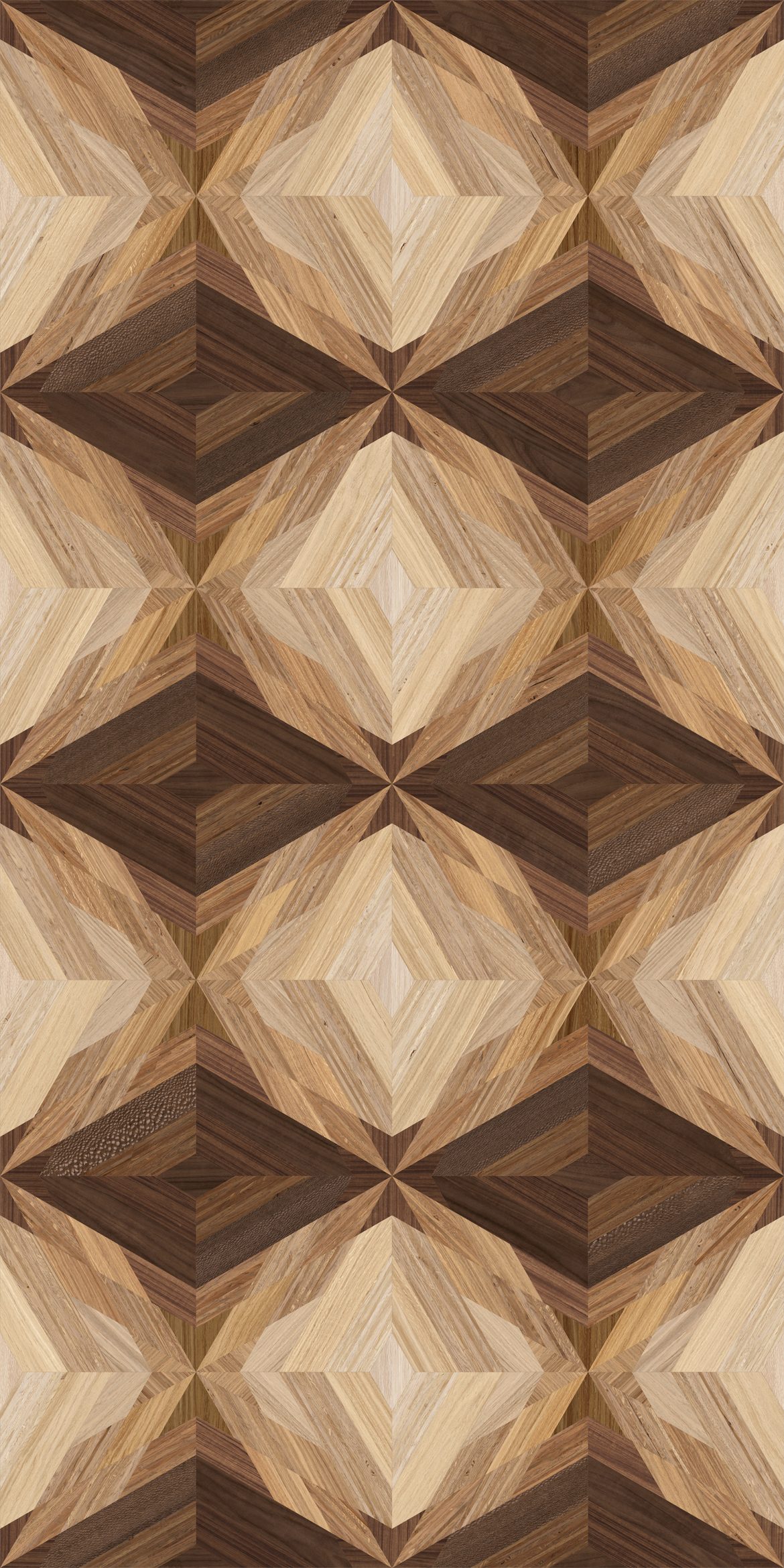
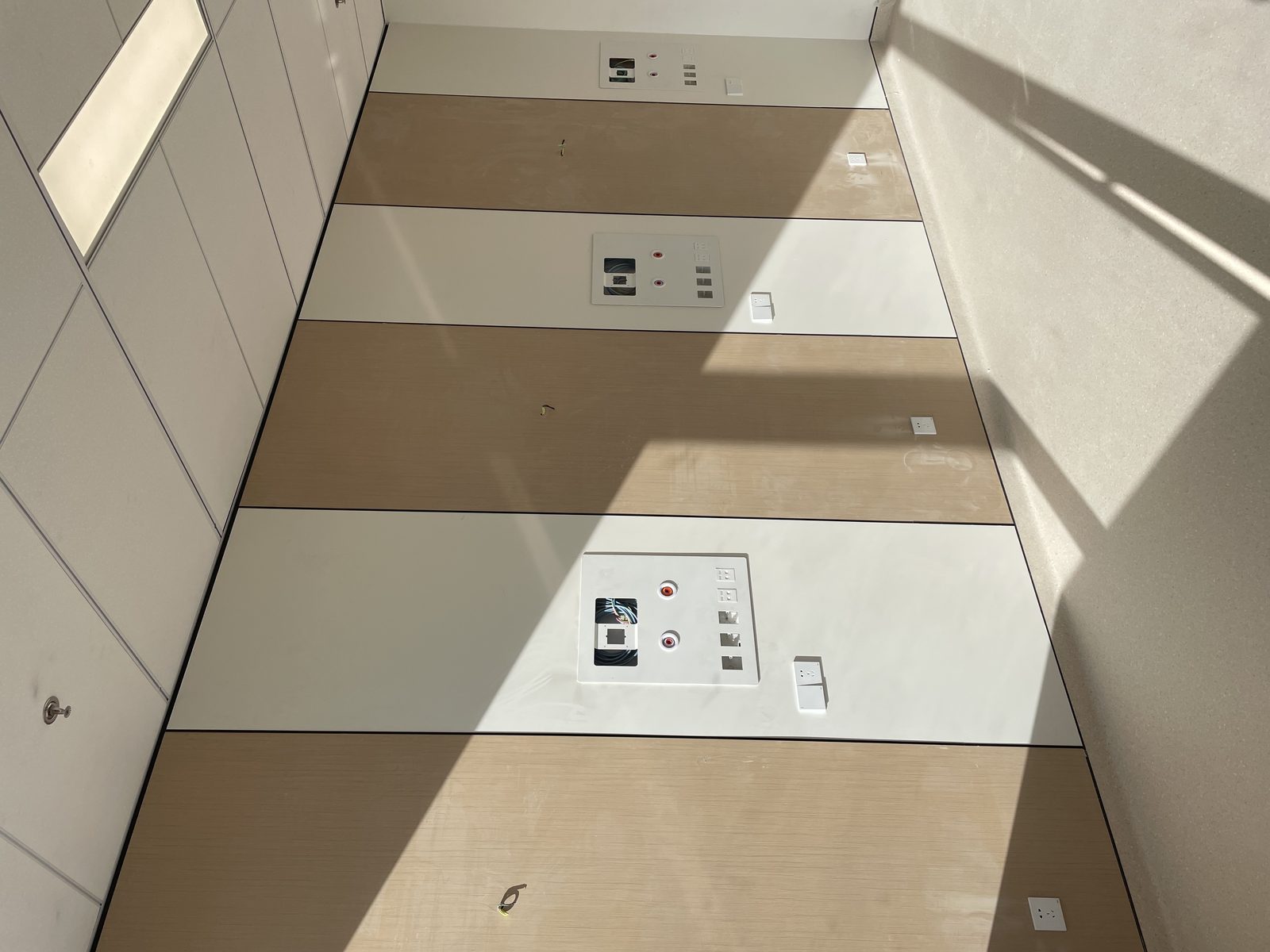
- Decoratively finished in the factory. The face is a printed or coated decorative board — marble look, wood grain, solid colour, custom pattern — so the wall panel arrives ready to install. No skim coat, no putty, no on-site paint.
- Light and thin. A 1220 × 2440 mm sheet at 6 mm weighs about 18 kg — one installer, one trip up the stairs.

Why a Decorative Panel Beats Tile Behind the Cooker
The case for replacing tile with a fiber cement backsplash panel rests on five everyday realities. fire safety: tile is non-combustible, but the substrate behind it (typically plasterboard) is B1 at best. A fiber cement backsplash panel is A1 through and through, with substrate and decorative face in a single sheet that passes the EN 13501-1 single-flame-source test with negligible smoke. no grout: a continuous, joint-free surface means no porous lines for oil to settle into. easy clean: a permanent ink marker wipes off with a standard kitchen spray — see the lab clip:
slim profile: the standard install method is mechanical fixings into studs or adhesive over a sound existing substrate, so a 6 mm panel goes over existing tile with no demolition. looks like marble: the factory-printed face reads as Calacatta or Carrara from across the room, paired with a matching crystal coating board upstand.
Backsplash Materials Compared
| Material | Fire | Grease / stain | Grout lines | Off‑gas | Installer effort |
|---|---|---|---|---|---|
| Fiber cement panel | A1 non-combustible | Wipes clean, no staining | None | ENF (undetectable) | Dry, 1–2 days |
| Ceramic / porcelain tile | Inert, substrate usually B1 | Stain-prone at grout | Many — recurring maintenance | Low (grout, adhesive) | Wet trade, multi-day |
| Glass splashback | Inert, thermal-shock risk | Wipes clean | None (sealed edges) | Low | Templated, lead time |
| Stainless steel | Inert, scratches & dents | Wipes clean | Seamed joints | Low | Sheet-metal trade |
| PVC / acrylic panel | B2 / B1, can ignite and drip | Wipes clean | Seamed joints | Plasticiser off-gas possible | Cheap, fast, fire risk |
Across fire reaction, cleanability, hygiene and install speed — a fiber cement backsplash panel is the only option that ranks strong on every line.
Specification Notes for Specifiers
- Thickness. 6 mm (≈ 18 kg per sheet) for a single cooker-wall splashback; 8 mm for a full-wall tile replacement behind a range.
- Sheet size. 1220 × 2440 mm standard; 1220 × 3050 mm for floor-to-ceiling walls without horizontal joint.
- Edges & trims. Aluminium profile or matching crystal board upstand; avoid PVC trims on a fire-rated wall.
- Adhesive & fixings. Flexible cement-based adhesive plus stainless or zinc-plated mechanical fixings at 300 mm centres; no solvent-based adhesives.
- Standards. EN 13501-1 (A2-s1, d0), ASTM C1186, GB 8624-2012 (A1); indoor air per France A+ and ENF.
Where This Sits in a Larger Refit
The same fiber cement board family covers bathroom wet-area walls, moisture-resistant ceilings and prefabricated kitchen modules. One fire-rating system, one warranty, one installer — for a developer fitting out a tower of apartments, that consistency is the actual cost saving.
When a Fiber Cement Backsplash Panel Is the Right Call
- Open-plan kitchens where the cooker wall is also a room divider
- Kitchens in fire-engineered buildings (apartments, schools, hotels, care homes)
- Renovations where existing tile must stay in place during works
- Schemes with a strict indoor-air-quality specification (France A+, ENF, schools, healthcare)
- Compact kitchens where a slim 6 mm reveal is needed at the worktop
Tile solved the 20th-century kitchen problem. A fiber cement backsplash panel solves the 21st-century one: a continuous, decorative, fire-safe, low-emission wall behind the cooker — installed in the time it would take to re-grout.
Conclusion
A kitchen backsplash panel made from low-density fiber cement is the first time a specifier has been able to choose a single decorative board sheet that is fire-safe, cleanable, slim and indoor-air-friendly, without picking two of those and accepting the others as compromises. For a new kitchen, it replaces tile on the cooker wall and the substrate behind it in a single product. For a renovation, it goes over the existing tile and turns the dirtiest surface in the room into the easiest one to live with.
If you are specifying or installing a fiber cement backsplash panel and would like the matching TDS, CE DoP and the full colour range sent over, send us your project sheet — we will map the right thickness, sheet size and finish to your kitchen layout within one working day.