Architects still specify timber cladding for the warmth of its grain and the way it weathers. Owners and contractors, however, are increasingly asked how long that wall panel will still look good, how often it will need maintenance, and whether the building will pass a fire-safety review at handover. On those questions, a modern fiber cement board answers them at the material level rather than the coating level. This guide compares the two side by side — on fire, moisture, lifespan, maintenance, finish options and total installed cost — so specifiers and contractors can pick the right wall panel for each project with eyes open.
The Contenders at a Glance
| Property | Fiber Cement Board | Wood Cladding |
|---|---|---|
| Fire reaction | A1 non-combustible (GB 8624); A2-s1, d0 (EN 13501-1) | D / E untreated; B / C with fire-retardant treatment |
| Moisture behaviour | Wet expansion ≤0.25%, 30-day immersion with no delamination | Swells, cups, warps with humidity cycles |
| Rot & insects | None — inorganic, no food source | Vulnerable to rot, fungi, termites, wood-boring beetles |
| Density (typical) | 0.65–1.50 g/cm³ (product line dependent) | 0.4–0.8 g/cm³ (species dependent) |
| Finish options | Through-body, painted, digital-print wood, stone, marble, custom | Natural grain, stain, paint, char (yakisugi), oil |
| Maintenance cycle | Cleaning + re-coat of finish (typically 10–15 yr) | Re-stain / re-paint every 3–7 yr on exposed faces |
| Service life (rated) | 30+ years | 15–25 years (treated); 8–15 years (untreated softwood) |
| Carbon & resource story | Inorganic, no timber content; long replacement cycle | Renewable but locks in a maintenance and replacement cycle |
Fire: Where the Gap Is Decisive
On a facade, fire performance is decided by the worst-performing layer in the assembly. Wood is combustible by chemistry; even fire-retardant-treated timber is rated B or C under EN 13501-1 and still contributes to flame spread across a wall panel once the treatment weathers or the surface chars through. On multi-storey residential, school, healthcare and hotel projects, that rating frequently disqualifies untreated timber from being used on elevations close to the boundary or above 18 m.
A fiber cement board is rated A1 non-combustible to GB 8624-2012 and A2-s1, d0 under EN 13501-1: at 1000 °C it does not burn, melt or drip, and its smoke production is limited (s1) with no burning droplets (d0). For specifiers working to Approved Document B (UK), the EU Fire Classification regulation, or any project that passes through a fire-engineer's review, that single line in the datasheet is often the deciding factor. The same board also forms the face of a fire-rated rainscreen or partition assembly — a sister certification guide walks through A1, A2, B and the related wall-panel assemblies in detail.
Moisture: The Silent Reason Claddings Fail
Wood expands and contracts with humidity. Over a typical year, an exposed timber wall panel can move 2–4% across the grain, which is enough to open joints, cup boards, pop fixings and let driving rain into the cavity. In a coastal or humid climate, that cycle starts the rot and the paint-failure clock from the first season.
A fiber cement board moves with water at less than a quarter of one percent. It can be immersed for 30 days without swelling, delaminating or growing mould — the inorganic recipe gives fungi nothing to feed on. In a back-ventilated rainscreen, the wall panel is dimensionally stable year-round, so joints stay tight, paint stays bonded, and the cavity drains and dries as designed. For external applications, sister-product calcium silicate board is often paired in soffit, eave and detail zones for the same reason.
Lifespan & Maintenance: The 20-Year Math
The honest comparison is whole-life cost over 20–30 years, not per-sheet sticker price:
- Wood cladding on an exposed elevation: re-stain or re-paint every 3–7 years; expect board replacement on 15–25% of the elevation within 15 years; full re-cladding typically inside 20–25 years for softwood and 25–30 for premium hardwoods.
- Fiber cement board cladding: periodic cleaning, re-coat of the factory finish every 10–15 years if a coated colour is used, individual board replacement is rare. Rated service life of 30+ years on a correctly installed rainscreen.
- Lifecycle cost: the upfront gap on a typical 200 m² elevation can be recovered in 8–12 years through saved maintenance, fewer access costs (scaffolding hire is the largest single line in any re-paint budget), and avoided premature re-cladding.
- Carbon: a fiber cement board uses no timber in its core; over a 30-year service cycle the avoided maintenance visits and avoided re-cladding also avoid the embodied carbon of those repeat works.
Wood Look, Without the Wood Problem
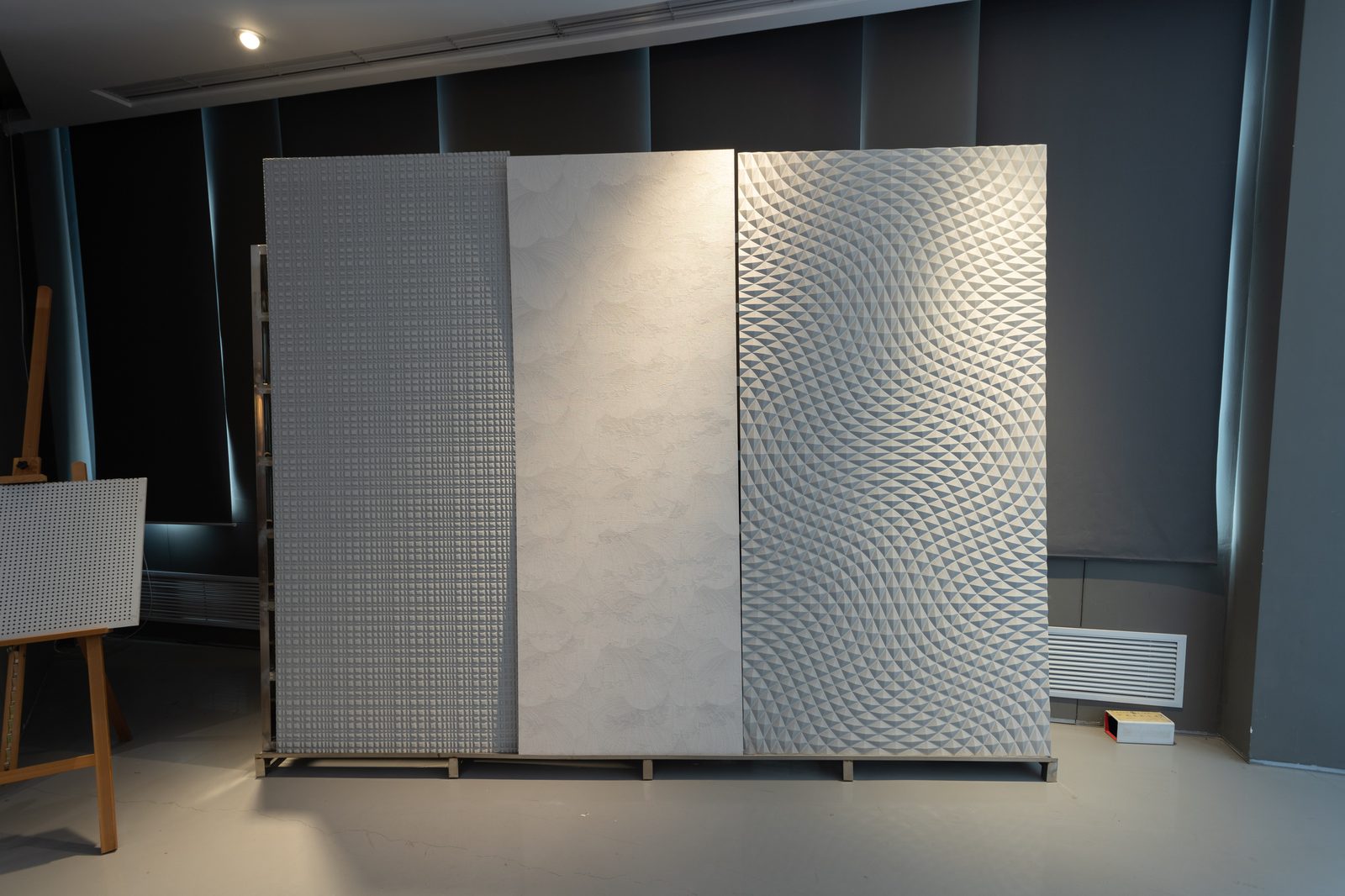
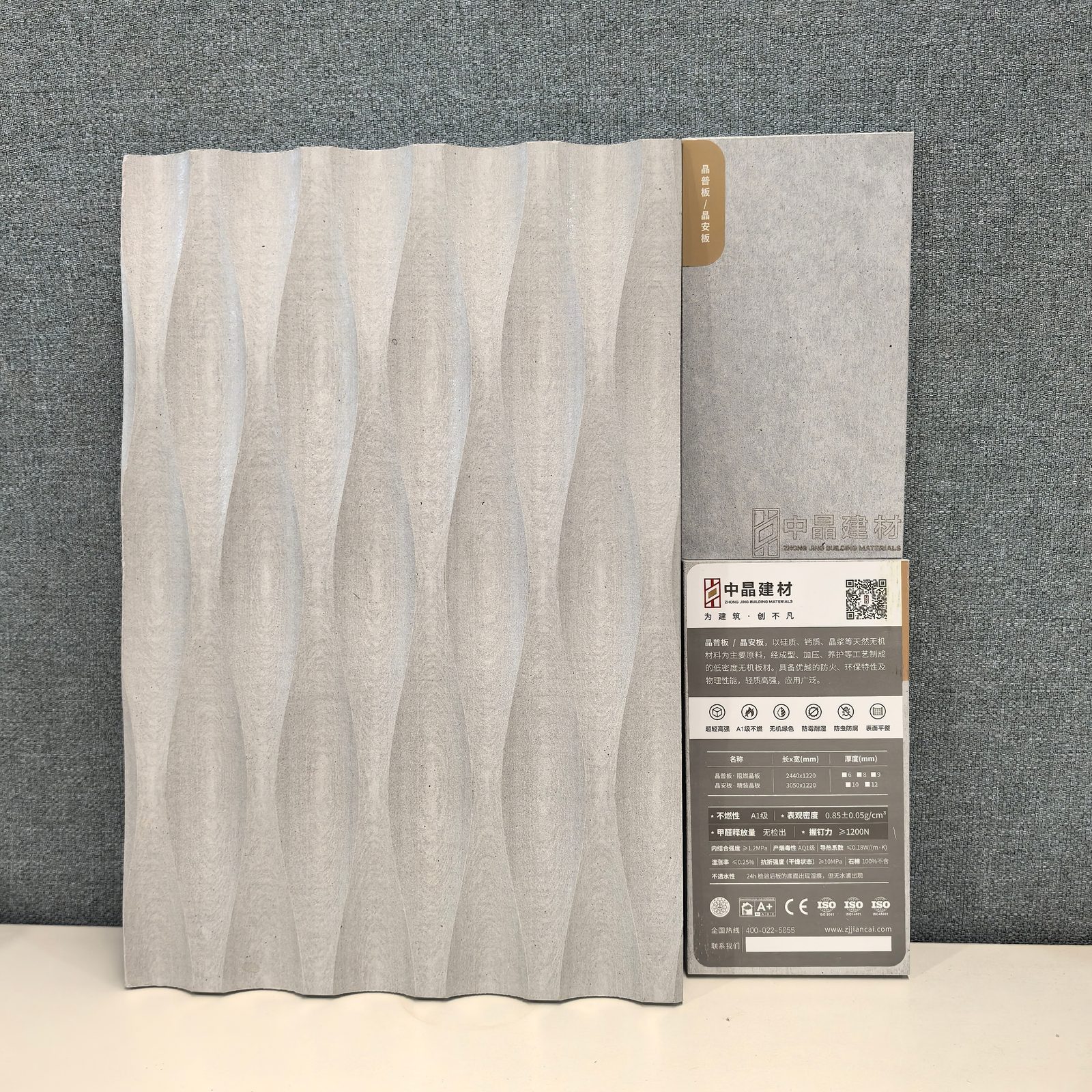
Specifiers rarely choose timber purely for its material properties — they choose it for the way it looks. The good news is that a fiber cement board wall panel is now available in deep-embossed wood grain, oak, walnut, charred-cedar and reclaimed-timber finishes, printed with digital ink and bonded under heat so the texture does not wear off with weather. From street level the difference is hard to spot; from the building's fire dossier and maintenance budget, it is enormous.
For interior walls, the same approach gives an oak or timber-look wall panel without the formaldehyde off-gassing of a real-wood veneer on MDF. The companion piece Crystal Board vs OSB, plywood & gypsum covers the interior-substrate side; the outdoor comparison in this article focuses on the cladding panel itself.
Rainscreen, Soffit & Eave Applications
Where a fiber cement board cladding panel really pulls ahead is on the parts of the building where wood historically failed first:
- Rainscreen facades: the wall panel is fixed on aluminium or steel sub-framing to a drained-and-ventilated cavity; A1 non-combustibility is required on most commercial towers within the UK, EU and Australian regulations.
- Soffits and eaves: enclosed horizontal surfaces that trap moisture — timber soffits routinely cup and flake within a decade; a fiber cement board soffit stays flat and paint-bonded for the same 30-year service life as the wall.
- Bargeboards, fascias and trim: where a small timber detail often controls the look of the whole elevation; printing a wood-grain fiber cement board trim in a matching finish keeps the timber aesthetic without the maintenance weak point.
- Boundary-wall screens and privacy louvres: timber louvres on coastal sites are typically replaced within 10–12 years; an inorganic board louvre survives twice as long, often three times.
For soffit and eave specifics, our external facade cladding guide covers the wall-panel-to-soffit detail and the rainscreen cavity, while the fiber cement installation walkthrough shows the typical fixing and sealing steps.
Where Wood Cladding Is the Right Answer
This is a comparison, not a one-way argument. There are still cases where timber is the right call:
- Listed buildings and conservation areas where the planning authority requires a like-for-like material on visible elevations.
- Internal feature walls where the wall panel will not see weather, fire load is controlled by other layers, and the tactile warmth of solid timber is the whole point of the design.
- Temporary or short-life structures — pop-ups, event pavilions, market stalls — where 5–10-year life is acceptable and embodied carbon is not the deciding metric.
- Premium hardwood species on sheltered elevations, where the maintenance budget is real and the species story (e.g. FSC-certified Western Red Cedar) is part of the project's sustainability narrative.
Outside those cases, a fiber cement board wall panel delivers the same visual outcome at a fraction of the lifetime cost and with fire, moisture and maintenance numbers that wood cannot match.
Total Installed Cost — Not Just the Sticker
The fair comparison is the 20-year installed cost, not the per-sheet price:
- Material: fiber cement board carries a higher per-sheet cost than commodity softwood; the gap shrinks once a coated or fire-retardant-treated timber is specified.
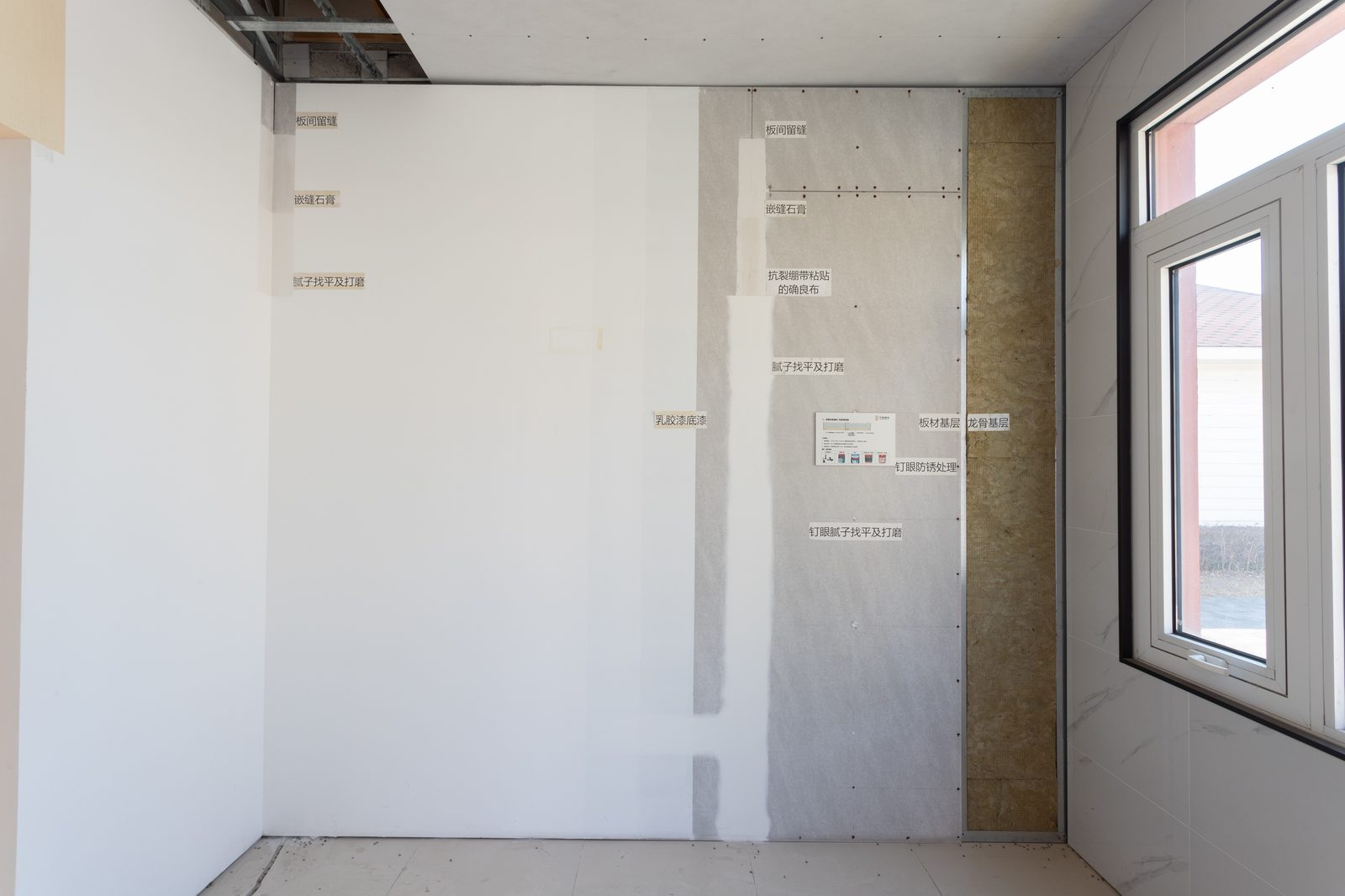
- Fixing system: both materials use standard back-ventilated rainscreen sub-framing; timber may need additional treatment or stainless-steel fixings in coastal zones, narrowing the gap further.
- Maintenance: timber re-paint cycles of 3–7 years versus a single re-coat at 10–15 years for fiber cement board.
- Compliance: A1 + CE + French A+ on the fiber cement board de-risks fire and IAQ approvals; treated timber still needs its treatment certificates renewed and audited.
- Lifecycle: one fiber cement board cladding panel installation typically outlasts two timber re-cladding cycles on the same elevation.
Across a typical 20-year ownership, the total cost of ownership of a fiber cement board wall panel is consistently lower than treated timber on any exposed elevation.
When a Fiber Cement Board Cladding Panel Earns Its Place
- Multi-storey residential, school, healthcare and hotel elevations with A1 / A2-s1, d0 fire requirements
- Coastal, humid or high-rainfall sites where timber maintenance is uneconomic
- Public and mixed-use projects needing A1 + French A+ + CE documentation in one datasheet
- Rainscreen facades, soffits, eaves and bargeboards on a 30-year service-life target
- Projects specifying printed wood, stone or marble finishes that look like timber but perform like inorganic board
Wood cladding has the warmth. A fiber cement board cladding panel has the lifespan. On any elevation where the fire dossier, the maintenance budget and the 30-year replacement cycle all matter, the inorganic board is the rational choice.
FAQ
Is fiber cement board better than wood for exterior cladding?
For most exterior cladding applications, a fiber cement board outperforms wood on the properties that determine lifespan: A1 non-combustible, dimensionally stable in humidity, immune to rot and insects, and requiring only periodic cleaning. Wood still has a tactile and visual appeal, but as a long-life substrate fiber cement board is the more rational wall panel for facades, soffits and rainscreens.
How long does wood cladding last vs fiber cement?
Untreated wood cladding typically needs re-painting or replacement within 8–15 years; even preservative-treated timber expects significant maintenance within 20 years. A correctly installed fiber cement board wall panel is rated for 30+ year service lives with routine cleaning and the occasional re-coat of any coated finish, with the substrate itself unaffected by moisture or biological attack.
Does fiber cement board look like real wood?
Modern digital-print fiber cement boards reproduce wood grain, oak tones and timber textures convincingly as a wall panel, including deep-embossed surface relief. From street level the difference is hard to spot, while the substrate keeps the fire, moisture and maintenance advantages of inorganic board.
Can fiber cement board be used as a rainscreen cladding panel?
Yes. A fiber cement board is one of the most common rainscreen cladding panel materials because it is dimensionally stable, A1 non-combustible, and unaffected by driving rain when installed on a drained-and-ventilated cavity with the correct joint detailing. It accepts standard back-ventilated rainscreen fixings on aluminium or steel sub-framing.
What is the fire rating of fiber cement board vs wood cladding?
A fiber cement board achieves A1 non-combustible to GB 8624-2012 and is rated A2-s1, d0 under EN 13501-1 — it does not burn, melt or drip, and produces very limited smoke. Wood cladding, even when fire-retardant treated, is typically rated B or C with higher smoke and contributes to flame spread on a facade.
Conclusion
Wood cladding remains a legitimate aesthetic choice on sheltered elevations and listed buildings. For the majority of commercial, residential and public projects — any elevation that has to clear fire engineering, survive a coastal climate, and look presentable at year 20 without a recurring re-paint budget — a fiber cement board wall panel is the more rational specification. It carries A1 non-combustibility, ENF-grade emissions, dimensional stability and a 30+ year service life on the same datasheet, and the printed wood-grain finishes now reproduce the aesthetic convincingly. For specifiers who answer for the whole-life cost of a facade, that combination is increasingly difficult to set aside.