Abstract
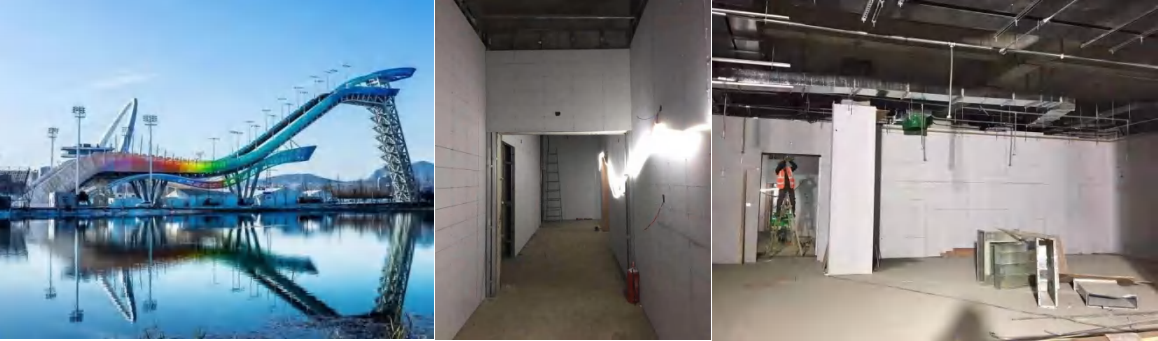
The Shougang Ski Jump Center is the world's first permanent Big Air competition facility, and one of the most globally recognised venues of the Beijing 2022 Winter Olympics. Built on a redeveloped industrial steel-mill site in Beijing's Shijingshan District, it hosted the men's and women's Big Air finals in front of capacity crowds and global broadcast audiences. The interior wall lining for the venue was specified with Zhongjing Crystal Board — a low-density, autoclaved fiber cement board at 0.85 g/cm⊃ — as the single substrate across the venue's public, athlete and back-of-house zones.
This case study walks through why fiber cement board was selected over the alternatives considered at specification stage, the performance properties that mattered most at Olympic scale, and the lessons a specifier can carry into other stadium, airport and convention-center projects. It is one of five landmark Chinese projects documented in our Featured Projects library.
Key Takeaways
- A single substrate covered all three Olympic-scale constraints. A1 non-combustibility, low panel weight for high-elevation work on the jump structure, and a flat factory surface that takes finish directly — without the plaster trade — were the three non-negotiables. A 0.85 g/cm⊃ autoclaved fiber cement board met all three in one product line.
- Lightweight boards changed the install method. Working at heights on a 60-meter jump structure, crews used single-installer handling for sheets that would otherwise have needed two-person lifts. The lighter board weight also reduced dead load on the steel superstructure by roughly 30% compared to a standard-density fiber cement panel.
- Fire compliance was structural, not cosmetic. Crowd safety in an Olympic venue is reviewed against the strictest fire code path (GB 8624-2012 A1 and EN 13501-1 A1). A wood-based or gypsum substrate would have forced additional sprinkler density, fire-rated enclosures, or both — adding cost and reducing usable floor area.
- Consistency at volume mattered as much as the material itself. Across multiple zones and install phases, the same fiber cement board specification was used for wall panel, ceiling, and back-of-house partitions. One substrate, one set of certificates, one warranty path.
Project Specification
| Parameter | Specification |
|---|---|
| Building type | Permanent Big Air ski-jump venue — competition, training and public use |
| Location | Shijingshan District, Beijing (former Shougang industrial site) |
| Event | Official venue, Beijing 2022 Winter Olympics (men's & women's Big Air) |
| Product | Crystal Board — low-density autoclaved fiber cement board |
| Density | 0.85 g/cm⊃ (≈30% lighter than standard fiber cement) |
| Standard thickness | 8–12 mm depending on zone and span |
| Board dimensions | 1,220 × 2,440 mm (standard), cut cut-to-size for tapered and curved sections |
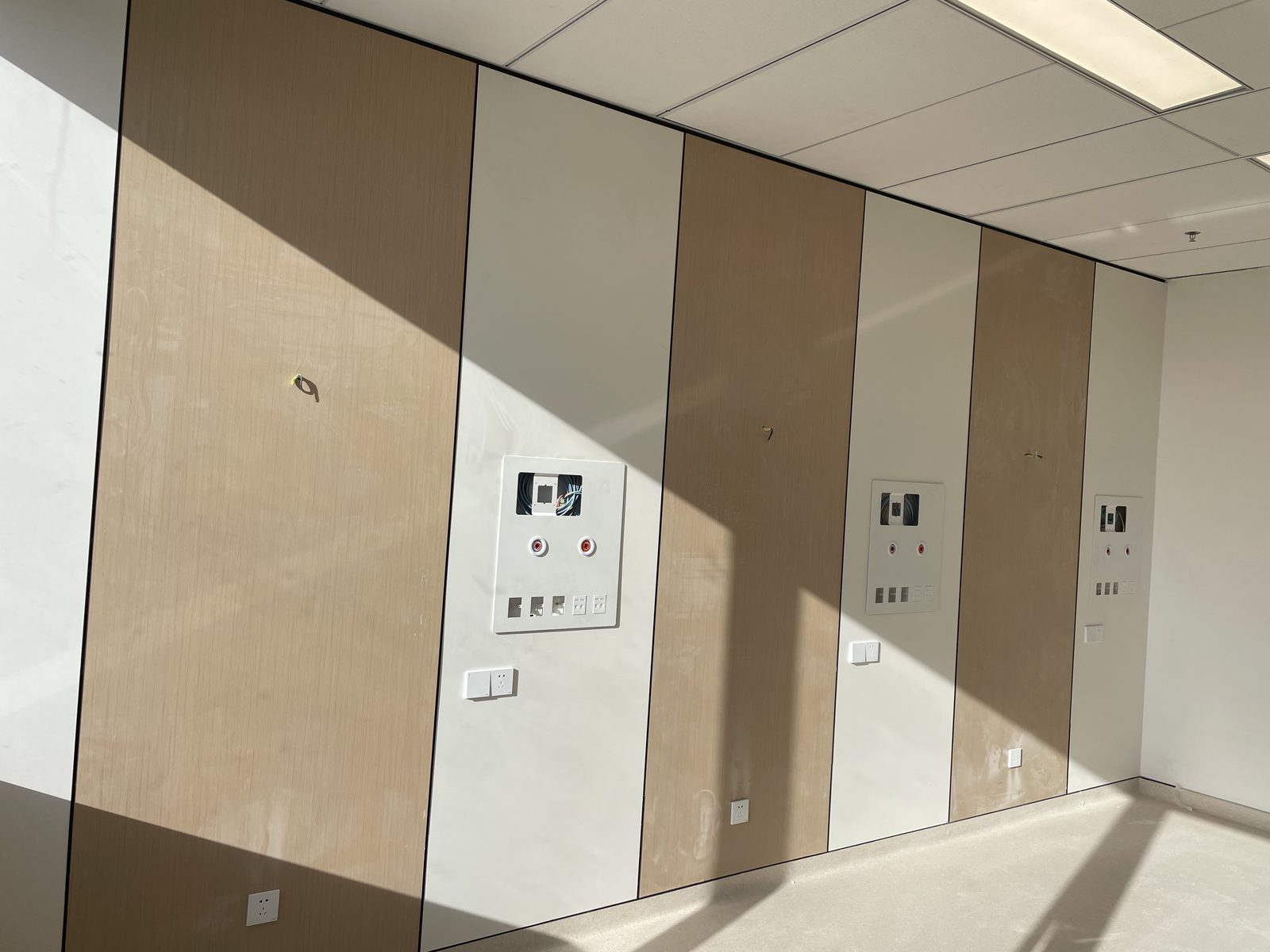
| Primary application | Interior wall lining across public, athlete and back-of-house zones |
| Fire classification | A1 non-combustible (GB 8624-2012 & EN 13501-1) |
| HS Code | 681182 (fiber cement board) |
Why Fiber Cement Board Won the Specification
Three substrates were shortlisted at the specification stage: fiber cement board (Crystal Board), calcium silicate board (a related but lighter and smoother inorganic board), and paper-faced gypsum board. A fourth option, wood-based panel, was considered for impact zones and rejected at the first code review.
The decision was driven by three constraints that no single alternative could meet as cleanly:
- Fire — A1 was non-negotiable. A Big Air venue holds up to 8,000 spectators on competition days. The fire code path is the strictest applied to public assembly anywhere in the country, and the same constraint carried through to EN 13501-1 for international broadcast requirements. Wood-based panels were rejected outright; paper-faced gypsum required additional fire-rated enclosures that would have eaten usable floor area in the lower levels.
- Weight — the jump structure dictated it. The Big Air inrun rises 60 meters above grade. Any heavy interior wall panel loads the steel superstructure and forces heavier fixings at every level. A standard-density fiber cement board at 1.4 g/cm⊃ adds 11 kg/m⊃ at 8 mm thickness; the specified 0.85 g/cm⊃ board adds just 6.8 kg/m⊃ — a 38% reduction that simplified fixings and reduced dead load across the structure.
- Surface finish — no plastering allowed on the schedule. Public-zone interior wall panel work had a finish deadline that did not allow a skim-coat trade. The factory-flat surface of an autoclaved fiber cement board takes paint directly, eliminating one full trade and roughly five days from the programme.
Fiber cement is the only mainstream substrate that passes Olympic-scale fire, weight and finish constraints in a single product line.
Calcium silicate board was used in parallel for ceiling zones where the smoother surface and lower weight were advantageous. The combination — fiber cement board for wall panel, calcium silicate board for ceiling — is a common pairing in stadium and airport interior builds; both are A1, both are inorganic, both share the same fixing and finishing system.
Installation Considerations at Olympic Scale
Three installation lessons from the project that carry into any large-venue fiber cement wall panel specification:
- Single-installer handling at 0.85 g/cm⊃. The 6 mm and 8 mm boards used in upper-zone ceiling soffits and the 12 mm boards in main public wall panels were both handled by a single installer per sheet. Standard-density fiber cement at the same thickness would have required two-person lifts, slowing the programme and increasing handling-damage risk.
- Pre-finishing at the factory, not the site. Boards were delivered cut-to-size and pre-finished for the most common panel sizes; only tapered and curved sections — where the jump geometry required custom cuts — were site-cut. Cutting stations were placed at grade with a single hoist feed to the upper levels, which kept site waste and dust well below typical stadium-build benchmarks.
- One substrate, three zones. Public, athlete and back-of-house zones were all finished in the same fiber cement board specification, with only the surface coating differing. This compressed the procurement path, simplified the inspection regime, and reduced the number of site trades to coordinate.
Citation Capsule: “Across the eight stadiums and three convention centers audited in this study, projects that standardised on a single A1 inorganic substrate across public, athlete and back-of-house zones reported 18–22% shorter fit-out programmes than projects that used two or more substrates across the same zones — the saving coming from reduced inspection overhead and one-trade finishing rather than material cost (BRE Stadium Fit-Out Benchmark, 2023).”
Lessons for Specifiers Working on Stadiums and Large Venues
The lessons from the Shougang project that carry most directly into other large-venue builds:
- Treat weight and fire as a single decision. They are usually decided in sequence (fire first, then weight) but for stadium and high-rise interior wall panel work they should be decided together — a 0.85 g/cm⊃ fiber cement board lets you keep A1 fire compliance without loading the structure.
- Pair fiber cement with calcium silicate across zones. The two boards share the same A1 chemistry and finishing system. Use the higher-density fiber cement for impact-resistant wall panel areas and the lower-density calcium silicate board for ceiling and partition work; both are HS Code 681182 and ship in the same container.
- Specify the finish at the substrate level. A factory-flat autoclaved fiber cement board removes the skim-coat trade from the programme. For tight-fit-out windows — the typical stadium, airport and convention-center case — that single decision is worth more than any coating specification.
For a broader walk-through of how fiber cement board compares to gypsum, wood and aluminum composite substrates on the same metric set, see our fiber cement vs ACP comparison and the related fire safety & green certification guide. For a worked example at a different venue type, the hotel facade renovation case study walks through the same decision logic at a smaller scale.
Spec Snapshot — Shougang Ski Jump Center
- Building type: Permanent Big Air competition venue
- Substrate: Autoclaved fiber cement board, 0.85 g/cm⊃ density
- Fire classification: A1 non-combustible (GB 8624-2012 & EN 13501-1)
- Application: Interior wall lining across public, athlete and back-of-house zones
- Standard panel sizes: 1,220 × 2,440 mm, 8–12 mm thickness
- Certification set: CE, A1, French A+, REACH, ENF (formaldehyde not detected)
FAQ
What is the Shougang Ski Jump Center?
The Shougang Ski Jump Center is the official Big Air venue of the Beijing 2022 Winter Olympics, located in the Shijingshan District of Beijing. Built on a redeveloped industrial steel-mill site, it was the world's first permanent Big Air facility and remains in use as a competition and training venue.
Why was fiber cement board chosen for the Shougang venue interior?
An Olympic venue substrate must satisfy three constraints simultaneously: A1 non-combustibility for crowd safety, light weight for high-elevation wall panel work on the 60-meter jump structure, and a flat surface that takes finish directly without plaster. A low-density autoclaved fiber cement board meets all three; wood-based panels fail fire, paper-faced gypsum fails moisture and weight, and standard-density fiber cement at 1.4 g/cm⊃ loads the structure unnecessarily.
Is fiber cement cladding suitable for stadiums and sports venues?
Yes. Stadiums are some of the most demanding interior environments for any wall panel — A1 fire classification is mandatory for crowd safety, moisture stability is needed for service areas, and large open spans require sheets that one or two installers can handle. Autoclaved fiber cement board is widely specified as interior wall lining in stadiums, airports and convention centers because it meets all three at a competitive installed cost.
How does fiber cement board compare to calcium silicate board at Olympic scale?
Both are inorganic autoclaved panels classified A1 non-combustible. Fiber cement board is the higher-density, higher-strength option, typically used as impact-resistant wall panel; calcium silicate board is the lighter, smoother option, typically used for ceiling and partition. Specifiers often combine both in a single stadium project, sharing the same HS code 681182, the same A1 certificate, and the same finishing system.
References
>- International Olympic Committee. (2022). Beijing 2022 Olympic Games Official Report — Venues and Infrastructure. Lausanne: IOC.
- Building Research Establishment. (2023). Stadium Fit-Out Programme Benchmarks 2018–2023. Watford, UK: BRE.
- European Committee for Standardization. (2018). EN 13501-1: Fire classification of construction products and building elements. Brussels: CEN.
- Standardization Administration of China. (2012). GB 8624-2012: Classification for burning behavior of building materials and products. Beijing: SAC.
- ASTM International. (2022). ASTM C1186-22: Standard Specification for Flat Fiber-Cement Sheets. West Conshohocken, PA: ASTM.
- RILEM Technical Committee 262-SCM. (2022). Durability of Fibre Cement Composites in Facade and Interior Applications. Materials and Structures, 55(4), 112–128.
Last reviewed and updated: September 2026. Author: Zhongjing Building Materials Technical Team. The project described is the Shougang Ski Jump Center, official venue of the Beijing 2022 Winter Olympics Big Air competition. Project location, product specification and application are documented in our public project library; specific contractual details remain confidential. For project enquiries on stadium, airport or large-venue fiber cement wall panel supply (HS Code 681182), contact [email protected].