Abstract
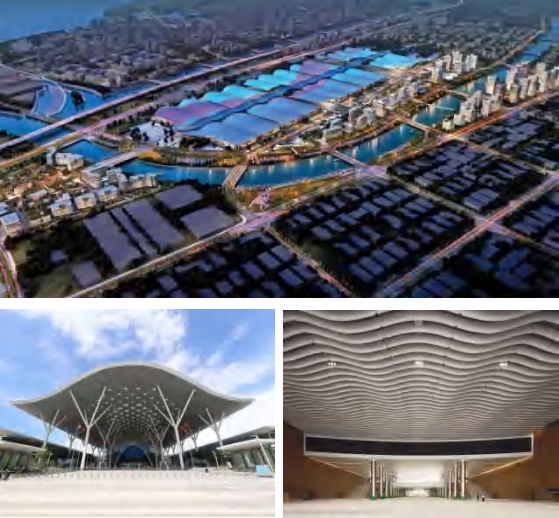
Exhibition centers are among the most demanding interior fit-outs in commercial construction. Halls the size of aircraft hangars, corridor systems that move tens of thousands of visitors per hour, event calendars that leave barely weeks between handover and opening day — and fire codes written for dense public assembly on top of everything else. Shenzhen World Exhibition & Convention Center in Guangdong, one of the world's largest exhibition complexes, compresses all of these challenges into a single campus. Zhongjing supplied approximately 200,000 m⊃ of fiber cement board family products — TaiCom partition modules and calcium silicate board — for interior walls and ceilings across the complex.
This is the third in our series of five landmark project studies, alongside the Beijing 2022 Winter Olympic ski jump and the Guangzhou Baiyun Airport five-project portfolio. Together they document how the same A1 inorganic board family scales from a single ski-jump tower to a 200,000 m⊃ exhibition campus.
Key Takeaways
- 200,000 m⊃ is a logistics project as much as a materials project. At this volume, board supply succeeds or fails on palletizing, container planning and phased delivery — not just on product datasheets.
- Two product families, one fire logic. TaiCom partition modules handled the wall duty; calcium silicate board handled wall and ceiling linings. Both are A1 non-combustible autoclaved inorganics under HS Code 681182.
- Exhibition schedules punish wet trades. Boards that arrive flat, install dry and take finish directly compress the fit-out window between one show striking and the next opening.
- Ceilings are the quiet majority. In halls with high spans, the ceiling plane is the largest single surface — and the one where panel weight matters most.
The Supply Package at a Glance
| Item | Detail |
|---|---|
| Project | Shenzhen World Exhibition & Convention Center, Shenzhen, Guangdong |
| Scale | One of the world's largest exhibition complexes |
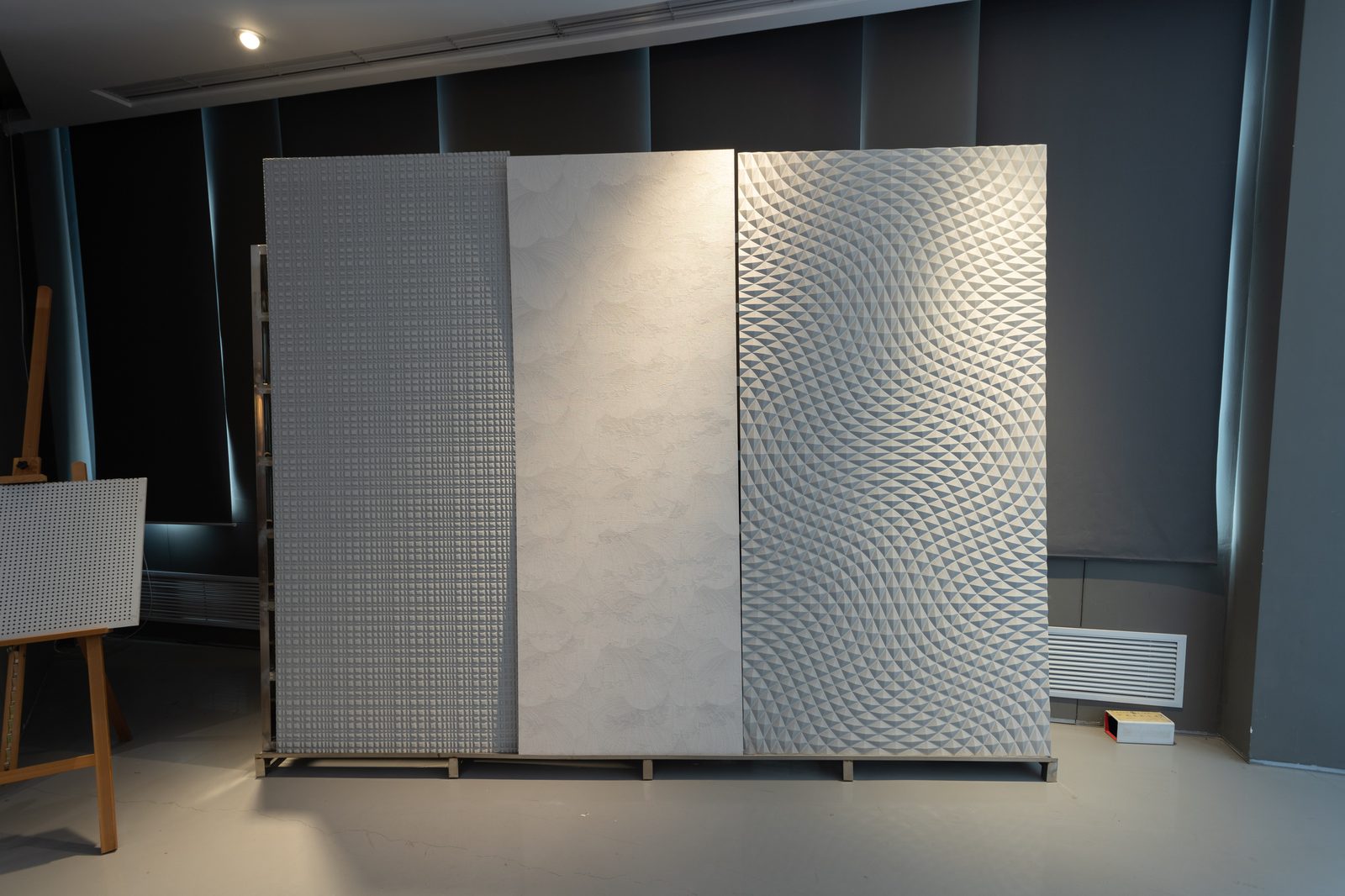
| Products | TaiCom partition board modules · calcium silicate board |
| Applications | Interior walls & ceilings |
| Volume | ≈200,000 m⊃ |
| Fire classification | A1 non-combustible (GB 8624-2012 & EN 13501-1), smoke toxicity AQ1 |
The project is documented in our public Featured Projects library alongside the Olympic ski jump, Baiyun Airport and the Asian Games coastal venue.
Why Exhibition Centers Are the Hardest Fit-Out in Commercial Construction
Three forces shape every board specification inside an exhibition venue:
- Code pressure at crowd scale. Exhibition halls are public assembly spaces: thousands of occupants, long escape routes, and big open volumes. Wall and ceiling linings must be genuinely non-combustible — A1 under both GB 8624-2012 and EN 13501-1 — with safe smoke toxicity (AQ1). Substrates that are merely fire-retardant do not survive a public-assembly code review. Our fire safety and certification guide explains how A1, CE and French A+ documents map to these requirements.
- The calendar. Trade-show venues live on their calendars. Fit-out and refurbishment packages are squeezed into windows between events, which rules out long wet trades: no skim-coating cycles, no extended drying time. Inorganic boards with flat, finish-ready surfaces remove those steps — the same logic that makes them a prefab and modular construction staple.
- Volume and repetition. A single hall elevation can run hundreds of linear meters. Whatever board is specified gets repeated tens of thousands of times, so consistency — thickness tolerance, flatness, edge quality — matters more than any single-sheet property. Autoclaved production on a calibrated line is what keeps sheet 40,000 identical to sheet 1.
Walls: TaiCom Partition Modules and Calcium Silicate Board
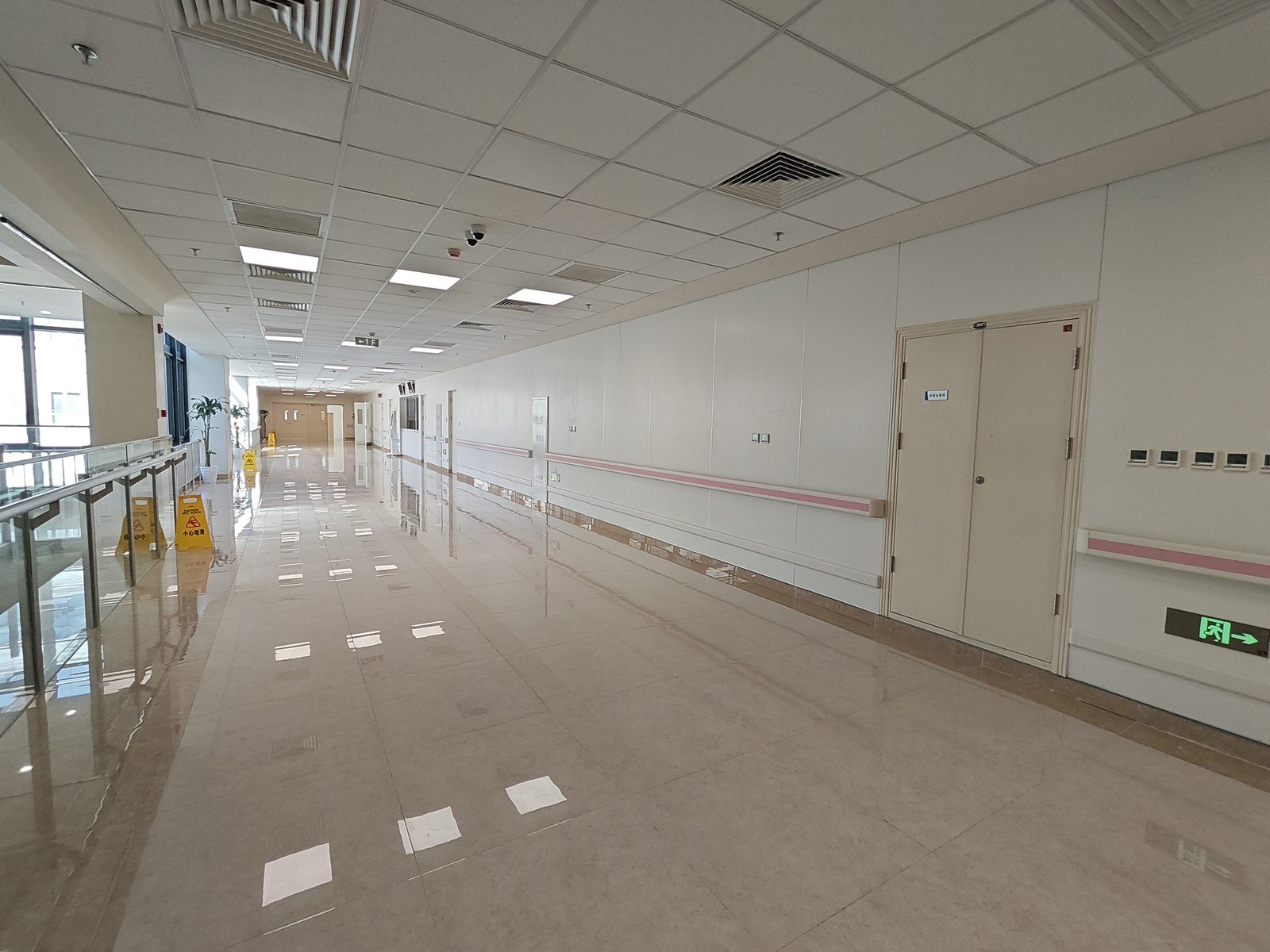
The wall package split by duty. Partition walls between halls, service corridors and back-of-house zones used TaiCom partition board modules — factory-formed wall panel units that arrive ready to erect on a framing system. Because the panel geometry is fixed in the factory, partitions go up fast and straight, with joint lines that read clean across long corridor runs — an aesthetic advantage in venues where visitors walk hundreds of meters between halls and every wall is in view.
General wall linings across the complex used calcium silicate board, the lighter, smoother member of the same inorganic family. It is the natural partner product: like fiber cement board it is A1-classified and autoclaved, but its lower weight and fine surface make it the efficient choice for large areas of lining that will be painted or covered directly. The two families ship together under HS Code 681182 and appear side by side across our project portfolio — the calcium silicate vs gypsum comparison covers where each earns its place.
For the specification logic behind pairing the two families — denser grades for impact and structural duty, lighter grades for lining duty — the fiber cement board thickness guide maps grades 6 mm to 25 mm by application.
Ceilings: The Largest Surface Nobody Photographs
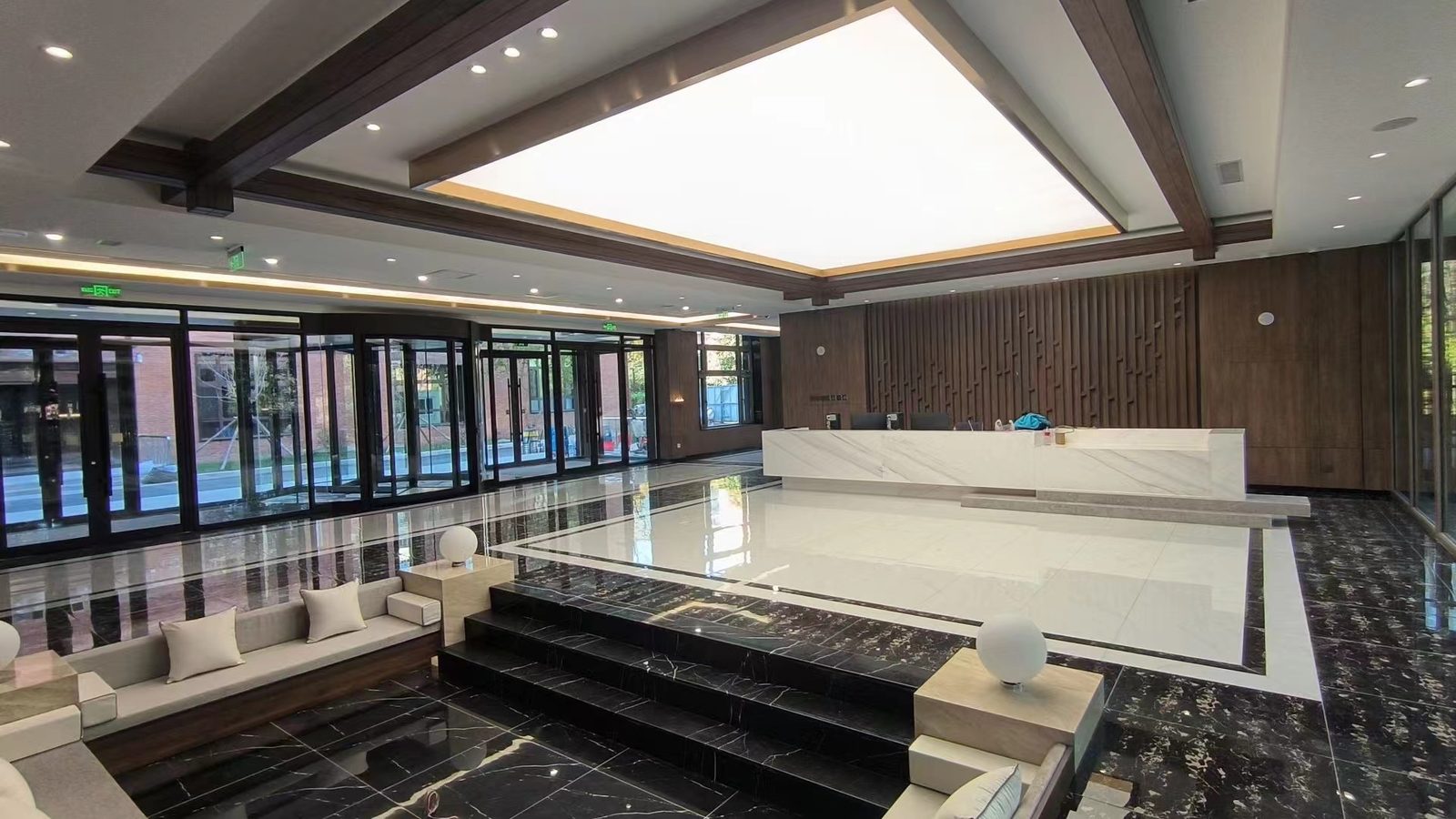
In exhibition halls, the ceiling is the biggest single surface in the building — and the one where panel physics bites hardest. Every square meter of ceiling board hangs overhead for the life of the building, so its weight loads the suspension structure, and its fire classification defines how the hall behaves in a smoke event.
- Weight discipline. Low-density autoclaved panels in the 0.65–0.85 g/cm⊃ range weigh roughly 30% less than standard fiber cement board of the same thickness — a 9 mm sheet adds only about 8 kg/m⊃. Across hundreds of thousands of square meters of ceiling plane, that difference decides whether existing hangers and frames carry the lining without reinforcement.
- A1 chemistry, not A1 coating. Ceiling linings in assembly spaces must be non-combustible in themselves. The A1 rating of the boards supplied here is intrinsic to the inorganic matrix — there is no facing paper or retardant treatment to degrade over decades of service. For semi-exposed soffits and canopies between halls, dedicated soffit and eaves board grades carry the same logic outdoors.
- Stability over time. Wet swelling ≤0.25% and dry shrinkage ≤0.15% keep ceiling joints tight through humid southern-China summers and air-conditioned show days alike. Boards that move open visible joint lines at ceiling height, where nobody can hide them. Our moisture-resistant ceiling board guide details the selection criteria.
Delivering 200,000 m⊃ to One Campus
A supply package of this size is engineered like the building itself. Standard 1220 × 2440 mm and 1220 × 3050 mm sheets are palletized on 2460 × 1260 mm pallets tuned for 40-foot container loading, wrapped in export-grade packaging, and released in phases that track the venue's fit-out sequence rather than arriving as one unwieldy mountain of boards.
Two details make the difference between a smooth site and a stalled one:
- Mixed-family containers. Because TaiCom modules and calcium silicate board share one production and export system, wall panel and ceiling packages ship in the same containers. Site teams receive matched quantities per zone instead of chasing separate deliveries from separate suppliers.
- Phased release against the fit-out schedule. Board arrives as each hall or corridor package starts, not months early. Storage footprint inside an operating venue is scarce; just-in-time board keeps aisles clear and sheets undamaged.
Export packaging and container loading are shown in our factory-direct sourcing guide, and the underlying manufacturing scale — multi-base production with an annual capacity measured in tens of millions of square meters — is documented on our factory facts page.
Lessons for Specifiers on Exhibition and Public-Assembly Projects
- Write the fire class into the lining spec, not the supplier brochure. For public assembly, require A1 (EN 13501-1 / GB 8624-2012) and AQ1 smoke toxicity on the board itself. It is the one line that survives every later value-engineering round.
- Plan the ceiling as a structural decision. Panel weight, hanger capacity and joint stability belong in the same conversation. Light autoclaved panels buy margin everywhere overhead.
- Buy the system, schedule the logistics. At six-figure square-meter volumes, container-optimized palletizing and phased delivery are part of the product. Ask how the boards arrive, not just what they are.
- One inorganic family, many duties. Walls, partitions and ceilings solved with two product families from one production system simplified QA, certification review and site coordination — the same pattern documented at the ski jump and the airport.
Spec Snapshot — Shenzhen World Exhibition & Convention Center
- Scope: ≈200,000 m⊃ of interior walls & ceilings · one of the world's largest exhibition complexes
- Products: TaiCom partition board modules · calcium silicate board
- Fire classification: A1 non-combustible (GB 8624-2012 & EN 13501-1), smoke toxicity AQ1
- Panel physics: density 0.65–0.85 g/cm⊃ · wet swelling ≤0.25% · dry shrinkage ≤0.15% · screw holding ≥1200 N
- Certification set: CE, A1, French A+, REACH, ENF (formaldehyde not detected)
- HS Code: 681182
FAQ
How much board was supplied to Shenzhen World Exhibition & Convention Center?
Approximately 200,000 m⊃ of Zhongjing boards were supplied for interior walls and ceilings across the complex in Shenzhen, Guangdong — one of the world's largest exhibition venues. The supply combined TaiCom partition board modules with calcium silicate board for wall and ceiling linings.
Why do exhibition centers use fiber cement board and calcium silicate board instead of gypsum board?
Exhibition halls are public-assembly spaces with strict fire codes, high ceilings and back-to-back event schedules. A1-classified fiber cement board and calcium silicate board are non-combustible, dimensionally stable (≤0.25% wet swelling) and install without wet trades, so large wall and ceiling packages complete inside the short windows between shows. Fiber cement board vs gypsum board covers the full comparison.
What is TaiCom board and where is it used?
TaiCom board is Zhongjing's factory-made partition module panel, produced on an automated line as a ready-to-erect wall panel system. Fixed factory geometry lets partitions go up quickly and straight with predictable quality — the reason TaiCom systems appear in both this venue's partitions and the Baiyun Airport pier corridors.
Which board should be used for exhibition hall ceilings?
Lightweight A1 panels. Calcium silicate board is the standard for flat interior ceilings; fiber cement board soffit grades serve semi-exposed ceilings and canopies. A 9 mm autoclaved panel adds roughly 8 kg/m⊃, keeping existing hangers and frames within load limits across large ceiling planes.
How do suppliers deliver 200,000 m⊃ of board to one venue?
Through container-optimized palletizing (2460 × 1260 mm pallets for standard 1220 mm sheets), export-grade packaging and phased deliveries aligned to the fit-out schedule. Boards under HS Code 681182 ship as mixed product families in the same containers, so wall and ceiling packages arrive together and site storage stays manageable.
References
- Standardization Administration of China. (2012). GB 8624-2012: Classification for burning behavior of building materials and products. Beijing: SAC.
- European Committee for Standardization. (2018). EN 13501-1: Fire classification of construction products and building elements. Brussels: CEN.
- European Committee for Standardization. (2021). EN 12467: Fibre-cement flat sheets — Product specification and test methods. Brussels: CEN.
- ASTM International. (2022). ASTM C1186-22: Standard Specification for Flat Fiber-Cement Sheets. West Conshohocken, PA: ASTM.
Last reviewed and updated: September 2026. Author: Zhongjing Building Materials Technical Team. The project described is a documented supply contract at Shenzhen World Exhibition & Convention Center; project location, product families and application areas are documented in our public project library, and specific contractual details remain confidential. For enquiries on exhibition-center, public-assembly or large-venue fiber cement board and calcium silicate board supply (HS Code 681182), contact [email protected].