Every fit-out makes the same hidden decision first: what goes behind the finish? Three substrates dominate the conversation — fiber cement board, drywall (paper-faced gypsum board) and plywood — and each one is genuinely the right answer somewhere. The trouble starts when a material is specified out of habit rather than against the conditions it will actually face. This is the substrate showdown: fire, moisture, weight, fixing power and site speed, compared honestly, with a clear view of where each board belongs.
The Three Substrates at a Glance
| Property | Fiber Cement Board | Drywall (Gypsum) | Plywood |
|---|---|---|---|
| Fire reaction | A1 non-combustible (GB 8624), smoke AQ1 | Mineral core, paper facing burns; typically B1 | Combustible; treated grades at best B1 |
| Moisture behaviour | Wet expansion ≤0.25%; 30-day immersion, no delamination | Softens, sags, powders when wet | Swells, cups, delaminates, feeds mould |
| Density | 0.65–0.85 g/cm³ (low-density grades) | ~0.7–0.9 g/cm³ | ~0.6–0.7 g/cm³ |
| Screw holding | ≥1200 N — one screw carries 15–20 kg | Weak; needs backing or a second layer | Good when dry, drops sharply once wet |
| Formaldehyde | Not detected (ENF grade) | Low, but glue and paper | Resin-bound; emissions over years |
| Flexural strength | ≥10 MPa | Low; brittle under impact | Directional; falls away when damp |
| Site finishing | No putty — takes finish directly | Joint compound, skim coat, sanding | Sanding, sealing, often a second skin |
| Wet-area use | Yes | No (moisture-resistant grades are limited) | No |
Round 1 — Fire: A1 Against Paper and Resin
Fire separates the three more cleanly than any other property. A quality fiber cement board is classified A1 non-combustible under GB 8624: it does not burn, melt or drip at 1000°C, and its smoke toxicity is rated AQ1 (safe). That is not a coating or a treatment — it is what the material is. Where a rated assembly is required, 8 mm board on light-gauge steel studs with rock wool forms the basis of a 1-hour system, 9 mm reaches 2 hours and 12 mm reaches 3 hours; confirm the exact build-up against the manufacturer's fire test reports.
Drywall is a more nuanced case, and it deserves the credit it gets: the gypsum core is itself mineral and non-combustible, which is why drywall assemblies hold fire ratings so widely. The weak link is the facing paper, which ignites and lets the core lose integrity — typically leaving the product at B1 rather than A1. Plywood is the weakest of the three in fire: it is wood, and fire-retardant grades are still wood with additives, carbonising and releasing smoke with toxicity typically rated ZQ1 (conditionally safe). In escape routes, service shafts, hospital corridors and any wall that must stay put while people leave, that difference is the whole specification. For the certification detail behind these ratings, see our fire safety and green certification guide.
Round 2 — Moisture and Dimensional Stability
Water decides the rest. Fiber cement board has a wet expansion of 0.25% or less and a dry shrinkage of 0.15% or less, survives 30 days of immersion without delamination, and retains 80% or more of its flexural strength after 100 freeze-thaw cycles. It is fully inorganic, so it offers mould nothing to feed on — the same logic that makes it the default in bathroom wall panel and wet-area work and in kitchen splashback zones. The full moisture picture, including the 24-hour impermeability test, is set out in our waterproof, fireproof and mould-resistant FAQ.
Drywall fails differently but just as reliably: a slow leak or sustained humidity softens the core, sags the sheet and powders the surface. Plywood is the worst of the three in a damp wall because it does not merely soften — it swells, cups and delaminates, and once the resin bonds break, holding power goes with them. In a building, that failure is invisible until a fixing pulls out or a tile line cracks. Where the humidity is persistent but the exposure is sheltered — hospital corridors, food-processing rooms, pool halls, spa areas — a calcium silicate board from the same inorganic family is often the efficient choice, and it is specified on exactly the same fixing and finishing logic as the fiber cement board.
Round 3 — Weight, Strength and Fixing Power
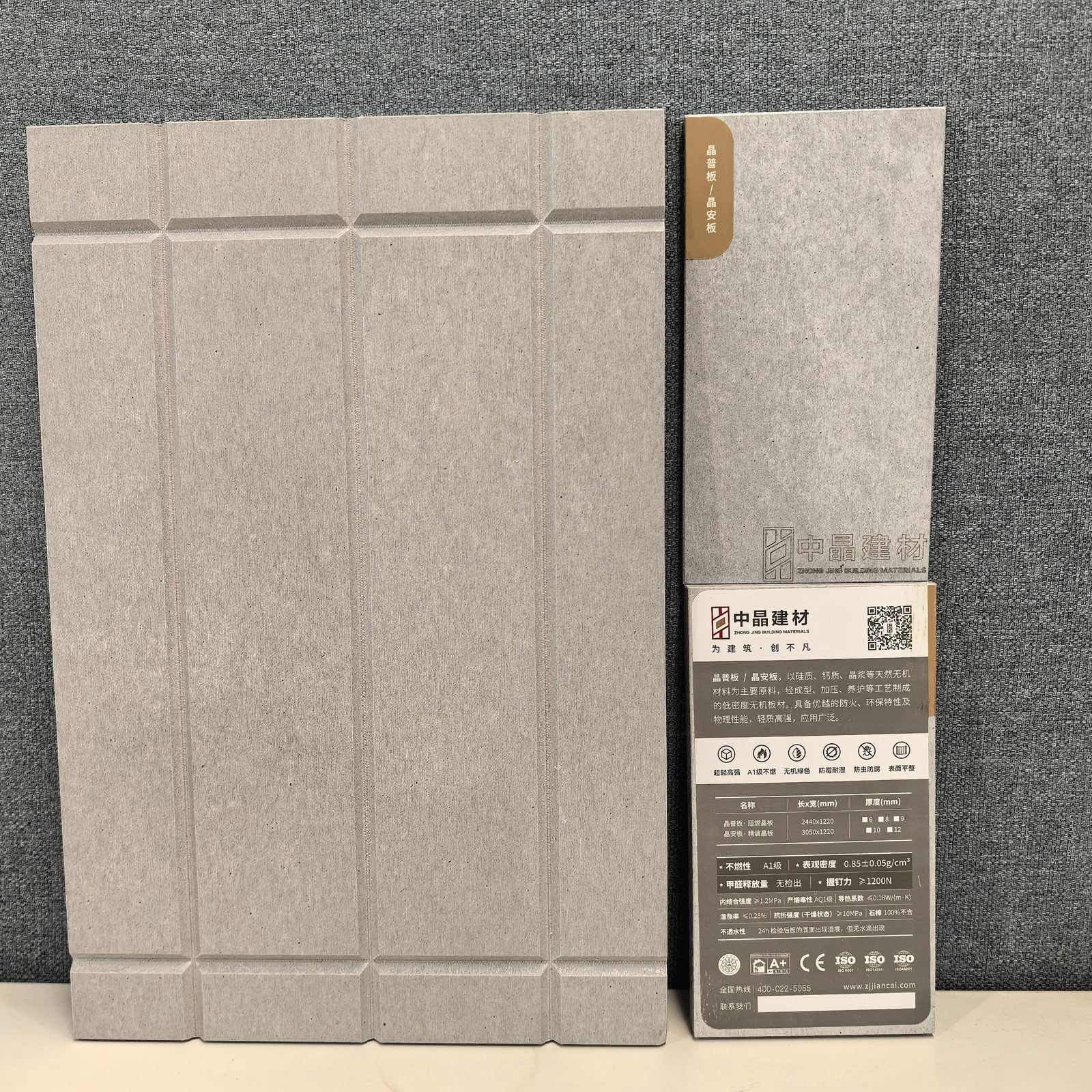
Substrate choice is also a structural decision, and here the comparison is closer than most specifiers expect. Low-density fiber cement board runs 0.65–0.85 g/cm³ — roughly 30% lighter than standard fiber cement board, and squarely in the same band as drywall at 0.7–0.9 g/cm³. A 6 mm sheet is around 18 kg, a genuine one-person lift, which is what makes it practical overhead and on scaffold-free fit-outs.
Where it pulls decisively ahead is fixing power. Screw holding is 1200 N or better, so a single screw reliably carries 15–20 kg, and flexural strength is 10 MPa or more. Drywall needs backing plates or a double layer to hang anything meaningful; plywood holds well while it is dry and then loses grip as it takes on moisture. The screw withdrawal test below shows what that means in practice.
Round 4 — Finishing and Site Speed
This is the round that changes programme dates. A wall panel in fiber cement board arrives flat and takes paint, coating or a printed finish directly — no joint compound, no skim coat, no sanding, no drying time. It cuts with a utility knife, and a 6 mm sheet can be gently curved for radii that would otherwise need a specialist board. Across a fit-out that removes a whole finishing trade from the critical path, which is where the widely quoted 50% schedule saving actually comes from. Board thickness selection is covered in our 6 mm to 25 mm thickness guide.
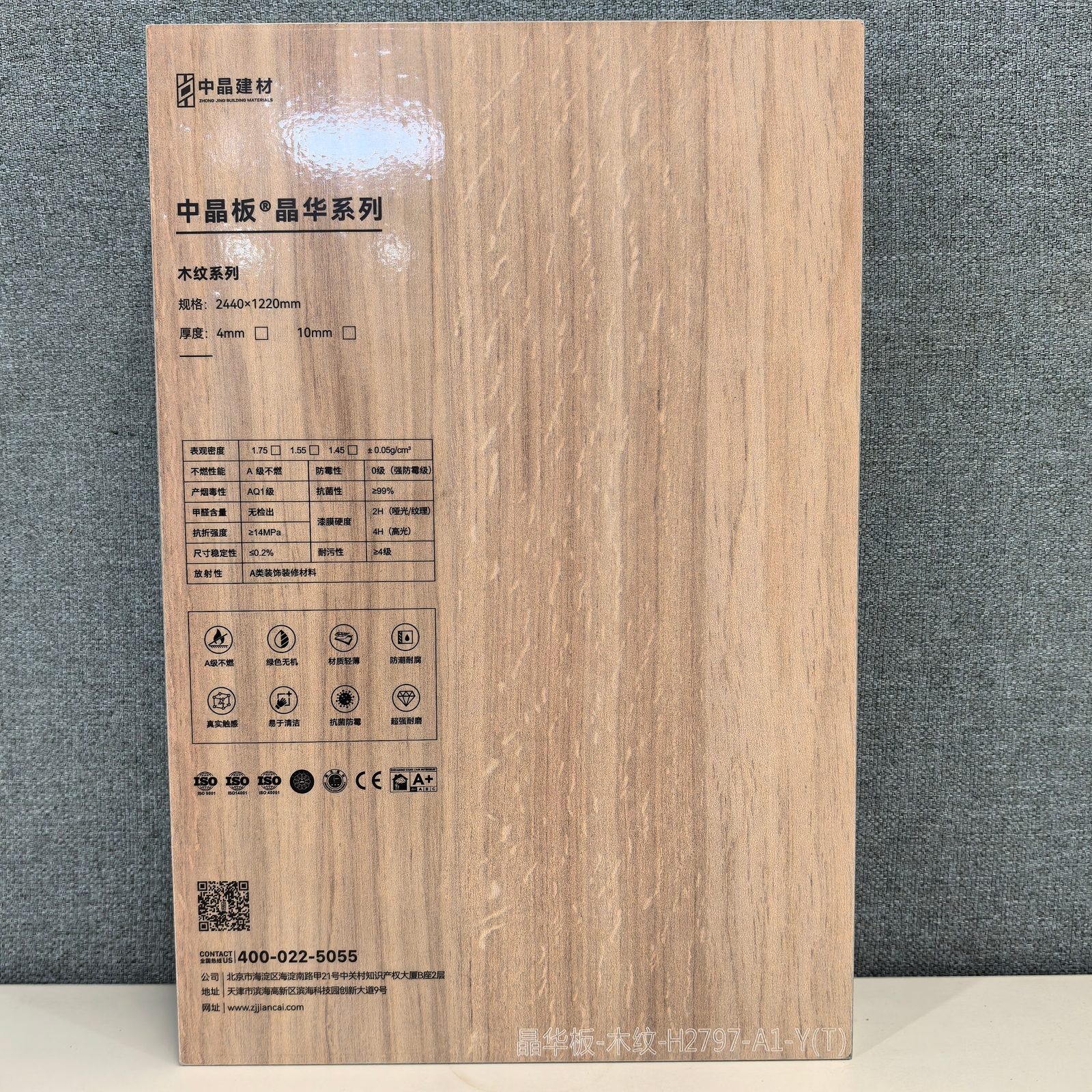
Drywall is fast and familiar in experienced hands — but the speed is bought back through taping, skimming and sanding, and it cannot be hung in a wet room at all. Plywood needs sealing and usually a second skin to reach a paintable surface, and every sheet has a face and a direction to respect. The same fiber cement substrate also takes factory UV coatings and digital printing, so a wall can arrive as a finished decorative board in wood-look, marble-look or a fully custom pattern — the option set behind our decorative board range.
Room by Room: Where Each Substrate Belongs
The honest answer to the cement board vs drywall vs plywood question is that the substrate should follow the exposure, not the habit. A practical allocation looks like this:
- Wet rooms, basements, pool and spa areas — fiber cement board or calcium silicate board. No wood-based product and no paper-faced board belongs here, whatever the grade name suggests.
- Fire-rated walls, shafts and escape routes — A1 non-combustible fiber cement board in a tested system, sized to the required rating.
- Ceilings, including humid and semi-exterior ones — low-density fiber cement board keeps the dead load down; our moisture-resistant ceiling board guide maps thickness to span.
- High-traffic corridors and healthcare interiors — inorganic wall panel substrate with an easy-clean coating, and a printed decorative board where the wall also has to look like something.
- Dry, low-risk interiors with large flat runs — drywall remains a legitimate, cost-efficient answer. There is no reason to over-specify a bedroom wall.
- Floor decks and dry structural voids — plywood is still efficient here, provided the assembly genuinely stays dry.
- Exterior facades and soffits — fiber cement board, detailed as cladding rather than as an internal lining; see our external facade cladding guide.
Where Fiber Cement Board Is Not the Answer
A comparison is only useful if it admits the trade-offs. Fiber cement board is heavier than plywood, it costs more than drywall up front, and it is not the right product for a dry partition where the cheapest compliant sheet will do. It also needs sharp blades and the correct low-speed cutting practice on site. The case for it is not that it wins every column — it is that it is the only one of the three that does not have a moisture or fire failure mode waiting for it. And because the same factory supplies both the fiber cement board and the calcium silicate board, a project can standardise its substrate across wet, humid and rated zones without changing fixing details, finish systems or quality paperwork — the sourcing logic covered in our factory-direct sourcing guide.
Frequently Asked Questions
Is fiber cement board heavier than drywall or plywood?
By density grade, low-density fiber cement board sits at 0.65–0.85 g/cm³ — about 30% lighter than standard fiber cement board and in the same band as drywall (0.7–0.9 g/cm³). A 6 mm sheet is roughly 18 kg. Plywood is lighter again, but it is also the only one of the three that swells and delaminates when wet.
Can fiber cement board be screwed straight onto timber or steel studs?
Yes. Screw holding is 1200 N or better — one screw carries 15–20 kg — so single-layer fixing to light-gauge steel studs or treated battens at standard centres is normal practice. With wet expansion at 0.25% or less, joints stay tight instead of working loose.
Does a cement board substrate need a vapour barrier?
That is an assembly decision, not a board one. The vapour control layer still belongs on the warm side of the insulation per local code; the board neither needs nor replaces it. What the inorganic board does give you is tolerance of intermittent moisture without rot or mould. In wet rooms, tank and seal the substrate before tiling or coating.
Why is plywood still used as a substrate if it is combustible?
Because in dry structural roles it is efficient — light, economical, easy to cut and good at taking a screw. Keep it to floor decks and dry voids. Once it is repeatedly wetted it swells and loses holding power, and even fire-retardant grades remain combustible with ZQ1 (conditionally safe) smoke toxicity.
Can fiber cement board replace drywall everywhere?
In wet, humid and fire-rated positions, yes — and that is precisely where drywall is weakest. In dry, low-risk interiors with long flat runs, drywall still competes on first cost. Match the substrate to the exposure, and many projects end up standardising on the inorganic board so one fixing detail and one finish system cover the whole job.
Conclusion
Drywall, plywood and fiber cement board are not interchangeable, and pretending otherwise is how buildings end up with sagging wet-room ceilings and combustible walls in escape routes. Drywall earns its place in dry volume work; plywood earns its place in dry structural work; and where there is water, humidity or a fire rating to satisfy, the inorganic board is the only one of the three with no failure mode left to discover. Specify each to its exposure, and the substrate stops being a risk and becomes a decision you never revisit.