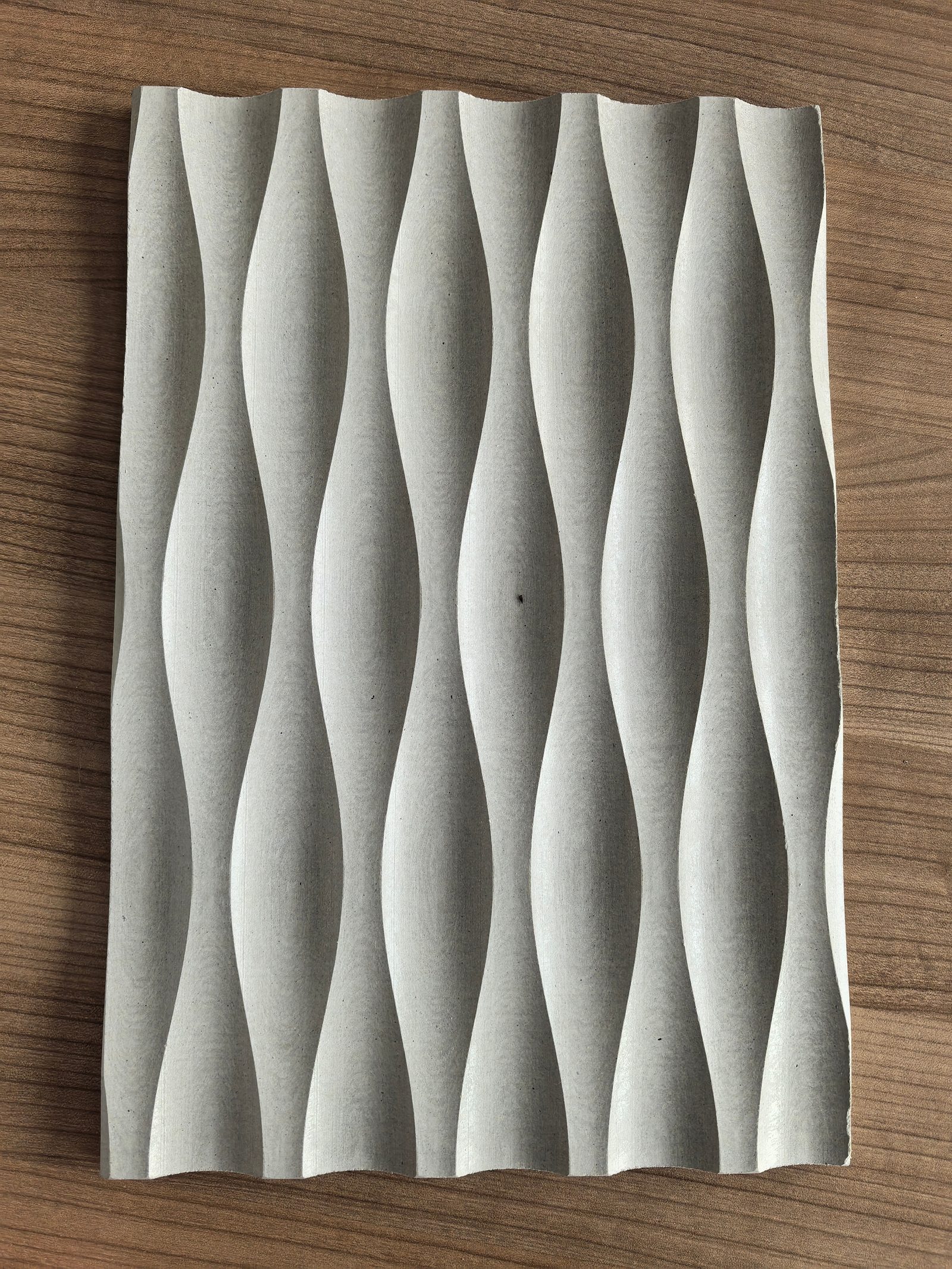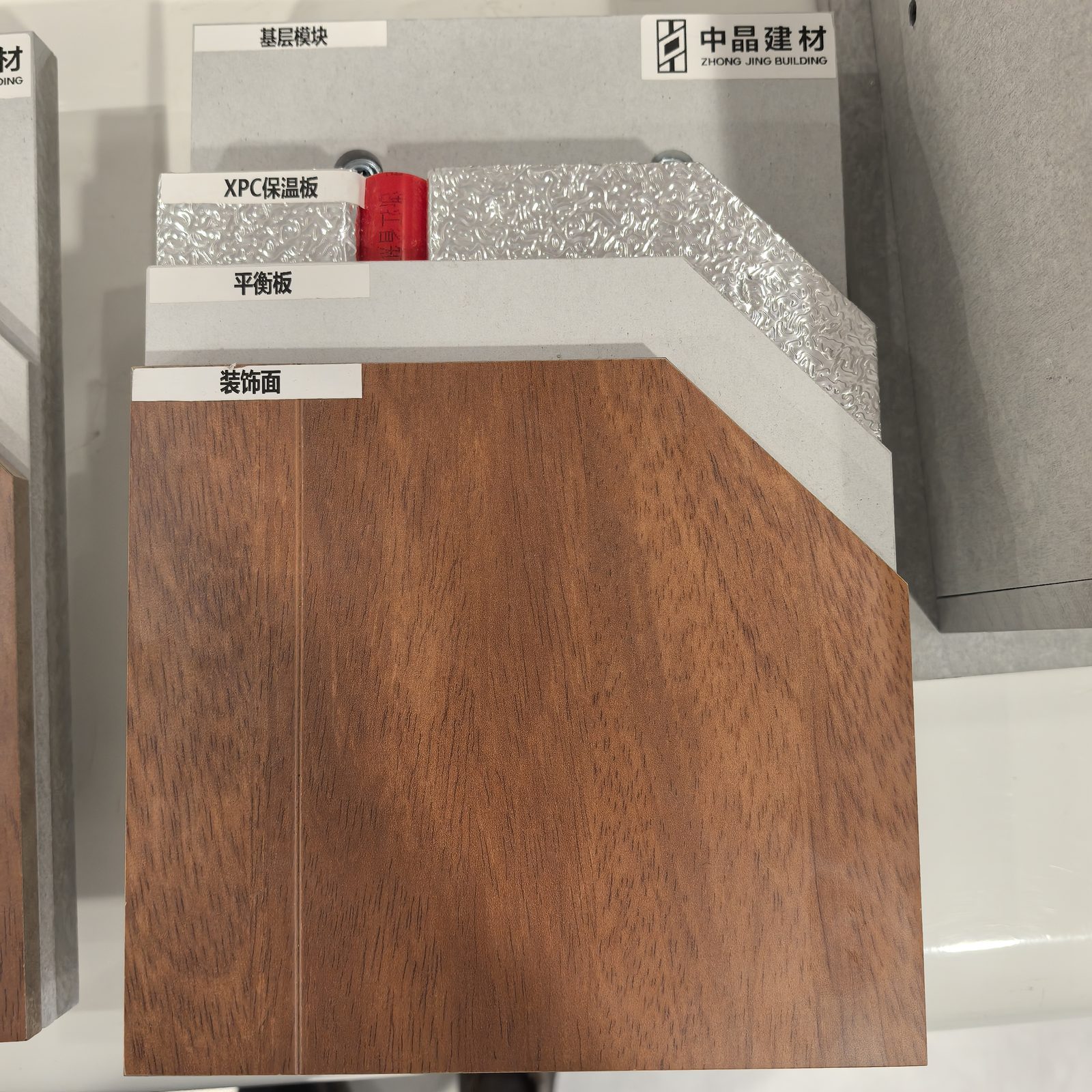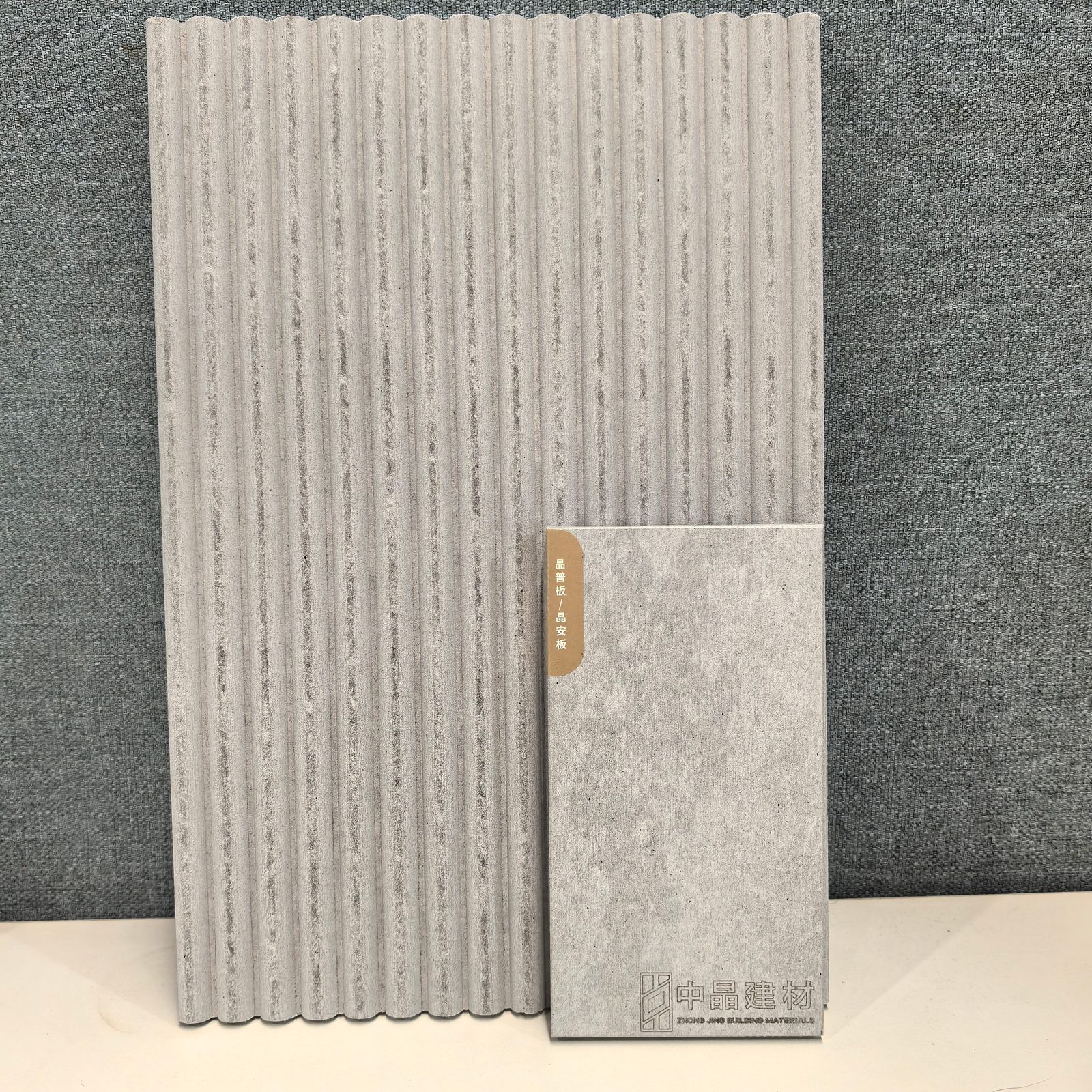
Bathrooms and kitchens are the hardest rooms in any building. They combine steam, splash water, temperature swings and heavy fixings — the exact conditions that destroy ordinary wall boards. If you are renovating, building or specifying, the wall board you choose behind the tiles determines whether the room stays sound for decades or fails quietly behind the finish. This guide explains what makes a wall board genuinely waterproof, why traditional options fall short, and how fiber cement board performs as a bathroom waterproof wall board.
Why Ordinary Wall Boards Fail in Wet Areas
The two most common wall linings — gypsum board and wood-based panels — are both vulnerable to moisture in different ways.
- Gypsum board (drywall): the gypsum core softens when wet, the paper facing sags, swells and grows mould, and the board loses structural integrity. "Green" moisture-resistant gypsum is a coating-level improvement, not a waterproof material: under persistent damp it still degrades.
- Plywood and wood-based boards: even with moisture-resistant coatings, wood absorbs water, swells, warps, delaminates and provides food for mould. In shower walls and behind kitchen splashbacks, wood substrate is a recurring failure point.
The pattern is the same in both cases: the board itself is organic or paper-based, so water eventually wins. A true waterproof solution needs an inorganic substrate — one that has nothing for mould to eat and does not swell or soften when wet. That is where fiber cement board enters the picture. See how it stacks up in our fiber cement board vs gypsum board comparison.
What Makes a Board Truly Waterproof
A wall board can honestly claim to be moisture-proof for wet areas when it meets four criteria:
- Dimensionally stable when wet — low wet expansion so tiles do not crack and joints do not open. Crystal Board's wet expansion is ≤0.25% and drying shrinkage ≤0.15%.
- Mould-proof by nature — an inorganic surface gives mould no nutrients. Our board passes a 30-day water-immersion test without mould growth or delamination.
- Structurally sound when damp — flexural strength ≥10 MPa and screw-holding ≥1200 N, so even a damp wall still holds tiles, cabinets and towel rails.
- Fire-safe as standard — a wet-area board is often installed in high-traffic spaces; A1 non-combustible performance (no burning, melting or dripping at 1000 °C) removes a separate fire-rating problem.
Crystal Board meets all four because it is a low-density fiber cement board: silica and calcium minerals bonded with inorganic fibre, cured under high-temperature autoclave. No paper, no resin, nothing organic for moisture to attack. Our Crystal Board deep-dive covers the full product story, and the fire & certification guide details the A1, CE, French A+ and ENF formaldehyde (not detected) credentials.
Crystal Board as a Bathroom Waterproof Wall Board
At a density of about 0.85 g/cm³, Crystal Board is roughly 30% lighter than conventional fiber cement boards — a practical advantage in renovations where existing floors and frames cannot take heavy loads. A 6 mm sheet can be carried and cut by one installer, which matters when you are working inside an existing bathroom or kitchen.
| Property | Crystal Board (fiber cement) | Gypsum Board | Wood-Based Panels |
|---|---|---|---|
| Wet expansion | ≤0.25% | Softens, sags, powders | Swells, warps, delaminates |
| Mould behaviour | No nutrients, no mould | Paper facing grows mould | Rots and moulds |
| Fire reaction | A1 non-combustible | B1, paper burns | B1 (treated) / flammable, toxic smoke |
| Formaldehyde | ENF (not detected) | Low, glue & paper | Resin-bound, off-gases |
| Screw holding | ≥1200 N | Weak, needs backing | Weakens when wet |
| Finish prep | Direct, no skim coat | Skim coat + sanding | Sanding, sealing |
The short version: gypsum and wood solve the cost question, fiber cement solves the durability question. In rooms where failure means ripping out tiles, the substrate is not the place to save.
Because performance claims only matter when they are verifiable, Crystal Board is tested against recognised standards: flat-sheet performance follows BS EN 12467 (fibre-cement flat sheets), interior substrate sheets reference ASTM C1288, and fire classification uses the EN 13501-1 framework familiar to specifiers across Europe. These are the same benchmarks used to qualify boards for wet-area and fire-rated assemblies — not self-declared figures.
Where to Use It: The Wet-Area Map
A single fiber cement substrate covers every damp zone in a residential or commercial building:
- Shower enclosures and wet walls — the direct-water zone where gypsum fails fastest. Fiber cement behind the tiles gives a stable, mould-proof base.
- Dry-wet partition walls — dividing shower from vanity; one board type keeps the whole wet wall consistent.
- Kitchen splashbacks and worktop upstands — steam, oil and splash back at the hob; a flat, tile-ready board is quick to finish.
- Public and commercial toilets — schools, hospitals, shopping centres combine high humidity with fire and air-quality rules; A1 + formaldehyde-free + mould-proof covers all three. The prefab & modular construction guide shows why inorganic boards fit high-spec builds, and our Vietnam supply page covers one of our key humid-climate markets.
- Balconies and laundry rooms — semi-exposed damp spaces that get light rain or condensation.
Installation: Dry Work, Simple Cutting
Waterproof does not have to mean difficult. Fiber cement board installs with familiar drywork methods:
- Cut with a utility knife — score and snap on thin boards; 6 mm boards can even be flexed for curves. No special tools on site.
- Screw directly to studs or metal frames — high screw-holding means no backing boards for normal loads.
- Finish directly — the factory-flat face takes tile adhesive, paint or decorative panels without a skim coat, collapsing a trade and days off the schedule.
- One board, whole room — ceilings, walls and wet areas can share the same substrate, simplifying ordering and logistics. See the application & installation methods article for detailed build-ups, and browse our Crystal Board product page for specifications.
When to Choose Fiber Cement for Wet Areas
- Shower rooms, bathrooms, kitchens, laundries and balconies
- Any damp space with a fire-rating or indoor-air-quality requirement
- Renovations where light weight protects existing structure
- Projects targeting green-building certifications (ENF, French A+, CE)
Water finds the weak point in every wall. Give it nothing to rot, nothing to feed on, nothing to burn — and the wet area stays the way you built it.
FAQ: Bathroom Waterproof Wall Board
Is cement board waterproof?
Fiber cement board is moisture-proof and does not rot, swell or delaminate even after prolonged wet exposure — our Crystal Board passes a 30-day water-immersion test without mould or delamination. For continuous full immersion, specify a denser wet-area grade; for bathroom and kitchen walls, standard fiber cement is the reliable choice.
What board should I use for bathroom walls?
For bathroom walls, use an inorganic, moisture-resistant board such as fiber cement board rather than paper-faced gypsum. Fiber cement is A1 non-combustible, formaldehyde-free, dimensionally stable (wet expansion ≤0.25%) and takes tiles or finishes directly — the safest substrate for showers, dry-wet partitions and behind kitchen splashbacks.
Can you tile directly onto fiber cement board?
Yes. A flat fiber cement board surface can be tiled directly without a skim coat, and its high screw-holding strength (≥1200 N) supports heavy tile and fixing loads. The board also works with the adhesives and mechanical fixings used in standard tiling practice.
Is fiber cement board better than green drywall in a bathroom?
For permanently damp areas, yes. Moisture-resistant (green) gypsum board tolerates some humidity but its paper core softens, sags and grows mould under direct water or persistent damp. Fiber cement is fully inorganic: it does not feed mould, keeps wet expansion under 0.25%, and is A1 non-combustible.
Can fiber cement board be used in a shower?
Yes. Fiber cement board is a standard backing for shower enclosures and wet walls. Its inorganic composition resists moisture and mould, its dimensional stability prevents tile-cracking movement, and its fire performance (A1 non-combustible, no melting or dripping at 1000 °C) adds safety in high-humidity, high-traffic spaces.