A bathroom ceiling lives in the worst micro-climate in the building. Every hot shower pushes warm, saturated air upward; it meets the coolest surface in the room — the ceiling — and condenses into a film of water. Then the room dries, the film evaporates, and the cycle repeats, several times a day, for years. No other ceiling in the building endures that rhythm.
That is why a generic ceiling board so often disappoints above a shower. The right answer is a bathroom ceiling board built from an inorganic, dimensionally stable material. This guide explains why a moisture-resistant fiber cement board outperforms the usual suspects and how to specify it correctly.
Why Bathroom Ceilings Fail First
The failures are predictable because the physics is predictable:
- Condensation collects where the air is coolest. Warm moist air rises and deposits water on the ceiling plane, with the heaviest load directly over the shower or bath.
- Wet–dry cycling stresses the substrate. A material that swells when wet and shrinks when dry will eventually crack, bow or delaminate.
- Corners and edges stay damp longest. Ceiling–wall joints and the cold bridge around extract ducts are where surface mold almost always appears first.
- Service penetrations leak air and water vapour. Downlights, extract fans and access hatches interrupt the ceiling plane and concentrate moisture at their edges.
Each of those mechanisms attacks a specific weakness: the material's reaction to water, its dimensional stability, and whether it offers mold anything to eat. Choose a substrate with the right answers and the ceiling simply stops being a problem.
What to Look For in a Bathroom Ceiling Board
Before comparing products, fix the requirements. A wet-area ceiling board should deliver:
- Very low water absorption and minimal wet expansion, so it neither softens nor permanently deforms.
- An inorganic, non-nutrient composition — no paper facing, no starch, no cellulose binder that mold can feed on.
- Fire performance, because bathrooms contain electrics (extract fans, lighting, heaters) and escape-route ceilings often carry a rating.
- Low weight for overhead work, so sheets can be lifted, aligned and fixed safely in a small space.
- A finish-ready, flat surface that accepts paint, tile adhesive or a decorative face without a skim coat.
The Options, Side by Side
Four materials dominate bathroom ceilings. The table compares them on the properties that decide whether the ceiling survives.
| Property | Fiber Cement / Calcium Silicate Board | Moisture-Resistant Gypsum | PVC Panel | Aluminium Panel |
|---|---|---|---|---|
| Fire reaction | A1 non-combustible | B1 (paper-faced) | Organic; softens & fumes | A1/A2 metal |
| Water absorption | ≤0.25% wet expansion | Reduced, not immune | Waterproof body | Waterproof body |
| Mold resistance | Inorganic — no food source | Paper face feeds mold | Surface can stain | Good |
| Sag over time | Stable | Softens, can droop | Hollow, can bow | Stable but can dent |
| Overhead weight | Light (0.65–0.85 g/cm³) | Light | Very light | Light |
| Surface / design | Paint, tile, printed, coating | Paint only | Plastic look | Metallic look |
| Screw holding | ≥1200 N per fixing | Weak, needs backing | Not load-bearing | Needs framing |
| Design life | Decades, non-degrading | Water-damage risk | Yellows, brittle | Long |
PVC and aluminium are genuinely waterproof, and that is their one strength. But PVC offers a plastic appearance, softens near heat and yellows; aluminium is a strong conductor, so it stays cold enough to condense water and can drum in a hard bathroom. A cementitious board avoids both problems.
Why Fiber Cement Board Wins Overhead
A low-density fiber cement board is engineered for exactly this environment. Its calcium-silicate matrix, reinforced with mineral and plant fibres and cured under high-pressure steam, is what gives this calcium silicate board its combination of stability and low weight:
- It ignores water. Wet expansion of 0.25% or less means a ceiling plane that stays true through thousands of steam cycles — no softening, no sag, no redecoration cycle.
- It starves mold. The board is entirely inorganic; with no paper, starch or wood to feed on, surface mold has nothing to establish on. That is the real difference from "moisture-resistant" gypsum, whose core is protected but whose paper face is still organic.
- It is A1 non-combustible. 1000°C without burning, melting or dripping, with safe (AQ1) smoke toxicity — reassuring where extract fans, lighting drivers and heaters sit in the ceiling.
- It is genuinely light. At 0.65–0.85 g/cm³, low-density board is roughly 30% lighter than conventional fiber cement, so a 6 mm sheet (~18 kg) can be lifted by one installer — a real advantage in a small bathroom.
- It holds fixings. A screw pulls at around 1200 N, so a single fixing carries roughly 15–20 kg — enough for extract fans, downlights and access panels without extra backing.
- It is finish-ready. The flat surface takes paint, tile or a decorative face directly, with no skim coat and no sanding, which shortens the fit-out.
The "Moisture-Resistant Gypsum" Trap
Moisture-resistant (MR) gypsum board is the default upgrade for bathrooms, and it is a genuine improvement on standard drywall — but it is not immune. The treatment protects the gypsum core; the paper facing and any cellulose additives remain organic and can support mold where condensation is habitual. Over a shower, where the board is wet and then warm repeatedly, that weakness shows up in the same place every time: discoloured patches in the corners and around fittings.
A cementitious ceiling board avoids the mechanism entirely rather than slowing it down. If the goal is a ceiling that is simply never a maintenance item, the substrate has to be inorganic from face to core.
Installation Notes for Wet-Area Ceilings
- Fix to a light steel furring or treated sub-frame with corrosion-resistant screws; keep a consistent pattern so no sheet carries a local load.
- Leave a small ventilation / service gap where the design allows, so the void can breathe and services stay accessible.
- Seal penetrations. Detail downlights, fans and hatches with moisture-tolerant sealant; a neat detail at the edges is the difference between a dry ceiling and a stained one.
- Allow drying before finishing. Let joint and coating products cure in a ventilated room; the board itself needs no acclimatisation the way timber does.
- Cut with a utility knife and straight-edge. Small ceiling details, service openings and cut-outs are quick to make on site without power tools.
Bathroom Ceiling Specification Checklist
- Inorganic, A1 non-combustible substrate (no paper face)
- Wet expansion ≤0.25%; dimensionally stable in humid air
- Low density, 0.65–0.85 g/cm³, for safe overhead handling
- Screw holding ≥1200 N for fans, lights and access panels
- Finish-ready surface — paint, tile or decorative face
- Zero formaldehyde (ENF) and CE / French A+ certification
Design Options Above the Shower
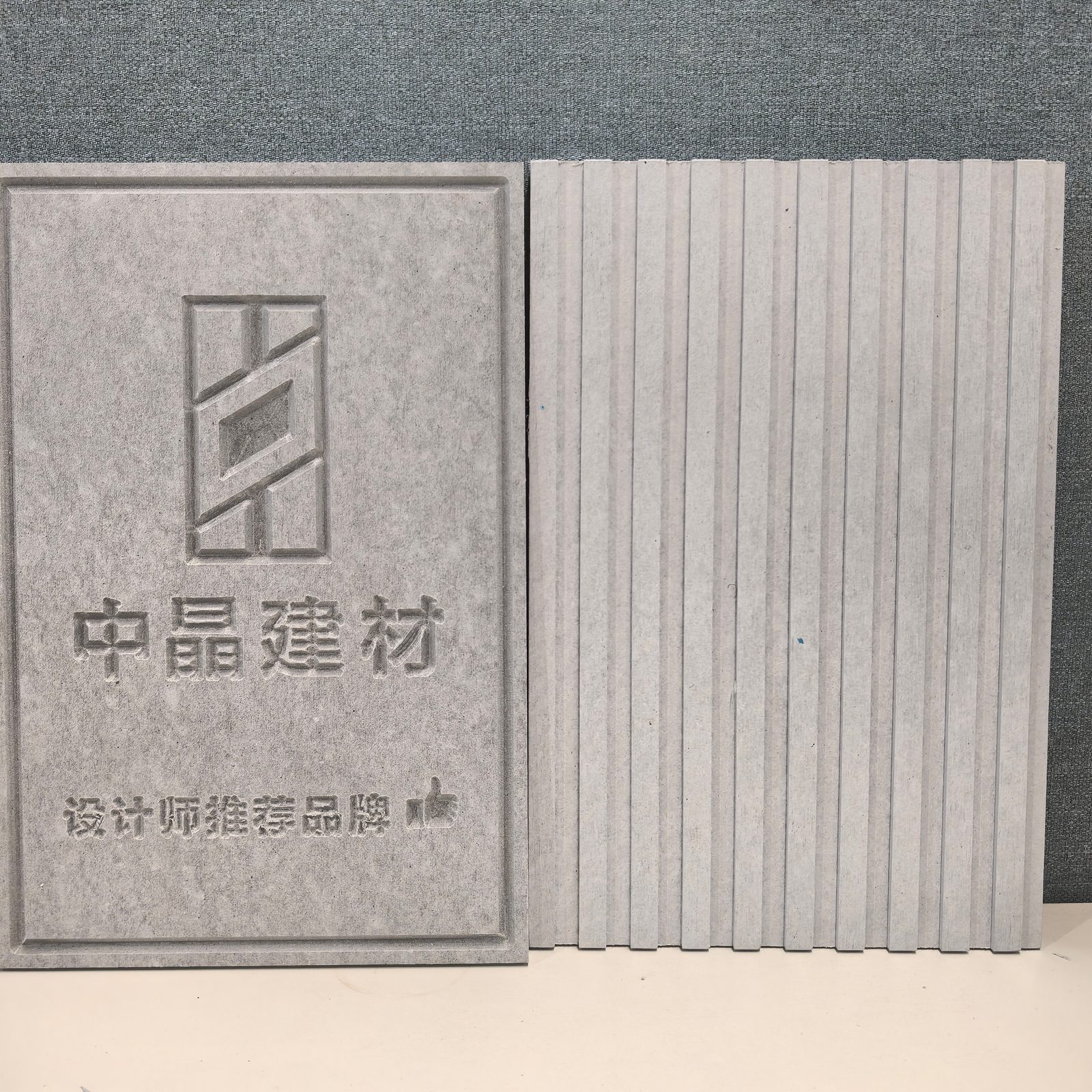
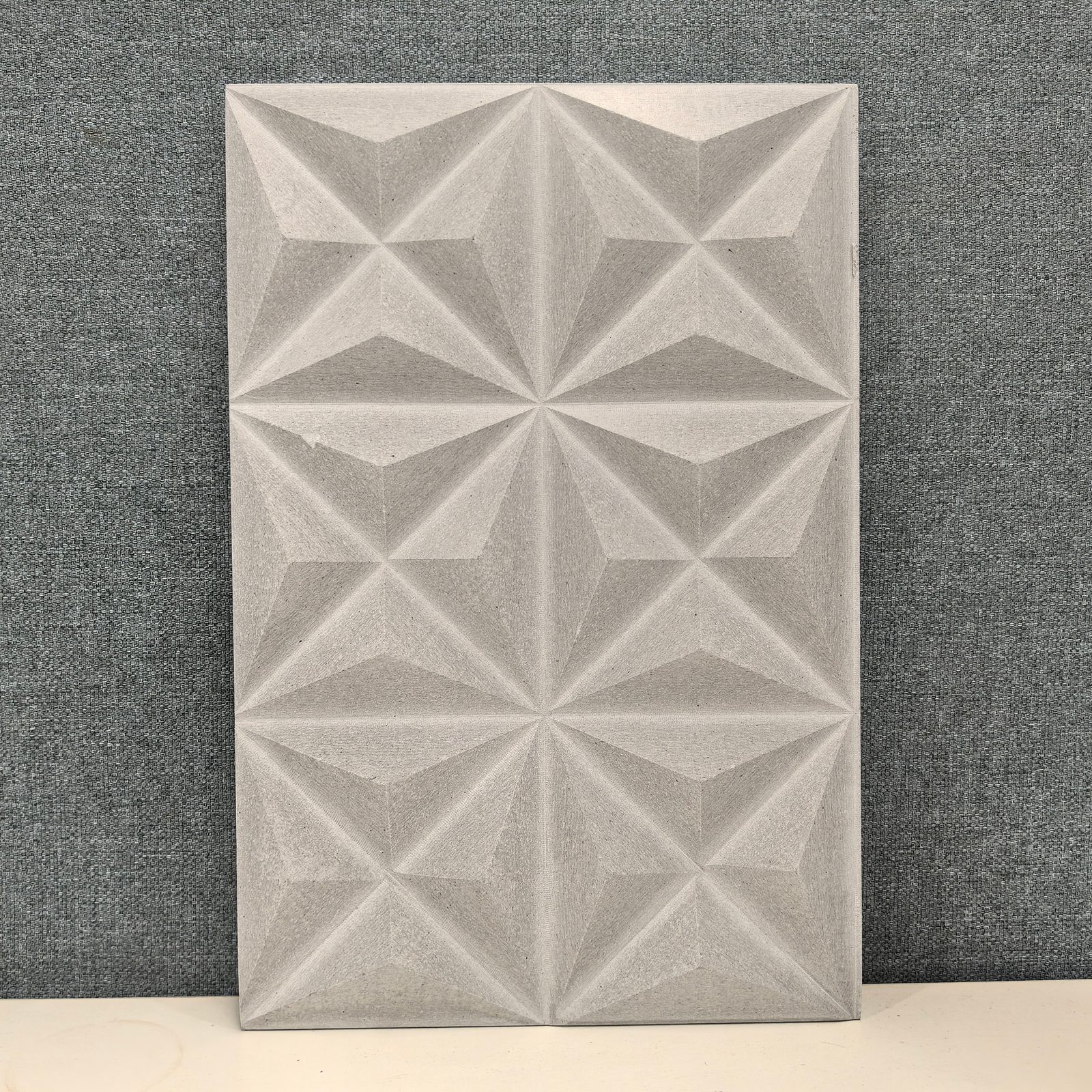
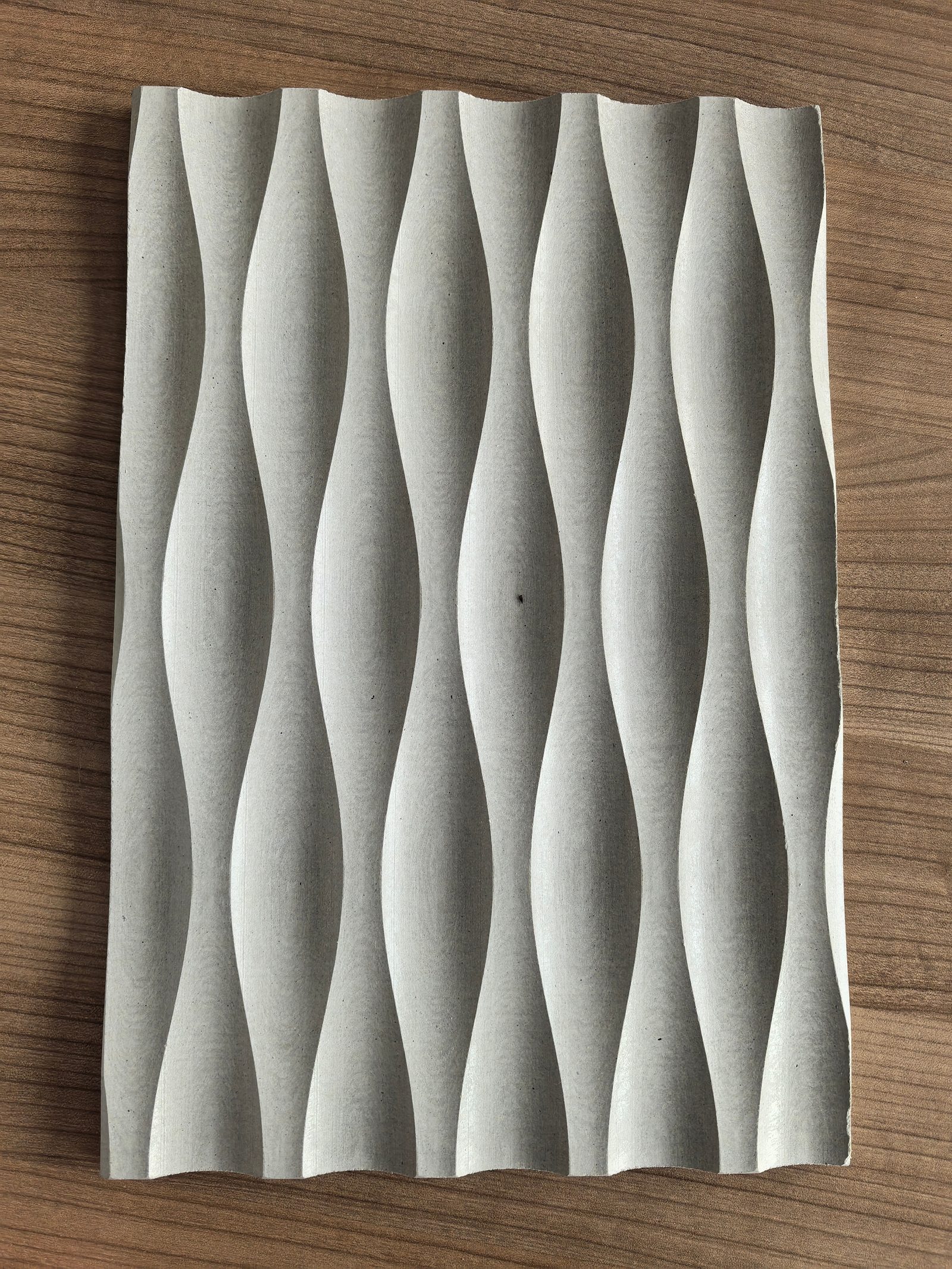
A cementitious ceiling does not have to look like a plant room. Printed and coated faces let the wall panel family carry the same decorative language onto the ceiling — stone-look or printed finishes that coordinate with the walls while keeping every wet-area benefit. Where a completely seamless surface is wanted, tape-and-fill detailing gives a monolithic plane; where services need access, a suspended grid with removable tiles handles maintenance. Either way, the base material is doing the invisible work.
Frequently Asked Questions
Is fiber cement board suitable for a bathroom ceiling?
Yes. It is one of the few substrates that tolerates constant humidity without softening, swelling or feeding mold, so it holds a flat plane directly above showers and wet zones.
Will a fiber cement ceiling board sag in a humid bathroom?
Not under normal wet-area conditions. Wet expansion of 0.25% or less is why it keeps its shape through repeated steam-and-dry cycles where gypsum-based boards soften and droop.
Can mold grow on a fiber cement bathroom ceiling?
The board gives mold nothing to feed on because it is entirely inorganic — no paper, no starch, no cellulose binder. Surface growth can still appear if dust and condensation accumulate, but the substrate does not support it.
Is a calcium silicate ceiling board too heavy for overhead work?
Low-density boards are about 30% lighter than conventional fiber cement, so a 6 mm sheet can be handled by one installer — a meaningful advantage in a tight bathroom.
What fixings do I need?
Fix to a light steel furring or treated sub-frame with corrosion-resistant screws. A screw holds around 1200 N, so a single fixing supports roughly 15–20 kg.
Conclusion
A bathroom ceiling is not the place to save on substrate. The steam-and-condensation cycle will find every weakness in a moisture-sensitive or mold-friendly board, and the repair always costs more than the upgrade would have. An inorganic, A1 fiber cement board or calcium silicate board removes the failure mechanism instead of masking it: it stays flat, stays clean and stays out of the maintenance budget.